
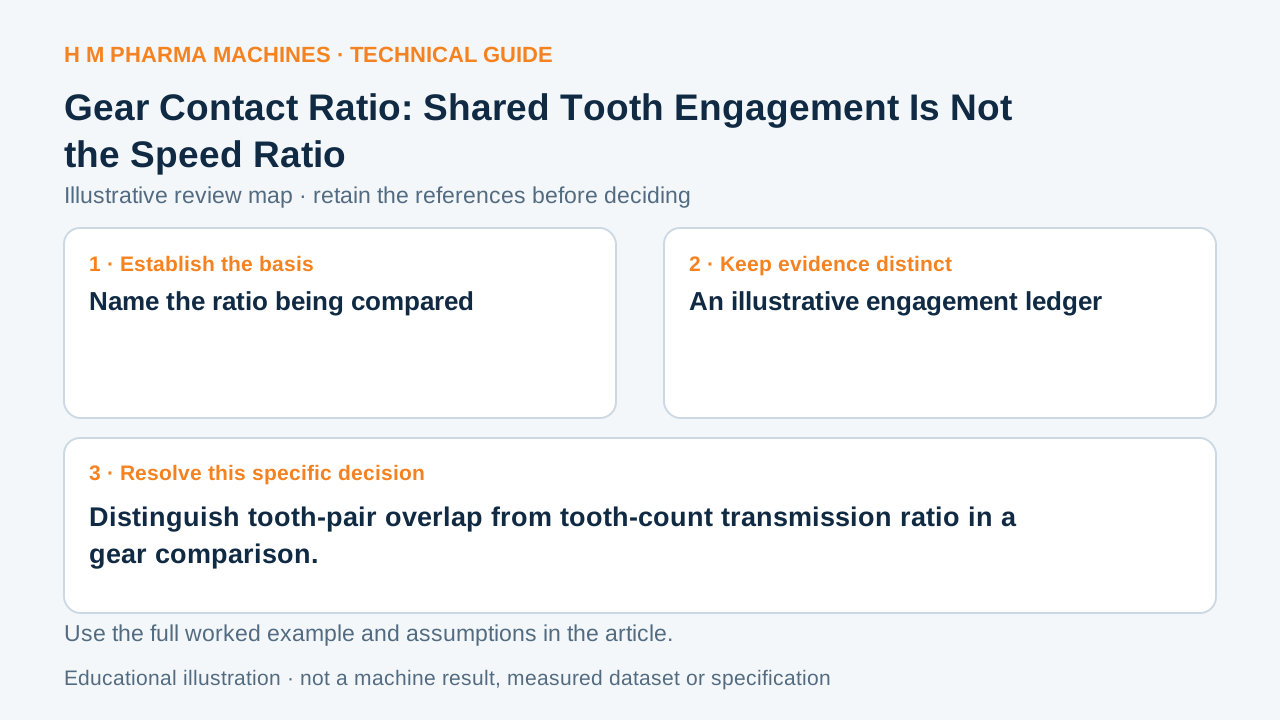
Distinguish tooth-pair engagement overlap from the input-output speed ratio.
Name the ratio being compared
KHK’s contact-ratio article concerns tooth engagement during mesh. That quantity differs from the transmission speed ratio determined by gear counts and arrangement. Primary reference: contact ratios.
Two numbers called ratio can therefore answer different questions. Ask whether the quoted value is transverse contact ratio, face overlap or a defined total for the selected gear type. A single unlabeled decimal cannot establish which geometry was assessed.
An illustrative engagement ledger
Imagine an ideal spur mesh described over one normalized tooth-pitch interval. Suppose it has one pair engaged for 40% of that interval and two pairs for 60%. Its illustrative average engagement count is 1×0.4 + 2×0.6 = 1.6. That number says nothing about whether the speed reduction is two-to-one or three-to-one.
Conversely, a hypothetical 20-tooth input and 60-tooth output give an ideal three-to-one speed ratio, but those counts alone do not supply the engagement-overlap calculation. The interval example is invented and assumes only one- and two-pair regions; it is not a measured loaded-contact trace.
Request a labeled geometry result
Keep speed ratio, contact-ratio definition and its geometric calculation in separate fields. Ask which center distance, tooth geometry and gear type the result represents. Do not use a favorable contact-ratio label as a complete capacity or noise guarantee.
Actual tooth loading, manufacturing and operating evidence remain part of the supplier assessment. This guide copies no catalog table or installed gear value. Its purpose is to make the requested comparison unambiguous before a decimal from one kind of ratio is used to answer a different transmission question.
Customer Questions
Is contact ratio the speed reduction?
It describes engagement rather than output speed.
What does the fictional 1.6 represent?
An average under the stated one-/two-pair interval model.
Does it establish loaded capacity?
A capacity assessment needs additional applicable evidence.
Primary References
These references support the technical principles discussed in this guide. The worked examples and review questions are educational.
Discuss Your Machine Requirement
Share your product, container, required output and the evidence needed for your technical review.
Request a Technical Review