
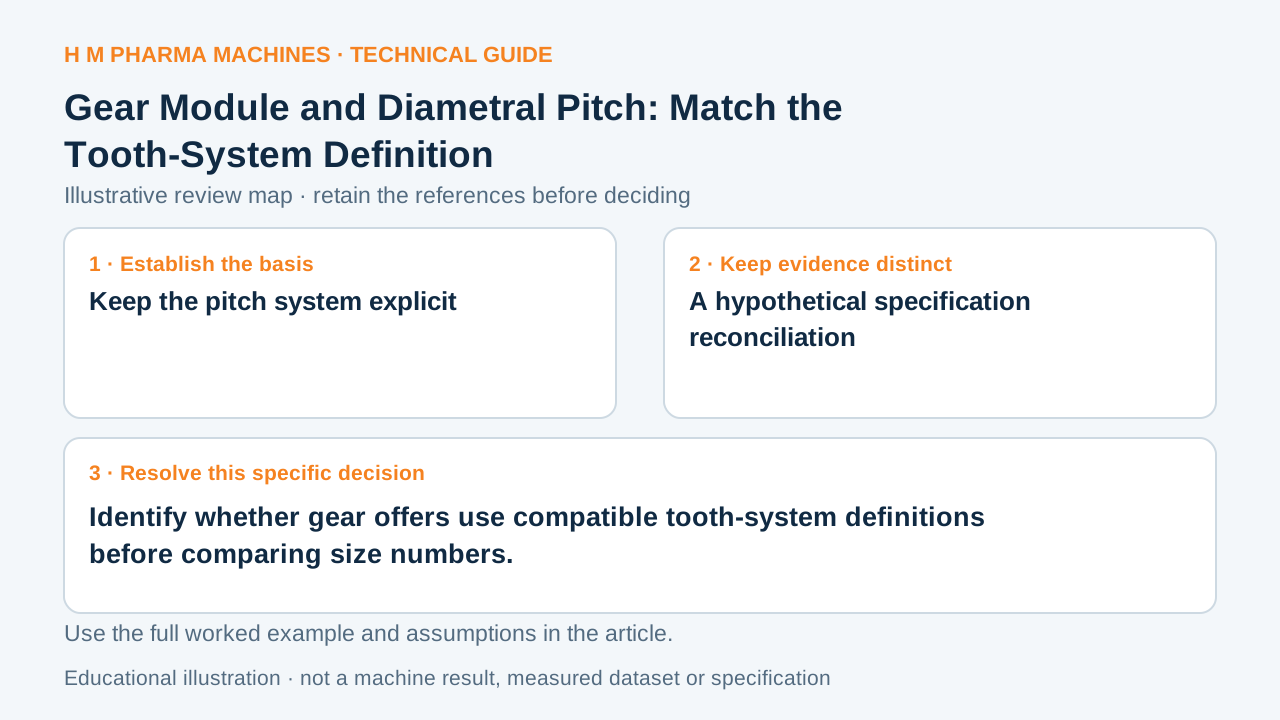
The number on a gear specification may describe a direct tooth-size measure or its inverse. Identify the convention first.
Keep the pitch system explicit
Module and diametral pitch express gear tooth size using different conventions. KHK provides a comparative pitch reference. A bare number without the system and units is not enough to identify mating geometry. Primary reference: KHK comparative gear pitch.
For the conventional conversion, module in millimetres equals 25.4 divided by diametral pitch in inverse inches. This reconciles one tooth-size quantity; it does not establish the complete gear design or prove that two parts will mesh.
A hypothetical specification reconciliation
Imagine a fictional offer stated as 10 diametral pitch. Its equivalent module is 25.4/10 = 2.54 mm. Comparing it with a separate offer labelled module 10 as though both numbers meant the same thing would create a large geometric mismatch. Keep the original specification and the converted value side by side.
Add tooth count, pressure-angle basis, gear type and the relevant mating-component identity as separate fields. The example chooses no actual gear or HM dimension; it demonstrates why a matching numerical label can conceal a different system.
Complete the identity before selecting a replacement
Ask for the complete drawing or designation rather than ordering from a translated pitch number alone. Where an imperial or metric alternative is proposed, request how all mating geometry and application requirements are reconciled.
Preserve the accepted pitch convention in the project record so a later RFQ cannot drop its units. A simple conversion can be useful without becoming an interchangeability certificate. Torque, speed, material and quality requirements remain separate parts of the gear assessment, and should not be inferred from an equivalent tooth-size value.
Customer Questions
Are module 10 and 10 diametral pitch equivalent?
No. They use different conventions; 10 DP corresponds to module 2.54 mm.
Does converting pitch prove two gears can mesh?
No. The remaining tooth geometry and mating design must agree.
What should an RFQ preserve?
The original pitch system, units, full gear identity and mating-component requirements.
Primary References
These references support the technical principles discussed in this guide. The worked examples and review questions are educational.
Discuss Your Machine Requirement
Share your product, container, required output and the evidence needed for your technical review.
Request a Technical Review