
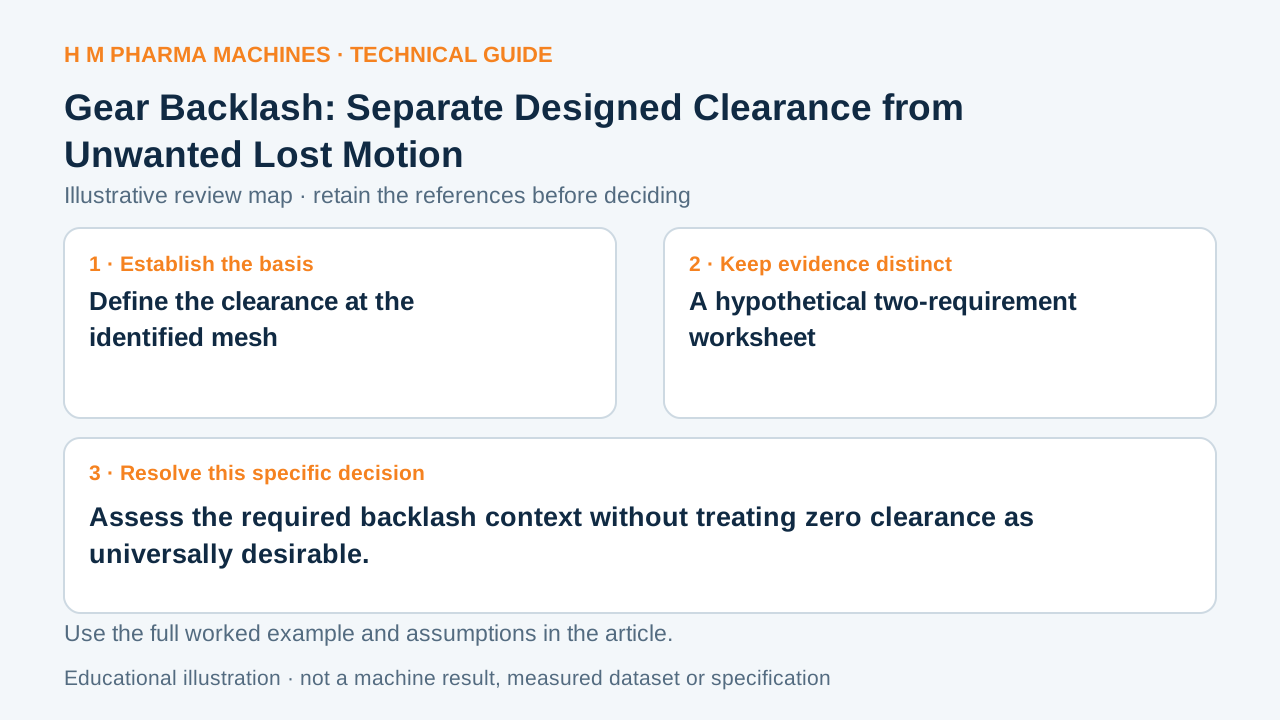
Backlash can be a designed clearance and a source of reversal motion. State which question the project is asking.
Define the clearance at the identified mesh
KHK's spur-gear technical information treats backlash as part of gear geometry and notes that conditions affecting dimensions can also affect backlash. A clearance statement therefore needs its gear pair and conditions. Primary reference: KHK spur-gear technical information.
Separate the intended mesh clearance from the application's allowable reversal response. They are related but not identical requirements. Do not assume that a request for improved positioning means every physical clearance should simply be eliminated.
A hypothetical two-requirement worksheet
Imagine a fictional design with a documented mesh-clearance basis and a separate buyer requirement for reversal behavior at the driven output. A proposal supplies only a backlash number measured under an unstated condition. That number cannot fully answer either row until the geometry, conditions and measurement basis are reconciled.
Create rows for gear pair, centre-distance basis, condition, clearance description and output-response requirement. The example assigns no target clearance, temperature correction or HM gear performance. It keeps the design and motion questions visible instead of collapsing them into zero is best.
Review changes at the mesh and the output
Ask how the responsible designer addresses the actual operating conditions and how the required output behavior is verified. A change in gear material, mounting geometry or duty can alter the applicability of earlier evidence.
Retain the accepted gear-pair identity and the operating basis with the component record. Later service measurements should be interpreted against those references. This approach avoids diagnosing all lost motion as gear backlash; couplings, supports and other interfaces may also contribute. The useful conclusion names the supported clearance and output-response evidence separately.
Customer Questions
Is zero backlash always the appropriate design request?
No. The required mesh clearance and output behavior need a design-specific assessment.
Does one backlash number describe every operating condition?
Do not assume that. Keep the gear pair and stated conditions with the value.
Does lost output motion prove a gear-mesh cause?
No. Review the other mechanical interfaces as well.
Primary References
These references support the technical principles discussed in this guide. The worked examples and review questions are educational.
Discuss Your Machine Requirement
Share your product, container, required output and the evidence needed for your technical review.
Request a Technical Review