
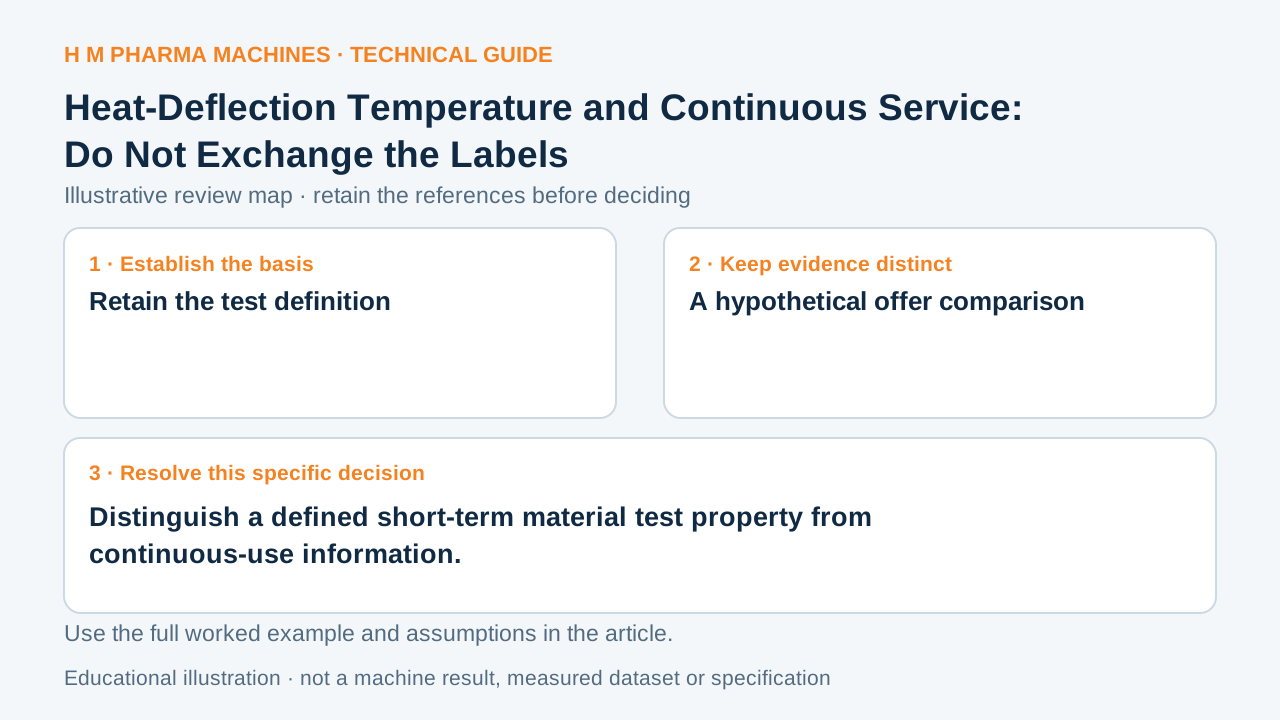
A high short-term test temperature does not automatically establish sustained service suitability.
Retain the test definition
Curbell warns against using a single heat-deflection or service-temperature property as a complete thermoplastic application limit. The defined property must match the question. Primary reference: Curbell high-temperature applications.
Heat-deflection information refers to a particular test basis. A continuous-duty requirement adds duration and actual loading conditions. Preserve the stated method and relevant stress or condition beside the figure instead of reporting only a maximum temperature with no definition.
A hypothetical offer comparison
Imagine a fictional offer highlighting a heat-deflection value of 180°C, while the RFQ asks about long-held load at 120°C. The fact that120 is numerically lower than180 does not complete the application assessment. Mark the short-term test evidence as defined information and ask what supports the actual sustained condition.
List duration, load, geometry, material grade, property method and required functional endpoint. Both temperatures are teaching assumptions, not taken from a supplier grade or used by HM. The comparison provides no universal safe operating margin and does not approve the proposed part.
Specify the function at temperature
Ask whether the relevant concern is deformation, force retention, electrical behavior or another defined property. A thermal-use decision should state the function that must persist rather than relying on a generic heat-resistant label.
Keep the selected material condition and evidence with the accepted design. If load duration or environment changes, revisit the applicable basis. This guide reconciles test labels with a sustained-service question; it does not turn a short-term material test into a guaranteed lifetime, calculate a universal continuous-use temperature or rank grades from one headline property.
Customer Questions
Does being below HDT prove continuous-use suitability?
No. The actual duration, load and function require assessment.
Can different HDT methods or stresses be ignored?
No. Preserve the reported test basis.
Does heat-resistant identify the required function?
No. State what behavior must persist under the intended condition.
Primary References
These references support the technical principles discussed in this guide. The worked examples and review questions are educational.
Discuss Your Machine Requirement
Share your product, container, required output and the evidence needed for your technical review.
Request a Technical Review