
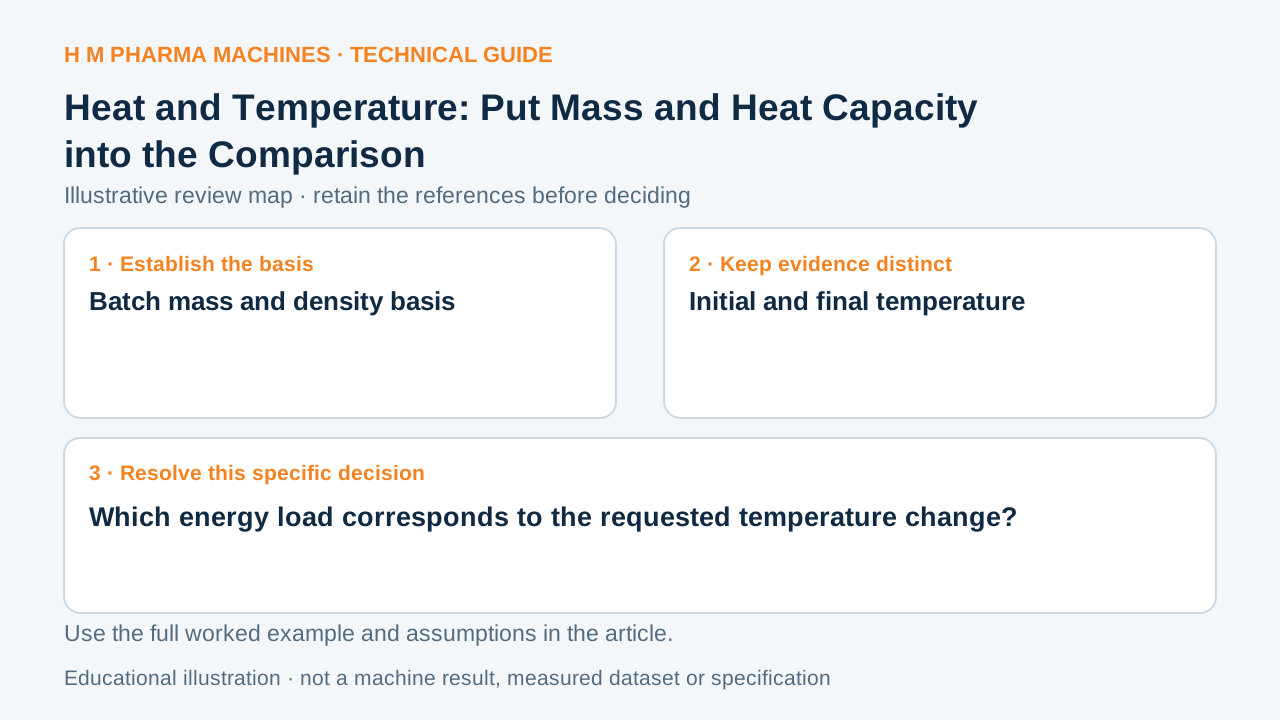
Temperature alone does not describe the energy needed to heat a batch. Name its mass, material and temperature change first.
Define the Thermal Model
For a single-phase batch with nearly constant specific heat, E = m cₚ ΔT. Spirax Sarco’s tank-energy discussion separates the product heat requirement from vessel heating and environmental losses. A temperature is a state reading; the calculated energy belongs to a defined mass and change of state.
Compare a Hypothetical Case
Imagine two batches starting at 25°C and ending at 45°C. Batch A has 100 kg and an assumed cₚ of 3 kJ/(kg·K), giving 6,000 kJ. Batch B has 200 kg at that same assumed cₚ, giving 12,000 kJ. Their final temperature matches, while the product-only energy doubles. These invented properties are calculation inputs, not specifications for a pharmaceutical formulation.
Complete the Engineering Review
Write the initial and final states beside the mass basis. If a quotation lists litres, attach the density used to obtain kilograms. Mark whether the heat-capacity value is a point value or an average over the proposed interval. List the vessel, incoming materials and losses on separate lines so that a product-only result is not mistaken for the complete utility requirement.
For a processing-tank enquiry, provide the actual product data and batch range. This worksheet answers an energy-accounting question. Heating time, transfer area and achievable uniformity require their own review; they cannot be inferred from one final thermometer value.
Which energy load corresponds to the requested temperature change?
This blank worksheet is for your own project. It contains no H M machine trial result.
| Review field | Reference or result | Responsible person |
|---|---|---|
| Batch mass and density basis | To complete | To complete |
| Initial and final temperature | To complete | To complete |
| Heat-capacity value and interval | To complete | To complete |
| Additional vessel and loss terms | To complete | To complete |
Customer Questions
Does the hottest batch need the most energy?
Mass, initial state and material properties also matter.
Can Celsius differences be used?
A Celsius temperature difference has the same numerical value as a kelvin difference.
Does E specify heater power?
Only after a time requirement and other loads are included.
Related Equipment References
Review the actual offered equipment and application separately from this educational example.
Primary References
These references support the technical principles discussed in this guide. The worked examples and review questions are educational.
Discuss Your Machine Requirement
Share your product, container, required output and the evidence needed for your technical review.
Request a Technical Review