
Heater kilowatts describe a rate. A heat-up time needs an energy inventory and a realistic useful-power boundary.
Define the Thermal Model
Mean useful power is the required energy divided by the allowed interval. Spirax Sarco’s thermal-rating lesson distinguishes a design rating from the connected thermal load. A nameplate power can be relevant without being proof that the requested energy reaches the product on schedule.
Compare a Hypothetical Case
Suppose an invented total heating inventory is 9,000 kJ and the requested interval is 15 minutes, or 900 s. The required mean useful power is 10 kW. If a separate assumed loss term is 2 kW over that period, the supplying side must cover a mean 12 kW. A 15 kW offered rating still needs its transfer and control conditions checked.
Complete the Engineering Review
Build the energy inventory before dividing by time. Distinguish power into the heater, power crossing the transfer surface and power stored in the target contents. Record whether losses vary during warm-up rather than assuming every operating value remains constant. Ask the supplier to explain the limiting case near the target temperature.
For a processing-tank quotation, submit the batch range, start state and time criterion. This guide tests an energy-and-time requirement; it does not guarantee a heat-up result from electrical connection capacity or state an HM heater rating.
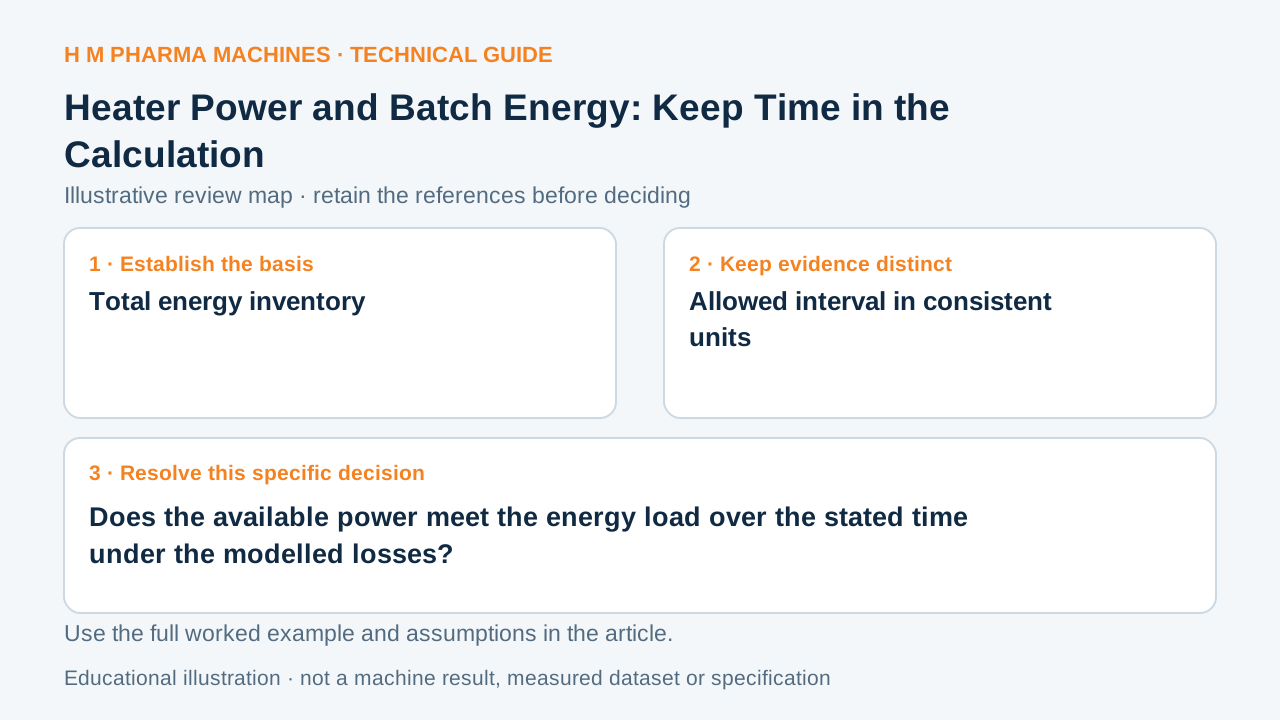
Does the available power meet the energy load over the stated time under the modelled losses?
This blank worksheet is for your own project. It contains no H M machine trial result.
| Review field | Reference or result | Responsible person |
|---|---|---|
| Total energy inventory | To complete | To complete |
| Allowed interval in consistent units | To complete | To complete |
| Mean useful and loss power | To complete | To complete |
| Rating conditions and end-of-heat-up limit | To complete | To complete |
Customer Questions
Is kW a quantity of energy?
It is energy per unit time.
Does a bigger nameplate prove faster heating?
Actual transfer conditions still govern delivery.
Can running load replace start-up load?
The thermal inventories can differ.
Related Equipment References
Review the actual offered equipment and application separately from this educational example.
Primary References
These references support the technical principles discussed in this guide. The worked examples and review questions are educational.
Discuss Your Machine Requirement
Share your product, container, required output and the evidence needed for your technical review.
Request a Technical Review