
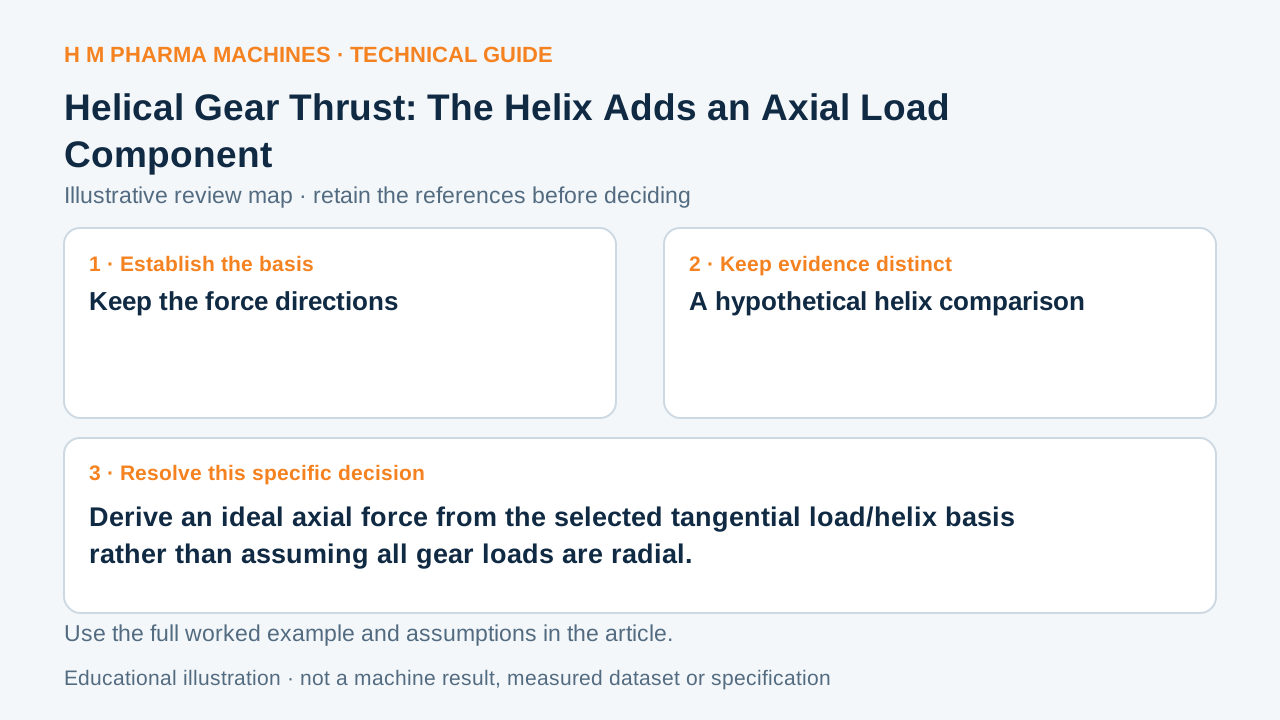
Preserve the axial force component in a parallel-axis helical gear assessment.
Keep the force directions
For the stated helical-gear force model, axial thrust is Fₐ = Fₜ tan β, with β the helix angle. SDP/SI derives this projection in section 16.2. Primary reference: helical gear forces, T-139.
Tangential, radial and axial components belong in separate rows. A support selected from only a radial-force statement may leave the thrust question unresolved. Direction also depends on the actual helix hand and rotation convention; a magnitude calculation cannot supply it.
A hypothetical helix comparison
Assume a fictional tangential load of 100 N. At an explicitly assumed helix angle of 20 degrees, axial magnitude is approximately 36.40 N. At 30 degrees, it is approximately 57.74 N. Equal tangential load therefore does not establish equal axial demand.
The calculation concerns the named parallel-axis gear model. It does not transfer directly to a crossed-axis arrangement or provide a bearing selection. The invented angles are comparison inputs rather than suggested gear geometry. Other force components and actual load histories remain unassessed.
Prepare the shaft-load ledger
Record gear type, tangential load basis, angle convention, hand and rotation direction. Ask the designer to identify the axial-load path through the actual shaft and supports. Retain which side reacts thrust and how reversals are treated.
Capacity, installation and compatible meshing geometry still require the selected component evidence. This guide does not claim a gear type, force or bearing arrangement on HM machines. Its result is an explicit axial-force question that cannot be settled by a speed-ratio label alone.
Customer Questions
Is the axial component the radial component?
Keep the two directions separate.
Can magnitude establish thrust direction?
Hand and rotation convention are also needed.
Do these numbers select a bearing?
The actual support/load assessment remains necessary.
Primary References
These references support the technical principles discussed in this guide. The worked examples and review questions are educational.
Discuss Your Machine Requirement
Share your product, container, required output and the evidence needed for your technical review.
Request a Technical Review