
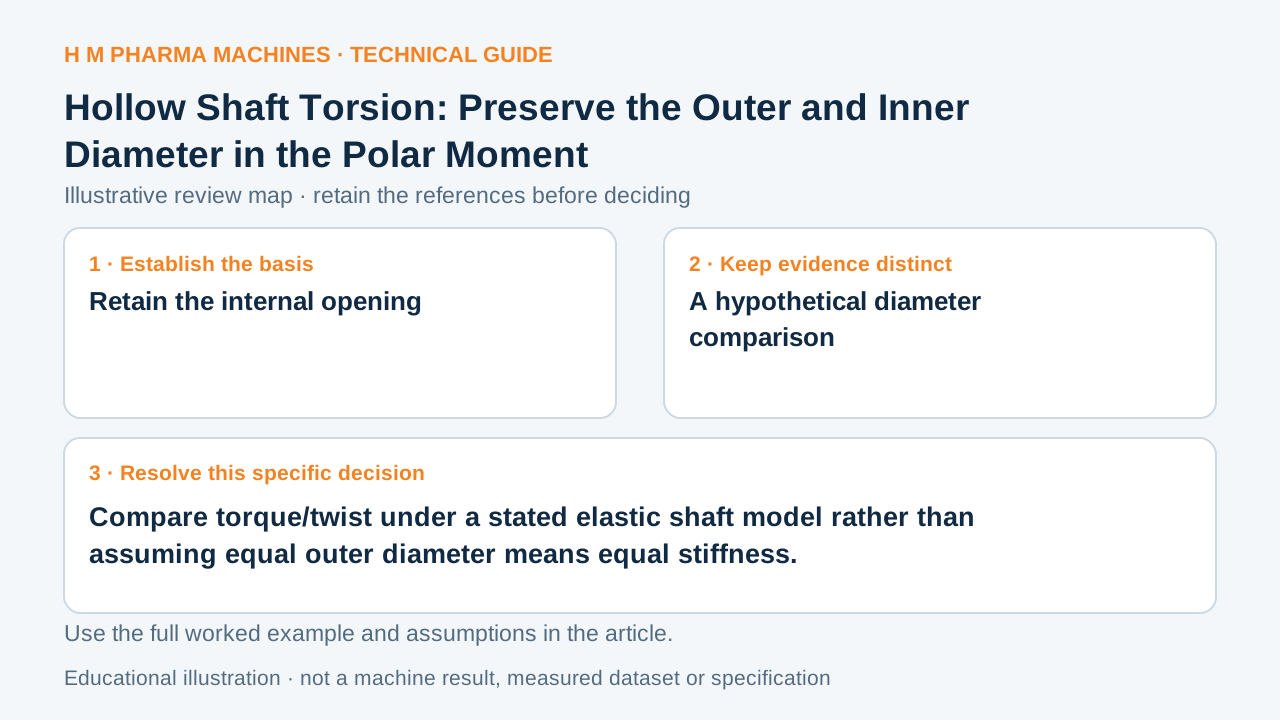
Keep both diameters when calculating an ideal circular shaft’s torsional stiffness.
Retain the internal opening
For an elastic circular shaft, twist is TL/(GJ). A hollow circular section uses J = π(Dₒ⁴−Dᵢ⁴)/32. The inner diameter cannot be omitted. Primary reference: circular shaft torsion.
These expressions assume the applicable circular-section elastic model. A slit, noncircular section or significant geometric discontinuity requires its own analysis. Equal outer diameter does not establish equal J or equal twist.
A hypothetical diameter comparison
Assume a fictional 20 mm outer diameter. The solid section has J approximately 15,708 mm⁴. With a 10 mm inner diameter, J becomes approximately 14,726 mm⁴, or 93.75% of the solid value. At equal torque, length and shear modulus, twist increases by a factor of approximately 1.0667.
The material cross-sectional area decreases to 75% of the solid value, so area and torsional stiffness change by different fractions. This comparison does not establish the actual shaft’s mass, strength, fatigue performance or usefulness. It deliberately retains the same outer diameter to expose the missing internal dimension.
Keep the model traceable
Record outer diameter, inner diameter, shaft length, shear modulus and the torque basis. Confirm that values refer to the assessed region rather than a nearby hub. Preserve openings, shoulders and other departures from the assumed constant section.
Ask the designer which actual load combinations and connection details govern the part. A twist calculation is not a complete strength assessment or a manufacturing specification. This guide supplies no real HM shaft dimensions and no approved substitution between solid and hollow parts.
Customer Questions
Can the solid J be used for a hollow shaft?
Retain the inner-diameter term.
Does area percentage equal stiffness percentage?
The expressions depend on different powers of diameter.
Does this formula cover a slit tube?
That geometry requires a different torsion model.
Primary References
These references support the technical principles discussed in this guide. The worked examples and review questions are educational.
Discuss Your Machine Requirement
Share your product, container, required output and the evidence needed for your technical review.
Request a Technical Review