
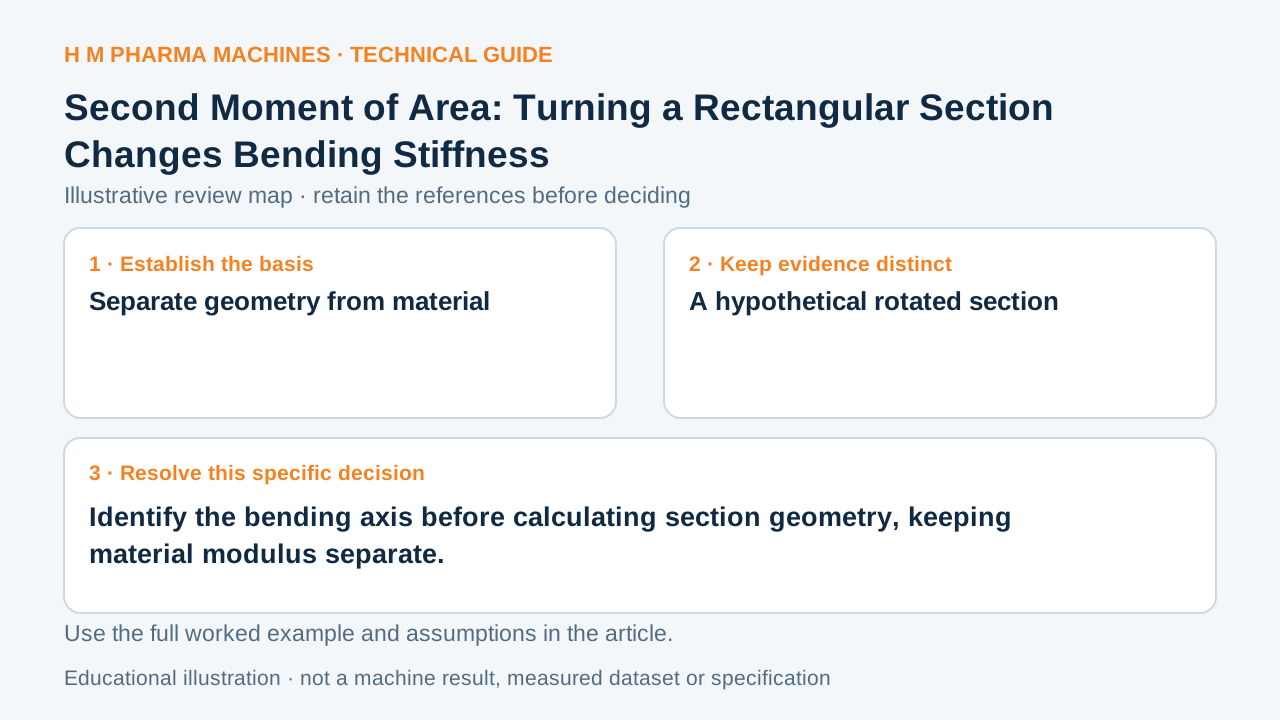
Identify the bending axis before using a rectangular section’s second moment of area.
Separate geometry from material
For a rectangle about its centroidal bending axis, I = bh³/12, with h measured perpendicular to that axis. The MIT solution derives this area integral. Primary reference: rectangular second moment, problem 5-2.
I has length-to-the-fourth units. It is distinct from mass moment of inertia used for rotational acceleration. The bending-stiffness product EI also includes modulus, so changing section orientation does not change the material’s modulus.
A hypothetical rotated section
Take a fictional solid rectangle 20 mm wide and 40 mm high relative to one centroidal axis. Its I is approximately 106,667 mm⁴. Turn the same section through ninety degrees: b = 40 mm and h = 20 mm gives approximately 26,667 mm⁴. Area remains 800 mm² in both orientations.
The first geometric second moment is four times the second, although the material quantity is unchanged. This does not establish a complete stiffness ratio for a real assembly: its load direction, supports and local connection behavior still need the same assessment. These dimensions are invented.
Preserve the axis in the worksheet
Sketch the load direction, centroidal axis and section orientation. Record which dimension is cubed rather than labeling both inputs simply width. When using a supplier table, confirm that its axis naming matches the application’s bending direction.
Keep material modulus in its own row and identify any holes, offsets or nonrectangular features that invalidate the solid-rectangle model. This guide supplies no allowable stress, chosen section or installed structural claim. Its purpose is to prevent a geometrically different bending case from inheriting an unchanged area value as if area alone described stiffness.
Customer Questions
Is I measured in mm²?
Area moment uses mm⁴ for millimeter dimensions.
Does turning a section change E?
The orientation changes geometry, not material modulus.
Is this the same inertia as Iα?
Mass moment and second moment of area are different quantities.
Primary References
These references support the technical principles discussed in this guide. The worked examples and review questions are educational.
Discuss Your Machine Requirement
Share your product, container, required output and the evidence needed for your technical review.
Request a Technical Review