
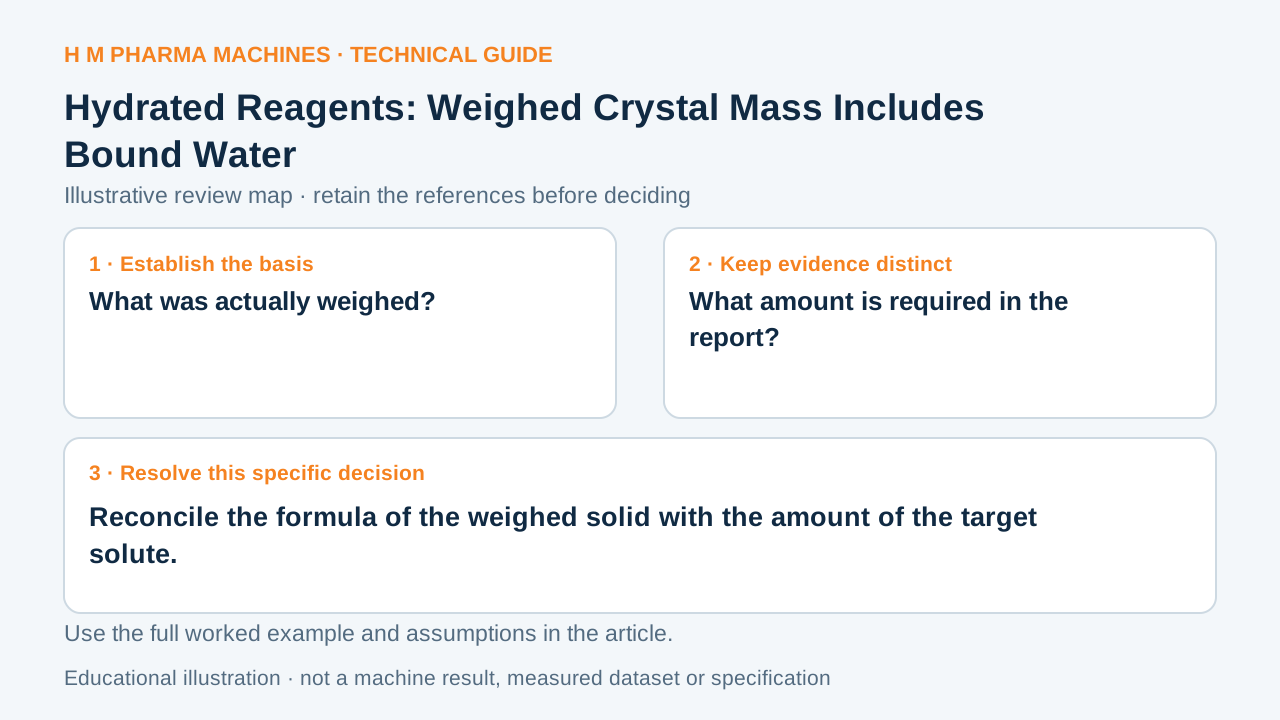
A weighed crystalline reagent can include water within its formula. A mass calculation must use that hydrated formula before it is compared with an anhydrous-solute amount.
Retain the crystalline formula
A crystalline hydrate includes water molecules in its crystal structure. For a composition calculation, the complete hydrate formula and its molar mass belong to the weighed solid. The mass of that solid cannot simply be called the mass of its anhydrous component. Primary reference.
Calculate an invented hydrate conversion
Define a fictional compound X with anhydrous molar mass 100 g/mol, and a hydrate X·2H₂O with teaching molar mass 136 g/mol. A 13.6 g pure hydrate sample contains 0.100 mol of X formula units. Its anhydrous-X equivalent mass is 10.0 g, with 3.6 g assigned to the two waters in this model.
Using 100 g/mol directly on the 13.6 g weighed hydrate would report 0.136 mol instead. The incorrect amount follows a mismatched formula. These invented molar masses isolate the bookkeeping and are not a real reagent specification or proof of its water content.
Record material identity before weighing comparisons
On an original receiving worksheet, retain the label’s full formula, stated hydrate identity, purity basis and applicable lot document. Keep a separately measured moisture result distinct from the formula’s specified crystal waters. A material may require further characterization before its actual composition is established.
The calculation supplies no preparation quantity for a pharmaceutical product. For a fluid trial, reconcile how the supplied chemical amount was calculated, then preserve the independently measured fluid properties. A hydrate correction is an identity-and-inventory question, not evidence of machine performance.
Solution review worksheet
This blank worksheet is for your own project. It contains no H M machine trial result.
| Question | Record to retain |
|---|---|
| What was actually weighed? | Full hydrate formula and material record |
| What amount is required in the report? | Target constituent and entity basis |
| How was mass converted? | Applicable hydrate molar mass and purity assumptions |
Customer Questions
How many fictional moles of X are present?
0.100 mol.
What is the corresponding anhydrous-X mass?
10.0 g.
Do the invented masses identify an actual reagent?
No. They define the teaching example only.
Primary References
These references support the technical principles discussed in this guide. The worked examples and review questions are educational.
Discuss Your Machine Requirement
Share your product, container, required output and the evidence needed for your technical review.
Request a Technical Review