
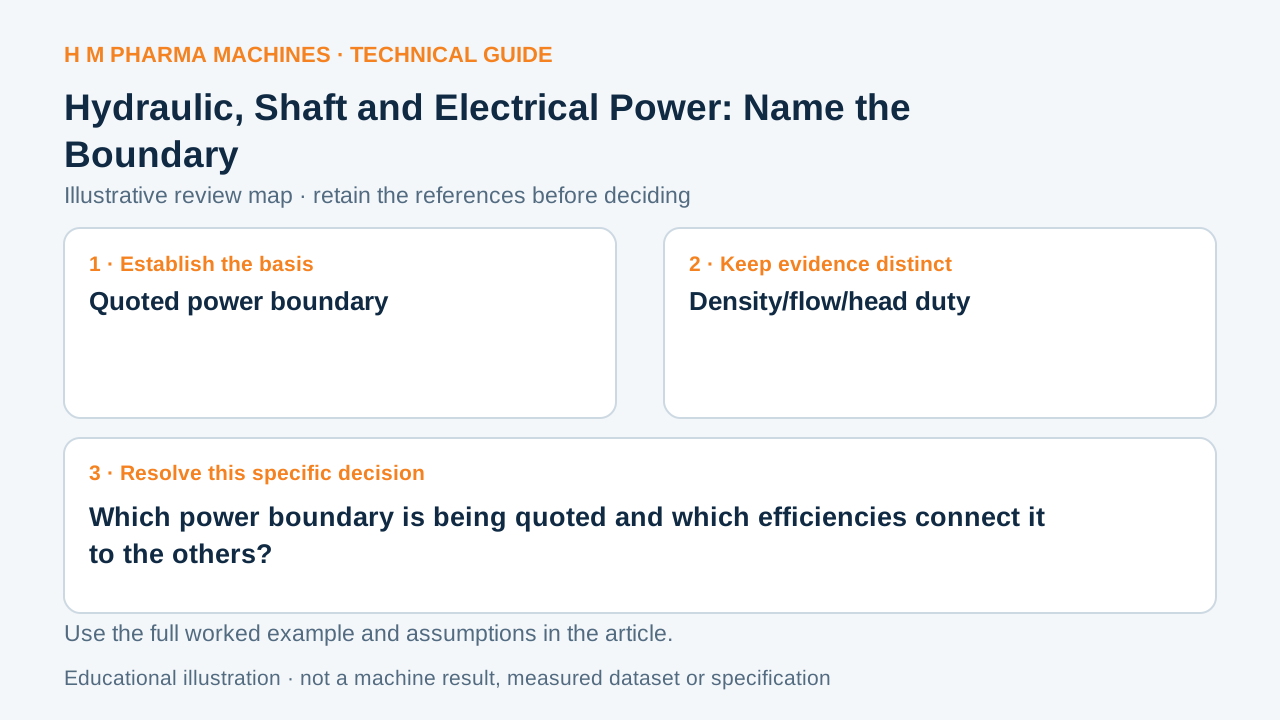
A power figure is comparable only when it identifies whether it concerns the liquid, pump shaft or electrical supply.
Separate Useful Liquid Power from Input
KSB identifies pump input power as mechanical power taken by the shaft or coupling. Hydraulic output power concerns energy transmitted to the liquid. The difference reflects losses; electrical input introduces an additional drive boundary. The three figures should not be exchanged without an efficiency basis.
For an incompressible-liquid illustration, hydraulic power is ρgQH. Keep flow in m³/s, density in kg/m³ and head in metres to obtain watts. A motor nameplate rating is a capability label, not a measured electrical consumption for every operating condition. KSB primary engineering reference.
Illustrative Power Chain
With invented values ρ = 1,000 kg/m³, Q = 0.001 m³/s and H = 10 m, hydraulic power is 98.1 W. At an illustrative pump efficiency of 0.60, shaft input is 163.5 W. At an illustrative drive efficiency of 0.80, electrical input is about 204.4 W.
These efficiencies are chosen for arithmetic and are not HM or motor test results. The calculation excludes other site loads. Its value is to show why a hydraulic output number cannot directly become an electricity-cost input.
Request Matching Duty Data
Compare power figures at the same liquid and operating point. Ask whether a quoted curve gives shaft power and whether the drive estimate includes its actual loading and control arrangement. Mark calculated and measured values separately.
Complete the worksheet with the power boundary, duty and efficiency references. For a tank-transfer proposal, retain the expected operating cases as well as the selected drive scope. Avoid estimating consumption from installed motor rating multiplied by time when the intended question concerns actual duty energy. Relevant HM context: Pharmaceutical Storage Tank.
Hydraulic, Shaft and Electrical Power: Name the Boundary — blank review record
This blank worksheet is for your own project. It contains no H M machine trial result.
| Question | Reference or result | Owner/status |
|---|---|---|
| Quoted power boundary | To complete | To complete |
| Density/flow/head duty | To complete | To complete |
| Pump and drive efficiency basis | To complete | To complete |
| Measured or calculated input | To complete | To complete |
Customer Questions
Is shaft power electrical power?
They use different boundaries; the drive efficiency and applicable losses connect them.
Does rated motor power equal consumption?
No. Consumption depends on the actual operating condition and drive.
Are the efficiencies recommendations?
No. They are illustrative values only.
Related Equipment References
Review the actual offered equipment and application separately from this educational example.
Primary References
These references support the technical principles discussed in this guide. The worked examples and review questions are educational.
Discuss Your Machine Requirement
Share your product, container, required output and the evidence needed for your technical review.
Request a Technical Review