
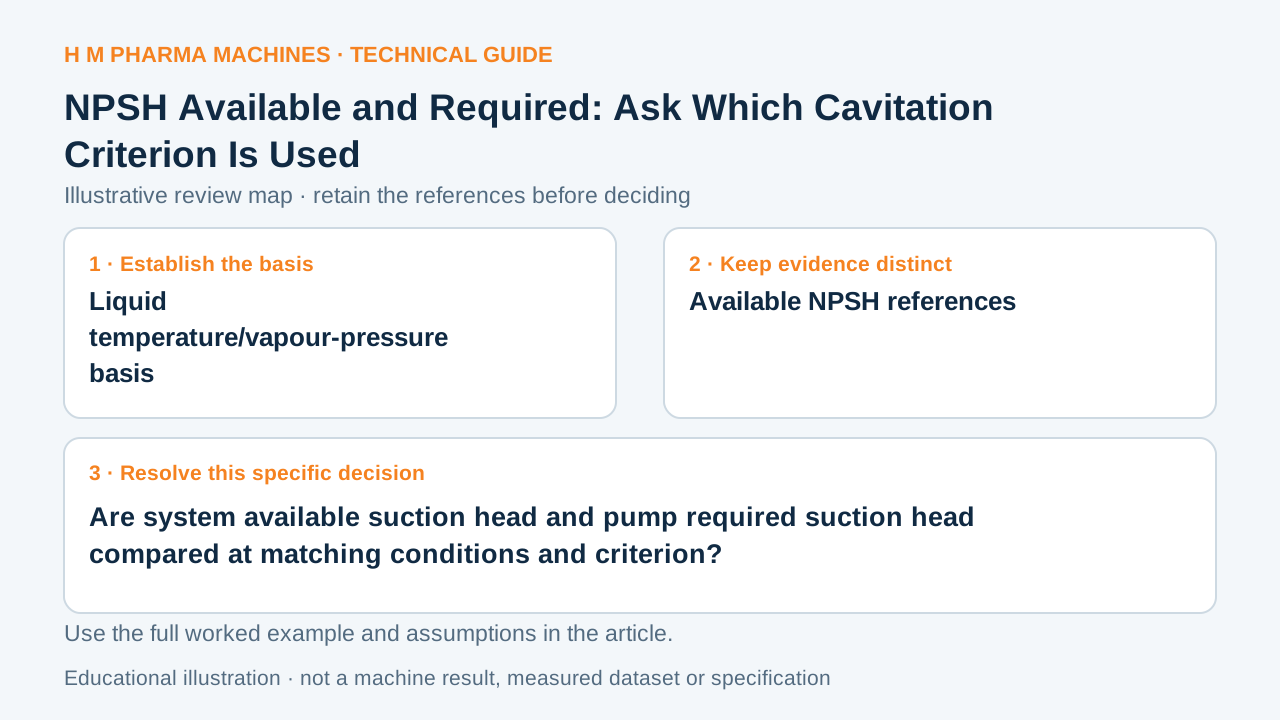
An inlet pressure figure and an NPSH requirement need defined references, liquid conditions and the same operating point.
Separate System from Pump
KSB distinguishes NPSH available in the system from NPSH required by the pump. The comparison concerns suction conditions relative to liquid vapour pressure. The required value depends on the pump and operating point; it is not a universal property of the liquid supply.
Retain liquid temperature and vapour-pressure information with the system calculation. Identify the suction reference level and the flow case. A gauge pressure alone leaves other terms unresolved, especially when source level or suction-route losses vary. KSB primary engineering reference.
Identify the Published Criterion
KSB describes several cavitation criteria, including incipient cavitation and a 3% head-drop criterion. A required value stated on an NPSH3 basis does not mean that every earlier cavitation effect has been eliminated. Ask the pump supplier which criterion its curve represents.
Hypothetical values of NPSHa = 5 m and NPSHr = 3 m leave an arithmetic difference of 2 m. That difference alone cannot be called an approved margin without the application basis, criterion and supplier assessment. The figures are illustrative, not HM equipment values.
Keep the Assessment Reproducible
Record the source conditions, suction-route calculation, curve identity and expected operating range together. If a product temperature or transfer route changes, identify which inputs must be reassessed. Avoid relabelling a previous calculation as covering an unreviewed condition.
For a tank transfer proposal, ask who establishes available NPSH and who confirms the selected pump requirement and application margin. The worksheet supports that exchange. It deliberately supplies no universal margin, pressure setting or diagnosis of a particular inlet problem. Relevant HM context: Pharmaceutical Storage Tank.
NPSH Available and Required: Ask Which Cavitation Criterion Is Used — blank review record
This blank worksheet is for your own project. It contains no H M machine trial result.
| Question | Reference or result | Owner/status |
|---|---|---|
| Liquid temperature/vapour-pressure basis | To complete | To complete |
| Available NPSH references | To complete | To complete |
| Required curve and cavitation criterion | To complete | To complete |
| Application margin and reviewer | To complete | To complete |
Customer Questions
Is NPSHr constant at every flow?
Use the requirement for the matching operating point and published curve.
Does NPSH3 mean no cavitation exists?
It names a head-drop criterion; it should not be read as a universal no-cavitation guarantee.
Can this guide set an inlet pressure?
No. The actual system and pump application require an engineering assessment.
Related Equipment References
Review the actual offered equipment and application separately from this educational example.
Primary References
These references support the technical principles discussed in this guide. The worked examples and review questions are educational.
Discuss Your Machine Requirement
Share your product, container, required output and the evidence needed for your technical review.
Request a Technical Review