
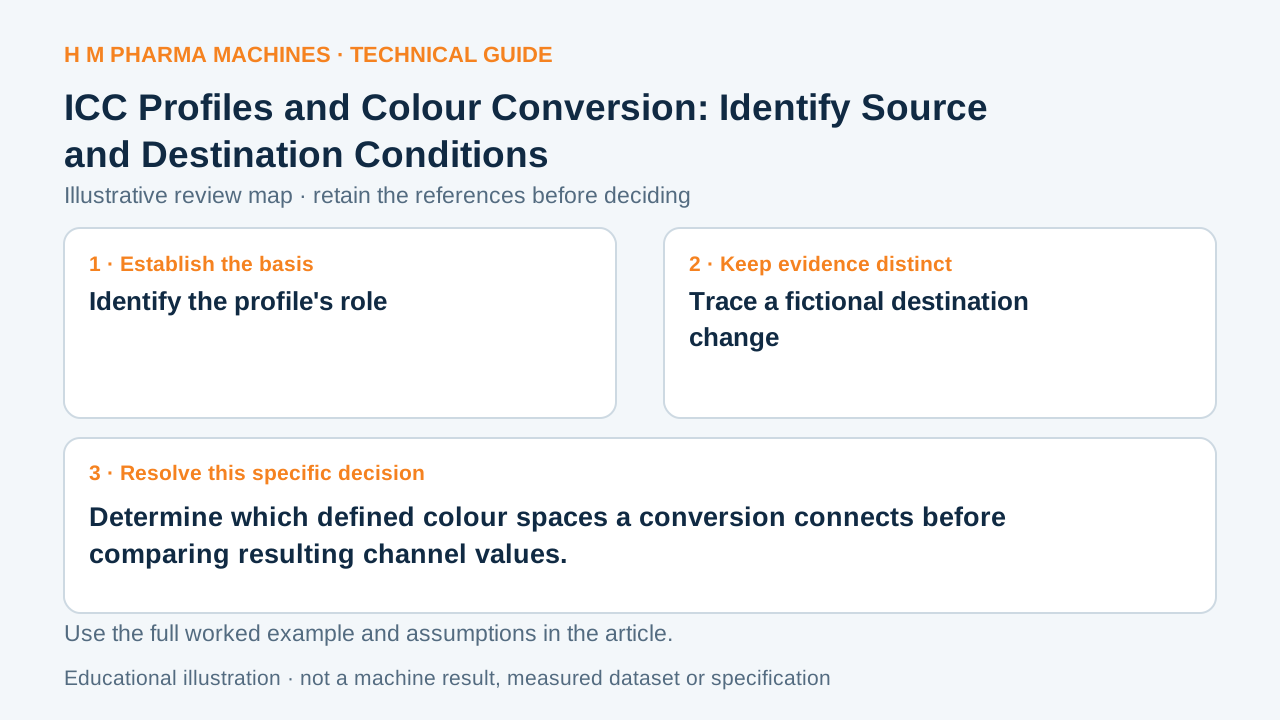
A profile gives colour numbers a defined interpretation and transformation context. Its presence alone does not prove it matches the intended output.
Identify the profile's role
ICC profiles connect a defined device or colour-space representation with a profile connection space used in colour management. The profile's role and characterised conditions matter: an input description and a printer-output description answer different questions. Primary reference: International Color Consortium: introduction to profiles.
Keep the profile identity with the actual file or conversion record. The word profiled does not identify which condition was characterised or whether the profile applies to the target substrate and output route. A named profile can be valid information while still being the wrong information for a particular job.
Trace a fictional destination change
Imagine a released artwork was converted for a hypothetical printer-and-substrate condition A. The job then moves to condition B while keeping the same profile label in the workflow record. The unchanged label does not establish that B reproduces the colour numbers as A did.
This situation does not predict a colour error or prescribe a replacement profile. It identifies a missing applicability check. The actual characterised conditions, conversion path and proof evidence need to show which output the data was prepared to describe.
Preserve the interpretation record
Ask for source and destination profile identities and the stage at which each was applied. Distinguish assigning an interpretation to existing values from a conversion that recalculates values for another space. Retain the released file so its embedded information can be compared with the workflow description.
When output conditions change, review profile applicability and the relevant proof together. Do not approve a job solely because software reports that a profile is present. The meaningful conclusion is that the profile and conversion were appropriate to the specified output and that the agreed appearance evidence supports the actual result.
Customer Questions
Does profile presence identify the intended output automatically?
No. Review the profile's role and characterised conditions.
Should a substrate change reopen applicability?
Yes. Determine whether the profile still describes the output route.
What makes the interpretation traceable?
Preserve profile identities, conversion stage and the released file.
Primary References
These references support the technical principles discussed in this guide. The worked examples and review questions are educational.
Discuss Your Machine Requirement
Share your product, container, required output and the evidence needed for your technical review.
Request a Technical Review