
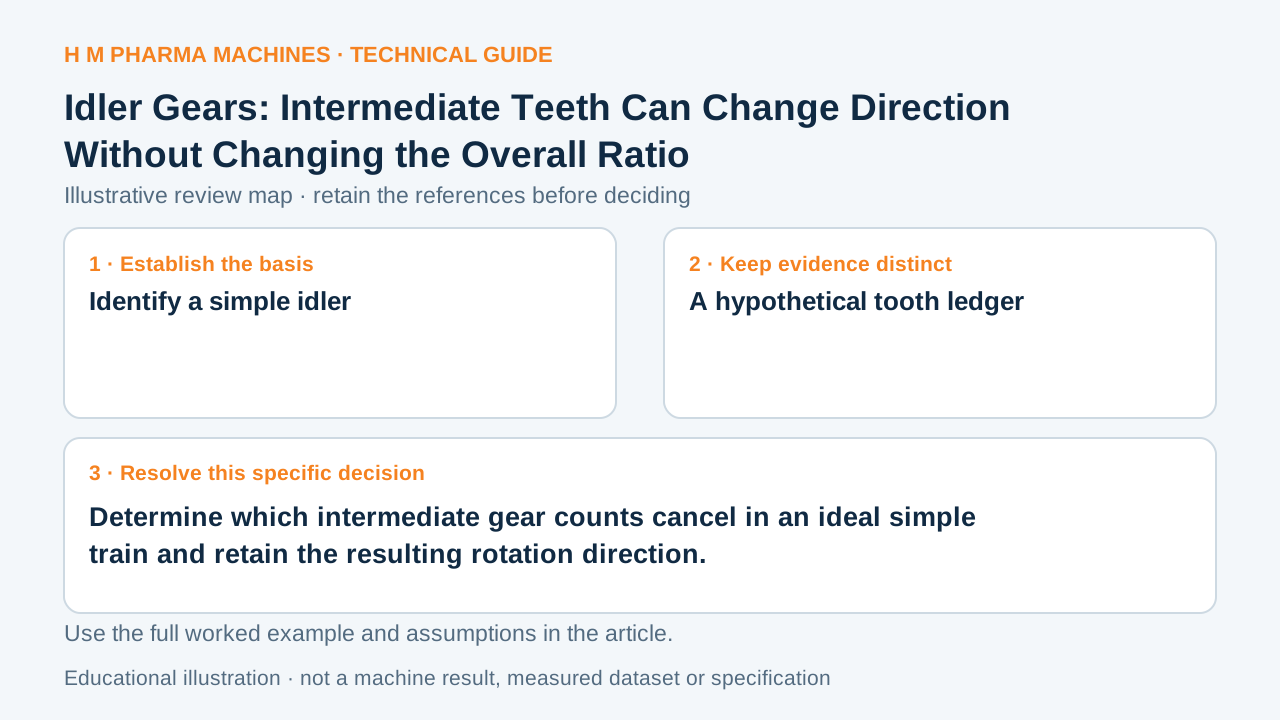
Check cancellation and rotation direction separately in a simple gear train.
Identify a simple idler
KHK shows that an intermediate idler’s tooth count cancels from the ideal simple-train speed ratio. Its presence still affects rotation direction and shaft placement. Primary reference: idler gear.
This cancellation applies to the stated simple train, with one relevant gear per intermediate shaft. A compound train with different gears rigidly sharing a shaft is a different arrangement. Keep the connectivity drawing with the numerical ratio.
A hypothetical tooth ledger
Assume external gears of 20, 30 and 60 teeth in sequence, driven at 300 RPM. The 30-tooth intermediate rotates at 200 RPM in the opposite direction. The 60-tooth output rotates at 100 RPM, in the same direction as the original input because there are two external meshes.
Replacing the ideal 30-tooth idler with a compatible 40-tooth idler changes its speed but leaves the 20-to-60 overall magnitude at three-to-one. Compatibility and actual center geometry are separate assessment questions; this example does not assert that the replacement physically fits.
Retain direction and topology
Create a row for each mesh, its gear counts and whether it is external or internal. Mark every shaft connection and direction. Multiplying unsigned ratios alone can hide the output-direction requirement.
Request the actual train drawing before interpreting a supplier’s reduction label. Keep strength, backlash and efficiency outside this ideal count calculation. No gear replacement or installed HM transmission is specified here. The useful conclusion is which tooth counts determine the ratio and which intermediate elements change direction or layout.
Customer Questions
Does every intermediate tooth count affect overall magnitude?
A simple idler’s count cancels.
Can a compound intermediate shaft be treated identically?
Its connected gear arrangement needs its own relation.
Does ratio cancellation prove interchangeability?
Geometry and capacity remain separate.
Primary References
These references support the technical principles discussed in this guide. The worked examples and review questions are educational.
Discuss Your Machine Requirement
Share your product, container, required output and the evidence needed for your technical review.
Request a Technical Review