
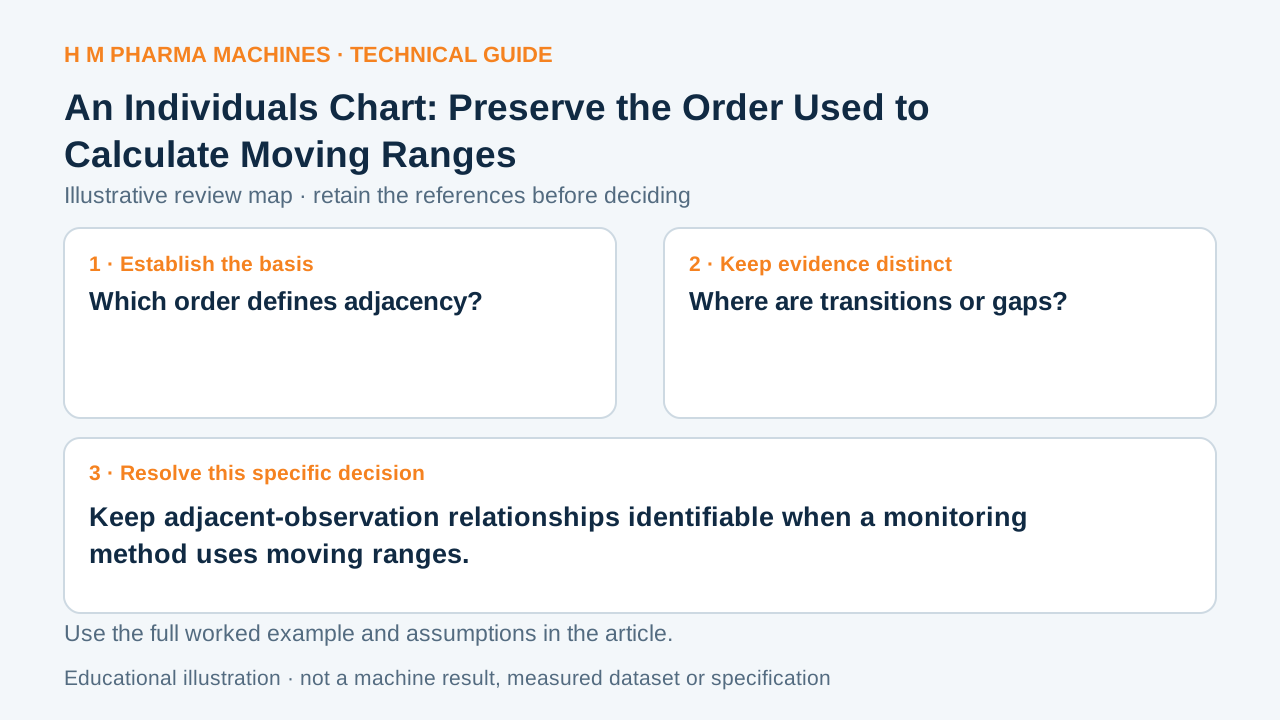
An individuals-chart dataset needs its collection sequence, because moving ranges depend on neighbouring readings.
Adjacent differences have a defined meaning
A common individuals-chart method uses the absolute difference between successive observations as a moving range. Sorting the readings changes those differences and therefore the variation estimate. The data order is part of the method, not a cosmetic spreadsheet choice. Method suitability still requires review of the process and measurement assumptions.
A hypothetical reordered table
For illustrative readings 10, 12 and 11 in collection order, the two moving ranges are 2 and 1. Sort the same values as 10, 11 and 12 and both ranges become 1. Every measurement remains in the table, but the statistic changes because the neighbour relationship changed.
This arithmetic example sets no HM chart limit. It explains why a reviewer needs both values and their original order. Time gaps, changed products and intentional transitions should remain identified rather than silently treated as ordinary adjacent observations.
Retain an interpretable export
Keep a permanent sequence number, timestamp, item identity and raw value. If reports are sorted for presentation, preserve the analysis order separately. Identify how gaps and condition changes enter or interrupt the moving-range calculation.
Send the selected method and baseline reference with any monitoring chart. Reconstructing a sequence from file modification times or sorted result values is not a reliable substitute for the actual collection record. Choose monitoring groups with the analyst before using the resulting limits to raise an equipment enquiry.
Trial discussion worksheet
This blank worksheet is for your own project. It contains no H M machine trial result.
| Review question | Reference or observation to retain |
|---|---|
| Which order defines adjacency? | Original sequence |
| Where are transitions or gaps? | Recorded events |
| What method generated limits? | Named calculation and baseline |
Customer Questions
Does sorting leave moving ranges unchanged?
No. It can change the adjacent differences.
Is a moving range an item-to-item tolerance?
No. It is a statistical quantity with a monitoring role.
Must gaps remain visible?
Yes. Their treatment should be identified in the method.
Primary References
These references support the technical principles discussed in this guide. The worked examples and review questions are educational.
Discuss Your Machine Requirement
Share your product, container, required output and the evidence needed for your technical review.
Request a Technical Review