
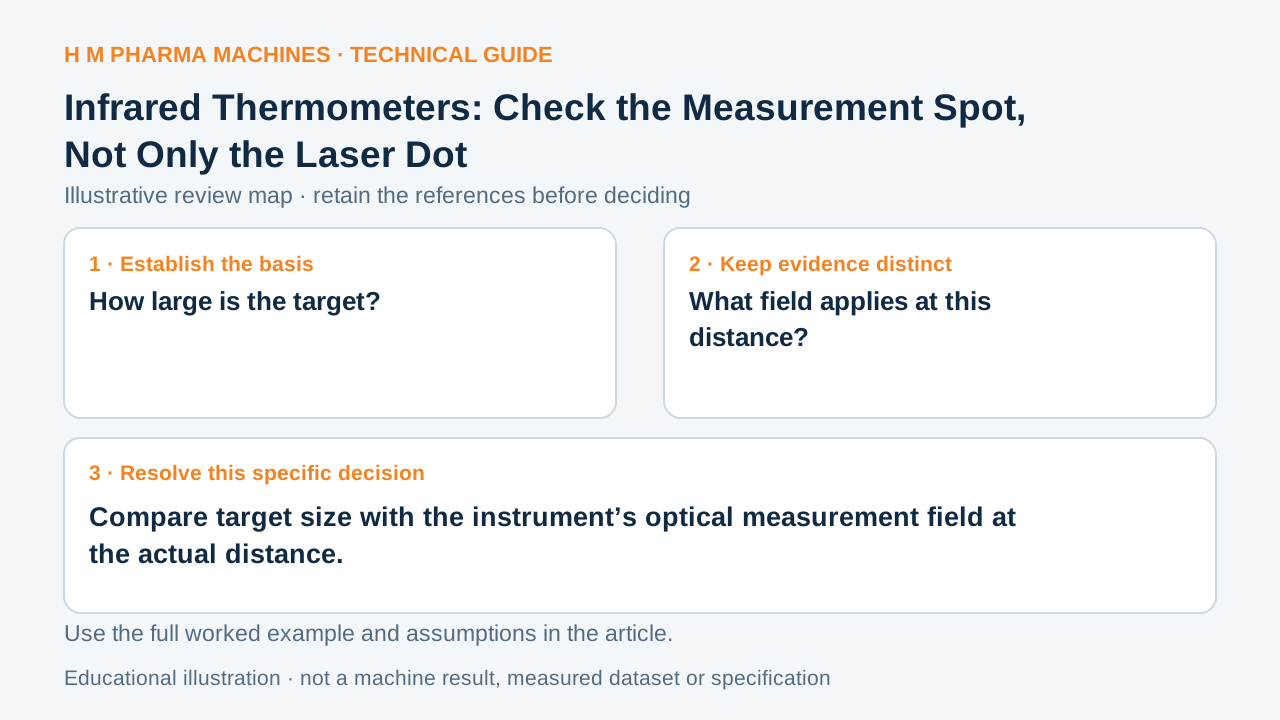
The aiming laser helps point an infrared thermometer. Its dot is not proof that the entire temperature measurement comes from that tiny area.
Read the optical field specification
Fluke distinguishes laser aiming from the infrared measurement spot. Distance-to-spot information describes an optical field, with details set by the model’s manual. A small aiming dot does not exclude cooler or warmer surrounding surfaces from that field.
Make an invented target comparison
Under an illustrative 12:1 distance-to-spot model, a distance of 240 mm corresponds nominally to a 20 mm spot. A 10 mm target would be smaller than that spot. This simple ratio is an example, not a replacement for a particular instrument’s optical chart or specified energy criterion.
Draw the target and surrounding area beside the intended viewing distance. If a different position is proposed, compare it against the actual manual and practical access conditions. Preserve target identity and measurement distance in each trial record so readings from different fields are not treated as identical observations.
Ask for an applicable viewing arrangement
Obtain the actual model’s optical information and identify the area meant to be measured. Check whether the target adequately fills the relevant field under the intended conditions. Review emissivity separately: an appropriate spot size does not, on its own, establish a correct surface-temperature result.
Primary reference: Manufacturer technical reference.
Instrument evidence worksheet
This blank worksheet is for your own project. It contains no H M machine trial result.
| Review question | Evidence to retain |
|---|---|
| How large is the target? | Intended measured surface dimensions |
| What field applies at this distance? | Model optical chart and criterion |
| What surrounds that field? | Surface/background sketch |
Customer Questions
Does the laser dot define the full spot?
No.
Can a generic distance ratio replace every optical chart?
No. Use the actual model documentation.
Does a suitable target size settle emissivity?
No. That is a separate measurement influence.
Primary References
These references support the technical principles discussed in this guide. The worked examples and review questions are educational.
Discuss Your Machine Requirement
Share your product, container, required output and the evidence needed for your technical review.
Request a Technical Review