
Equal cutting time can hide different contact histories.
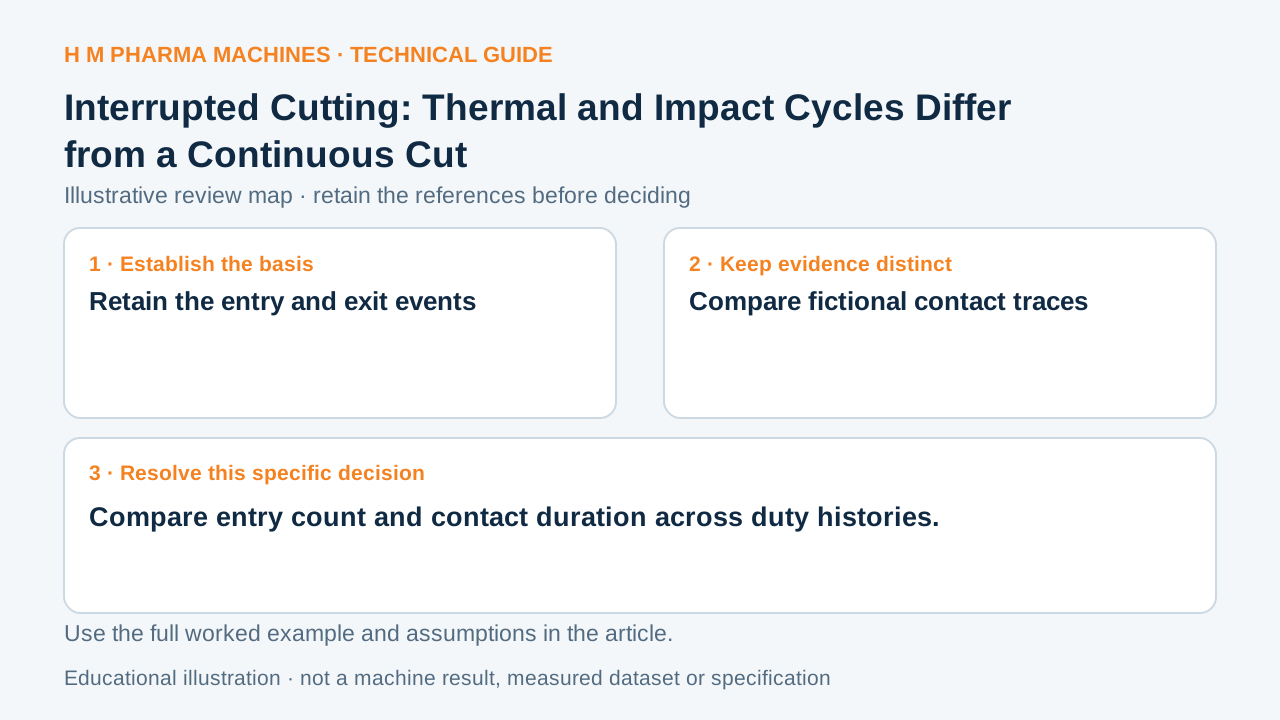
Retain the entry and exit events
Sandvik describes heating and cooling at repeated ceramic-insert entry and exit. Its specific example does not establish identical thermal response for every tool. Primary reference: Sandvik technical guide.
Compare fictional contact traces
Imagine trace A has ten seconds of continuous contact. Trace B has twenty episodes, each containing 0.5 seconds in contact followed by 0.5 seconds out. Both contain ten cutting seconds, but B has twenty entries and nineteen intervening off-contact intervals before its final exit.
Trace B therefore carries an event history that total contact time omits. Its off-contact temperature changes are not known from these durations alone. Material, coolant, geometry and thermal response require evidence; a rectangular contact trace is not a measured temperature waveform or a crack-life prediction.
Keep mechanisms from becoming labels
Record contact intervals, entry geometry, observed temperatures and edge condition separately. Mark where a mechanical impact hypothesis and a thermal-cycling hypothesis need different observations. Similar damage appearance cannot alone identify one of them.
A real interrupted cut must be reviewed under its actual tooling and machine conditions. Do not transfer a ceramic-specific coolant statement into a general rule from this article. The worksheet identifies the hidden event count and missing thermal evidence, allowing a process reviewer to compare continuous and interrupted engagement without reducing both to one elapsed-time number.
Customer Questions
Equal cutting seconds, equal entries?
The traces differ.
Is off-contact temperature known here?
The contact clock supplies no temperature measurement.
Is the ceramic example a universal coolant rule?
Its stated tool context must remain attached.
Primary References
These references support the technical principles discussed in this guide. The worked examples and review questions are educational.
Discuss Your Machine Requirement
Share your product, container, required output and the evidence needed for your technical review.
Request a Technical Review