
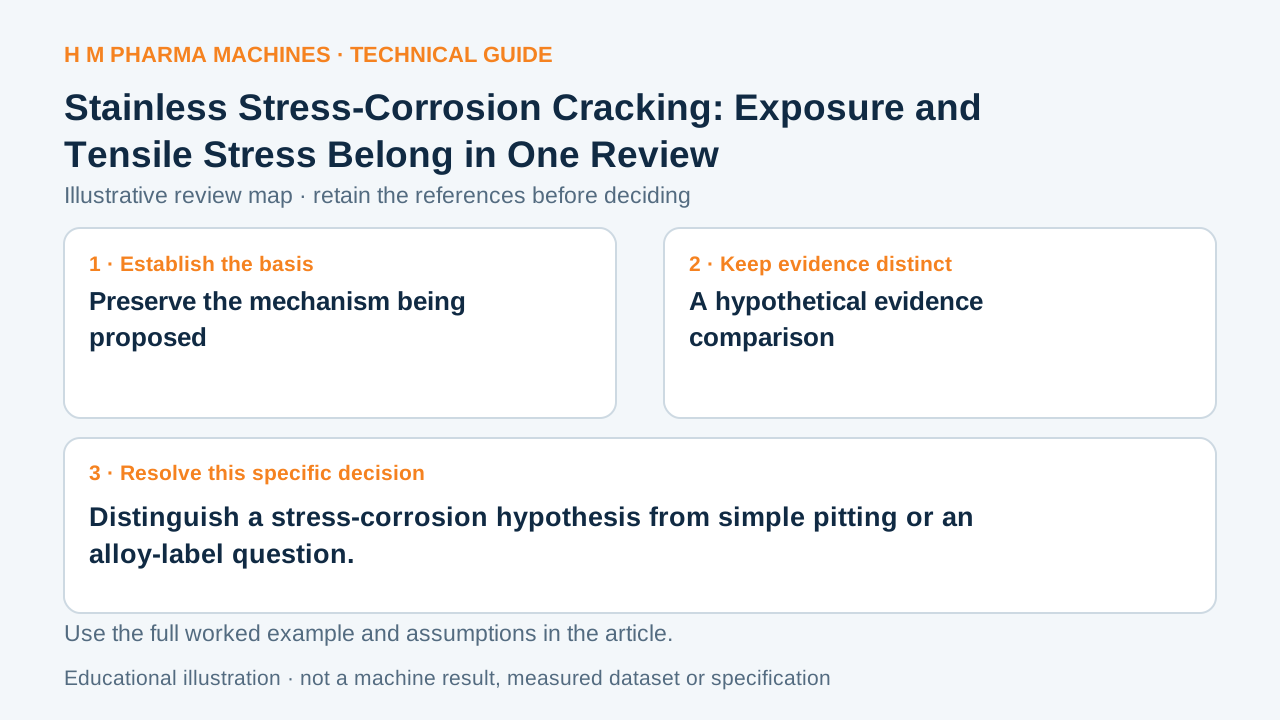
An alloy name alone cannot settle a cracking mechanism. Tensile stress and exposure belong in the same question.
Preserve the mechanism being proposed
Outokumpu defines stress-corrosion cracking through the combined action of corrosion and tensile stress. This differs from interpreting all visible damage as ordinary surface corrosion. Primary reference: Outokumpu corrosion forms.
A useful investigation identifies the stressed location, material condition and chemical exposure together. Retain relevant manufacturing and operating history. A crack photograph may identify an observation without establishing this particular mechanism; the evidence should support the proposed explanation rather than merely repeat its name.
A hypothetical evidence comparison
Imagine two fictional stainless brackets made from an identified grade. One record describes a loaded bend and repeated wet exposure, while the other describes an unloaded flat sample immersed in the same nominal liquid. The immersion observation does not reproduce the first bracket's combined stress-and-exposure question.
Build rows for applied load, possible residual-stress origin, temperature history, concentration history and examined location. Leave unknown information marked unknown. This example reports no HM cracking, selects no substitute alloy and establishes no permitted concentration or temperature.
Make the replacement question complete
Ask whether a proposed material or geometry change addresses the identified mechanism under the actual combined conditions. A corrosion-table comparison can be relevant but should not conceal a changed stress condition or fabrication route.
Keep specialist findings, drawings and the accepted action with the failure record. Distinguish the confirmed mechanism from an initial hypothesis. The resulting purchasing question concerns an actual stressed component in its environment, with the supporting evidence visible, rather than treating a general stainless designation as immunity to every type of cracking.
Customer Questions
Does any stainless crack prove stress-corrosion cracking?
No. The mechanism requires suitable stress, exposure and examination evidence.
Can an unstressed immersion sample settle the complete question?
No. It omits the stressed-component condition.
Does the article supply a universal chloride limit?
No. The actual material and combined exposure require assessment.
Primary References
These references support the technical principles discussed in this guide. The worked examples and review questions are educational.
Discuss Your Machine Requirement
Share your product, container, required output and the evidence needed for your technical review.
Request a Technical Review