
In This Guide
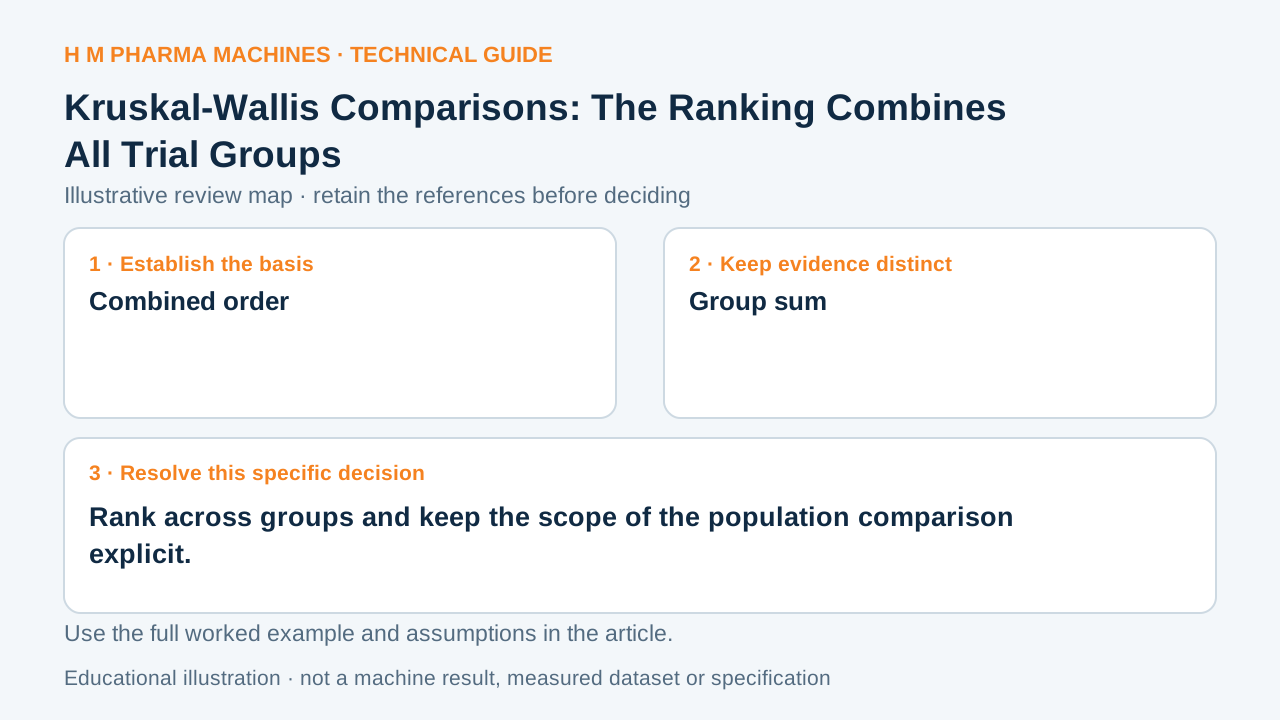
A rank-based comparison orders observations from all groups together. Independently ranking each group destroys the cross-group evidence needed by the test.
The statistical question
The Kruskal-Wallis procedure compares groups using ranks assigned in their combined ordered observations. Group rank sums contribute to its statistic. It does not use raw numerical spacing in the same way as a comparison of means. Interpretation concerns the relevant population differences; a simple median-shift description requires comparable distribution shapes rather than arbitrary differences in spread or shape.
An illustrative review example
Take invented readings A={2,5}, B={3,7} and C={4,8}. Combining all six gives A ranks 1 and 4, B ranks 2 and 5, and C ranks 3 and 6. Their rank sums are five, seven and nine. Ranking within each two-item group instead would give every group ranks one and two, erasing their relative positions. The tiny example explains ranking only and is not a valid significance demonstration.
Prepare the evidence for discussion
Retain group identity, raw readings, units, tie handling and the combined rank record. Tell the analyst whether observations are independent or linked by items, time or repeated runs. Ask which interpretation is justified when one group has a different distribution shape. For a filling-trial report, keep the original physical scale alongside ranks so engineering relevance remains assessable after the statistical comparison.
Rank all groups on one combined scale
This blank worksheet is for your own project. It contains no H M machine trial result.
| Question to resolve | Evidence to retain |
|---|---|
| Combined order | All groups ranked together |
| Group sum | Ranks returned to their group |
| Ties | Declared ranking adjustment |
| Interpretation | Independence and shape assumptions |
Customer Questions
Are ranks assigned separately in each group?
No. This procedure ranks the combined observations before obtaining group rank sums.
Does a rank test automatically compare only medians?
A median-shift interpretation needs suitable distribution-shape assumptions; broader differences can affect ranks.
Are original units still useful?
Yes. Retain physical readings so the size and engineering relevance of differences remain visible.
Primary References
These references support the technical principles discussed in this guide. The worked examples and review questions are educational.
Discuss Your Machine Requirement
Share your product, container, required output and the evidence needed for your technical review.
Request a Technical Review