
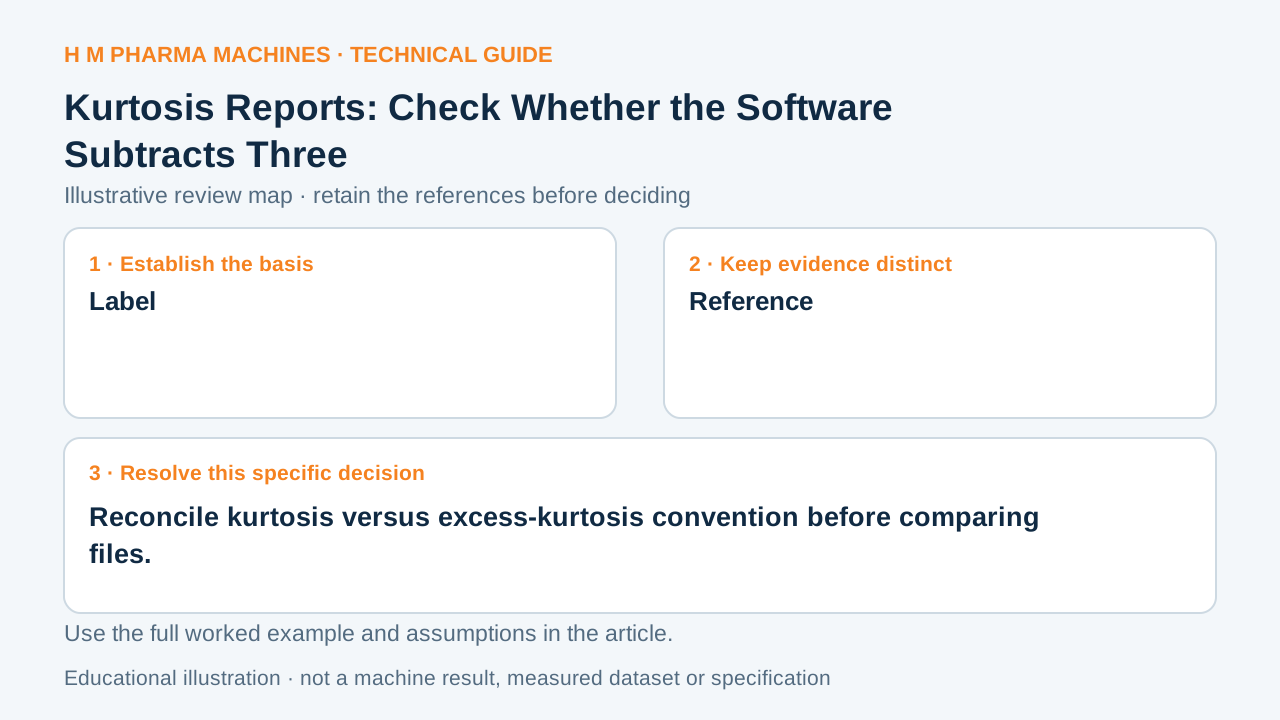
A three-unit difference between kurtosis outputs can be a definition change. Check the convention and finite-sample adjustment before attributing it to process behavior.
The statistical question
Kurtosis and excess kurtosis differ by subtracting three from the conventional kurtosis measure. Their normal-distribution reference values are therefore three and zero respectively. Sample implementations can also apply finite-sample adjustments. A comparison needs both the definition and estimator convention. Kurtosis concerns tail behavior and does not by itself establish a process failure or explain its cause.
An illustrative review example
Imagine the same fictional file is analyzed twice. One output labels kurtosis as 4.2, and another labels excess kurtosis as 1.2. Subtracting three reconciles those values without changing any observed readings. If a third program gives a slightly different result, check its sample correction rather than assuming a changed data set. These are invented reporting numbers, not claimed measurements from a production process.
Prepare the evidence for discussion
Preserve software version, estimator definition, adjustment convention, sample size and data filter alongside the output. Review the actual tail readings and collection conditions before drawing an engineering conclusion. When comparing repeated supplier reports, include a common glossary rather than copying unexplained chart labels. A reliable discussion separates a definition mismatch, a computation difference and an actual change in the observations.
A definition can shift the output by three
This blank worksheet is for your own project. It contains no H M machine trial result.
| Question to resolve | Evidence to retain |
|---|---|
| Label | Kurtosis or excess kurtosis |
| Reference | Three or zero convention |
| Estimator | Sample adjustment definition |
| Data identity | Same observations and filters |
Customer Questions
What is the difference between the two definitions?
Excess kurtosis subtracts three from the conventional kurtosis value.
What are their normal-distribution reference values?
Conventional kurtosis has reference three; excess kurtosis has reference zero.
Can software outputs differ for another reason?
Sample estimator adjustments can differ, so preserve the complete convention used.
Primary References
These references support the technical principles discussed in this guide. The worked examples and review questions are educational.
Discuss Your Machine Requirement
Share your product, container, required output and the evidence needed for your technical review.
Request a Technical Review