
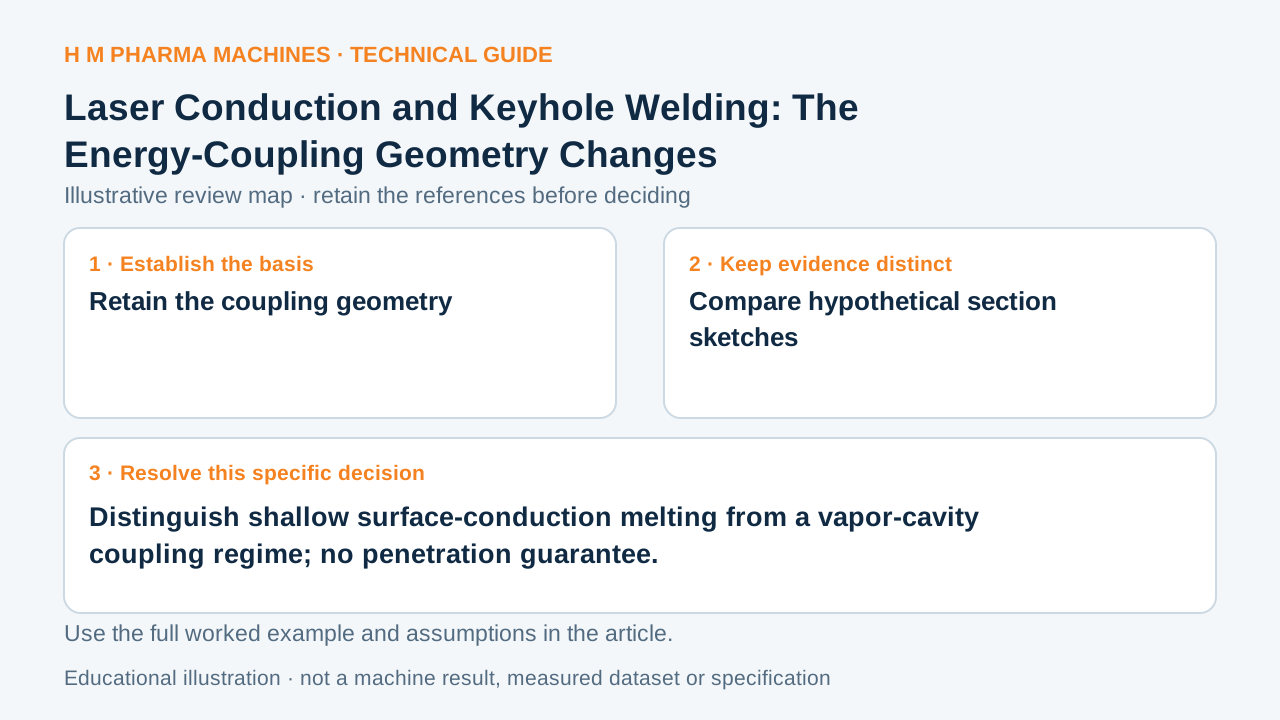
A focused beam can interact with the material through different coupling regimes.
Retain the coupling geometry
TWI describes conduction-limited and keyhole laser welding as distinct modes. The latter involves a vapor cavity; surface-conduction melting has a different energy-coupling geometry. Primary reference: TWI technical explanation.
A laser-power label does not identify the regime by itself. Beam distribution, material response and the joint context belong to the description before a reviewer interprets a proposed penetration shape.
Compare hypothetical section sketches
Consider fictional section A with a broad shallow melt region and no documented vapor cavity. Section B is accompanied by evidence of a cavity-coupled process and a narrower deep region. The drawings are teaching descriptions rather than measured specimens.
Record mode evidence separately from the resulting section geometry. A deep-looking sketch alone does not demonstrate how energy entered the material; a claimed keyhole label alone does not establish complete penetration of the intended joint.
Request the relevant process evidence
Prepare fields for beam conditions, actual material/joint identity, observed coupling regime and section evidence. Keep any reported defect observations alongside the section rather than omitting them from a favorable penetration image.
Ask which trial supports the proposed geometry under the application conditions. The useful conclusion is a traceable regime and penetration claim, with its evidence limits explicit. This guide provides no power-density boundary, laser setting or HM fabrication capability; it distinguishes the physical meanings behind two process descriptions.
Customer Questions
Does laser power alone identify the regime?
The actual coupling conditions and evidence matter.
What distinguishes the keyhole description?
It includes a vapor-cavity coupling regime.
Does its name prove complete joint penetration?
That requires the actual joint-section evidence.
Primary References
These references support the technical principles discussed in this guide. The worked examples and review questions are educational.
Discuss Your Machine Requirement
Share your product, container, required output and the evidence needed for your technical review.
Request a Technical Review