
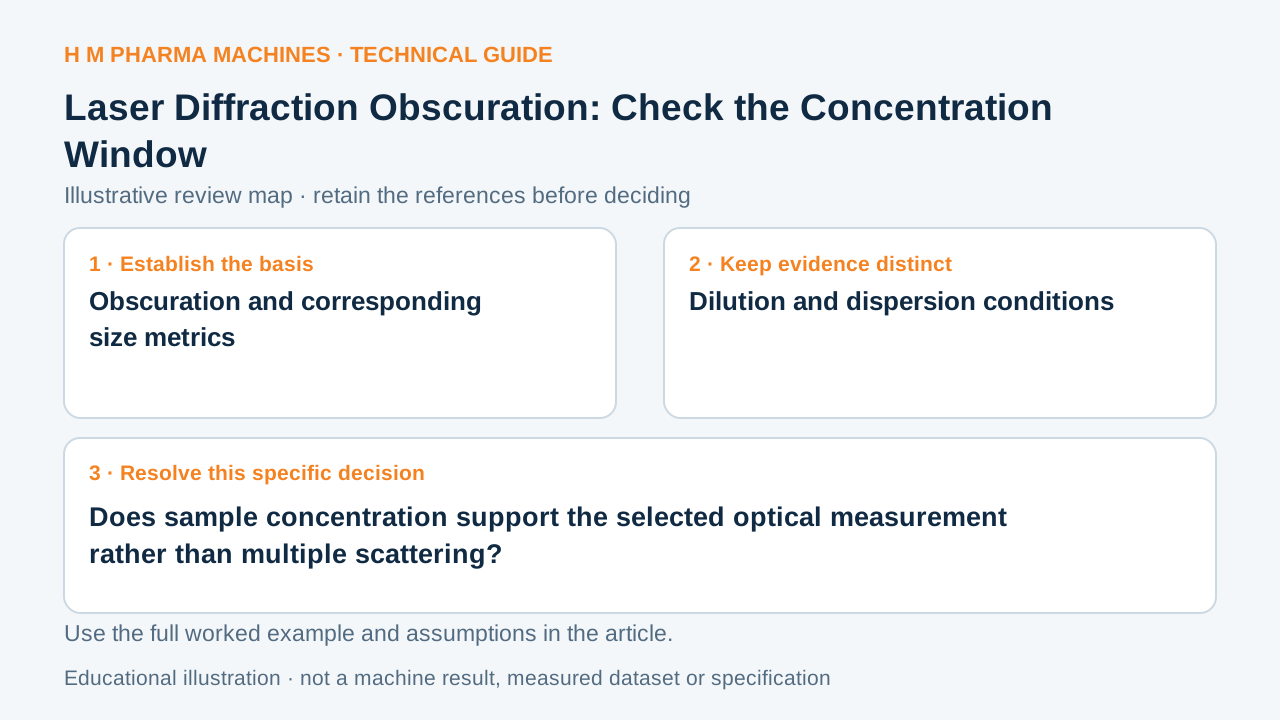
Compare particle-size results across a stated concentration study before accepting one obscuration reading as a suitable measurement condition.
Identify the Material Response
Malvern explains that insufficient concentration can weaken the scattering signal, while excessive concentration can introduce multiple scattering. Obscuration tracks loss of the transmitted laser signal; it is not a universal powder mass concentration. Primary reference: concentration and obscuration.
Review a Hypothetical Comparison
Imagine an invented wet-method study reporting obscuration values of 4, 8 and 12 percent with corresponding median sizes 15, 15 and 12 micrometres. The final size changes when the concentration changes. That observation opens a method question; it does not by itself prove that the actual material became finer or that multiple scattering was the only cause.
Keep the Evidence with the Decision
Prepare a plot or table of concentration indicator against the same reported size metrics. Keep dispersion preparation, liquid identity, circulation history and measurement timing beside each point. Identify whether dilution also changed another relevant condition. A stable interval is evidence to interpret with the method, rather than a licence to copy an instrument range from a different sample.
Request the material-specific concentration basis and retain the full titration record with the adopted method. The hypothetical values establish no acceptable obscuration band, actual particle distribution or HM filling performance. For a powder-filling discussion, identify which verified material report describes the powder being supplied.
Does sample concentration support the selected optical measurement rather than multiple scattering?
This blank worksheet is for your own project. It contains no H M machine trial result.
| Review field | Reference or result | Responsible person |
|---|---|---|
| Obscuration and corresponding size metrics | To complete | To complete |
| Dilution and dispersion conditions | To complete | To complete |
| Repeat measurement identity | To complete | To complete |
| Selected concentration basis | To complete | To complete |
Customer Questions
Is obscuration a powder mass percentage?
No. It describes an optical signal change.
Does a shifted median establish actual particle breakage?
No. Review measurement conditions and competing explanations.
Can the invented 4–12 percent range be copied into a method?
No. The actual sample and instrument require their own concentration evidence.
Primary References
These references support the technical principles discussed in this guide. The worked examples and review questions are educational.
Discuss Your Machine Requirement
Share your product, container, required output and the evidence needed for your technical review.
Request a Technical Review