
An image can look crisp while placing features at the wrong geometric positions. Sharpness and geometric mapping need different evidence.
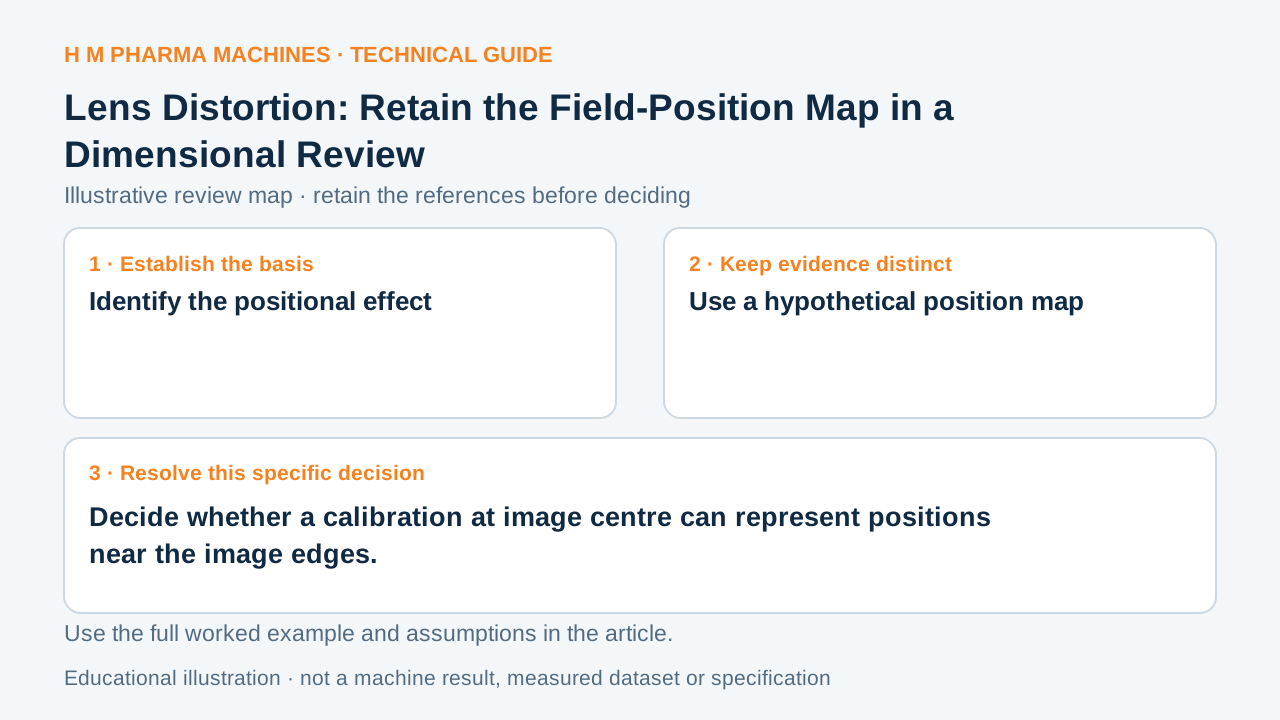
Identify the positional effect
Lens distortion changes the geometric mapping across the field. A single central scale or one distortion percentage can leave behaviour elsewhere unresolved. Calibration needs the relevant field and optical conditions. Primary reference: Edmund Optics: distortion in imaging systems.
For a dimensional comparison, ask where the feature lies in the image and which mapping converts that location to an object reference. A centre demonstration should not quietly become a claim about corners that the task also uses. Keep geometric displacement separate from blurred detail.
Use a hypothetical position map
Suppose an invented reference grid has a predicted image-centre-to-point distance of 100 pixels but an observed distance of 102 pixels at one field position. The illustrative relative displacement is (102−100)/100 × 100 = 2%. Another point may show a different value; the example does not establish a correction for the entire image.
It also identifies no real lens performance. A reviewer needs an appropriate reference and the defined geometry. Do not copy a two-percent result into every direction, replace a spatial map with that scalar or assume a calibration from another wavelength and working distance remains applicable.
Keep the mapping with the task
Request the calibration coverage and its retained conditions: lens/camera identity, active region, working arrangement and illumination. Identify which image positions the inspection uses and whether they fall inside the evaluated area. Record any correction applied to the supplied images.
After a configuration change, ask whether the previous geometric mapping remains valid. A cosmetically straightened presentation picture is not the calibration evidence itself. The buyer's decision is whether the reported dimensions share a supported coordinate mapping across the actual field.
Customer Questions
Can distortion occur in a sharp image?
Yes. It concerns geometric placement rather than only blur.
Does one distortion value describe every image position?
Not necessarily. Retain the spatial behaviour and its conditions.
What should remain with corrected images?
The mapping method, reference and configuration to which it applies.
Primary References
These references support the technical principles discussed in this guide. The worked examples and review questions are educational.
Discuss Your Machine Requirement
Share your product, container, required output and the evidence needed for your technical review.
Request a Technical Review