
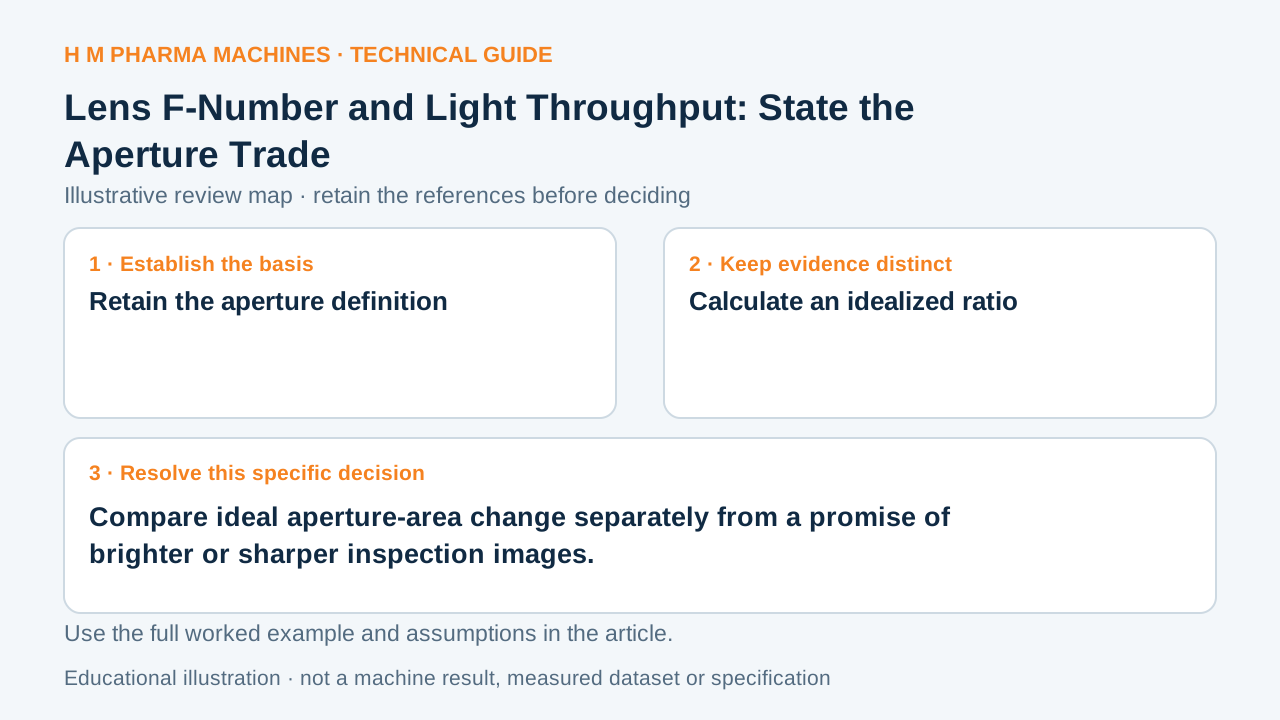
Opening an iris can brighten an image, but that change should not be recorded as an unspecified improvement to every part of the inspection.
Retain the aperture definition
The f-number relates focal length to effective aperture diameter. A larger f-number means a smaller relative aperture. For a simple throughput comparison at otherwise equal conditions, admitted light scales approximately with the inverse square of f-number. Primary reference: Edmund Optics: f-number and system throughput.
Keep the aperture adjustment separate from changes to exposure, gain and illumination. If these are all changed at once, a brighter screenshot cannot identify which variable produced the difference. An inspection comparison needs the settings and the tested physical arrangement, not a single image-brightness adjective.
Calculate an idealized ratio
In a hypothetical comparison, changing from f/4 to f/8 gives an ideal light ratio of (4/8)² = 0.25. Maintaining the same exposure while stopping down has reduced this idealized admitted light to one quarter. It has not created an exact quarter-brightness guarantee for every real camera output.
The illustration assumes unchanged scene, optical transmission and relevant geometry. Image processing and clipping can prevent digital values from following the same ratio. An effective aperture or actual lens transmission may need a more specific calculation. These are no recommended settings for an HM inspection task.
Review the coupled trade
Record what prompted the aperture change and compare the task's evidence before changing another control to compensate. If exposure is lengthened to recover brightness on a moving object, the motion question must be considered separately. If gain is increased, retain that adjustment explicitly.
A buyer's review should state which outcome improved and which constraint was rechecked. Keep the lens identity, aperture setting and acquisition conditions with the images so an iris adjustment does not disappear inside a general statement that the camera was optimized.
Customer Questions
Does f/8 admit more ideal light than f/4?
No. The idealized relative-area comparison gives one quarter as much.
Is digital brightness guaranteed to follow that ratio?
No. The camera and processing conditions must also be considered.
What should accompany aperture trial images?
The lens and acquisition settings and the stated task being compared.
Primary References
These references support the technical principles discussed in this guide. The worked examples and review questions are educational.
Discuss Your Machine Requirement
Share your product, container, required output and the evidence needed for your technical review.
Request a Technical Review