
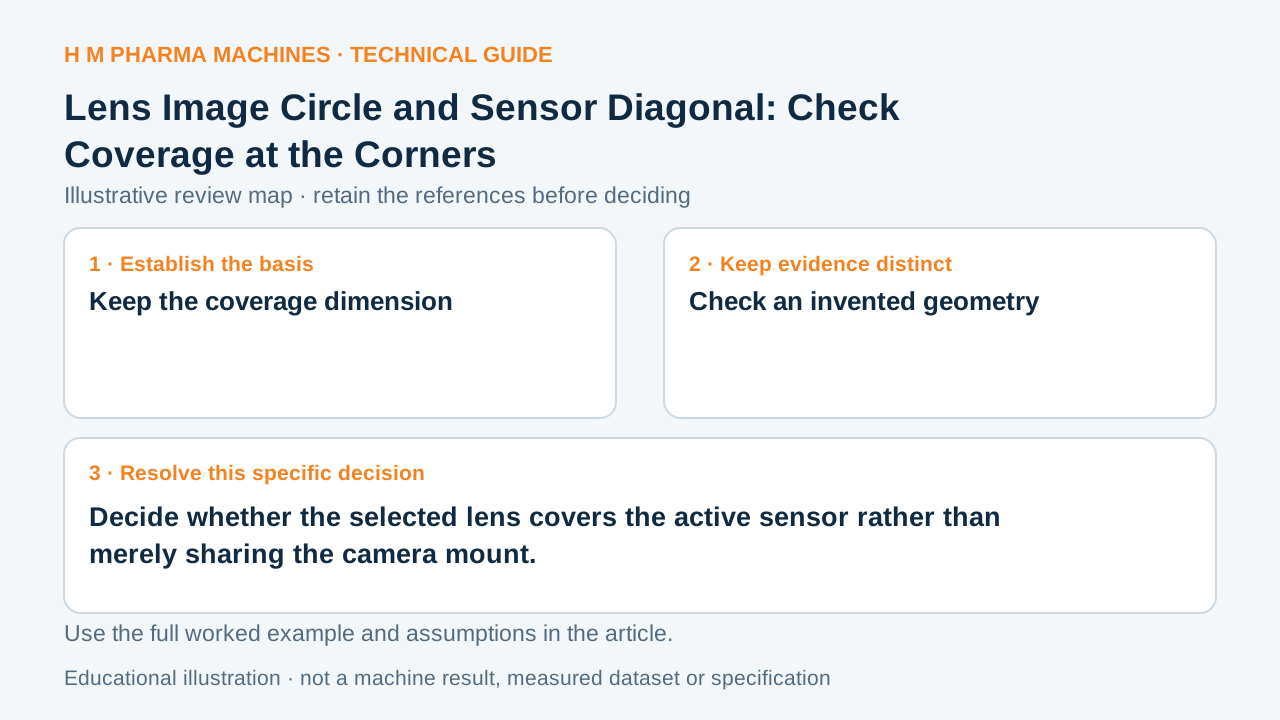
A lens that screws onto a camera is not automatically a lens that covers its whole sensor. Mechanical attachment and optical coverage need separate checks.
Keep the coverage dimension
A sensor that extends beyond the supported lens field can show degraded or darkened edges. The rectangular sensor's corners must be considered when comparing its active area with lens coverage. Primary reference: Edmund Optics: sensor coverage and vignetting.
Start with the actual sensor width and height in millimetres, not only a historical format label. A matching mount describes an attachment interface. It does not provide the active-area dimensions or the lens performance at the corner of that area.
Check an invented geometry
Consider a fictional 8 mm by 6 mm active sensor. Its diagonal is √(8² + 6²) = 10 mm. An offered 8 mm image circle cannot contain all four corners of that rectangle when centred on it. Its numerical match to the sensor width does not solve the diagonal comparison.
This geometric check does not specify any real lens or predict an exact corner brightness. A manufacturer's declared usable field may include a performance criterion beyond simple illumination. Keep that criterion with the coverage figure rather than calling every illuminated pixel equally useful.
Review the full image
Request evidence from the actual sensor region, including corners used by the task. Mark whether the image was cropped, corrected or resized before it was supplied. A centre-only sample can conceal the coverage question that motivated the review.
Keep the lens identity, camera identity and active ROI with the evidence. If a replacement camera has a larger active diagonal, reopen this check even when it retains the same mount. Do not assume that closing an iris or increasing electronic gain expands the lens's supported image field.
Customer Questions
Is a matching mount proof of full coverage?
No. Compare the optical field with the active sensor dimensions.
Which dimension catches the rectangle's corners?
The active sensor diagonal is relevant to a centred circular coverage check.
Are illuminated corners automatically adequate?
No. Review the lens performance and the task at those positions.
Primary References
These references support the technical principles discussed in this guide. The worked examples and review questions are educational.
Discuss Your Machine Requirement
Share your product, container, required output and the evidence needed for your technical review.
Request a Technical Review