
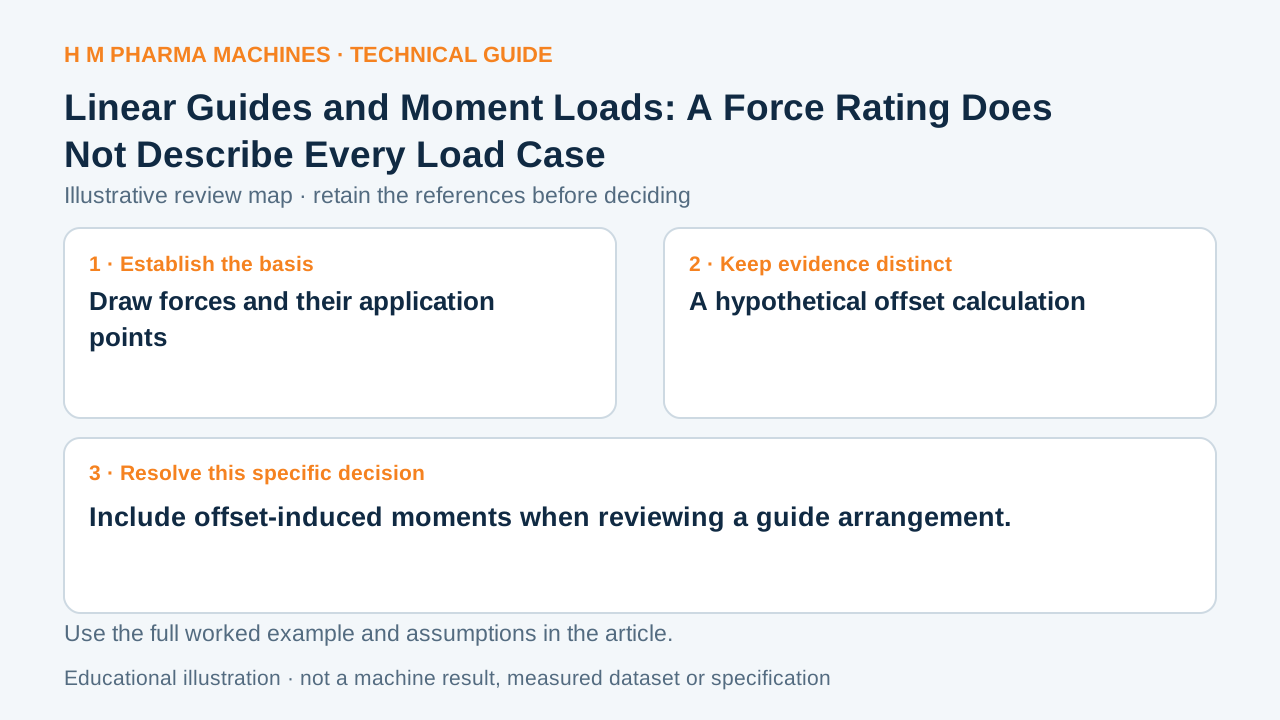
The same force can produce different guide demands when its application point moves. Keep the lever arm in the load description.
Draw forces and their application points
THK's guide selection material includes moments and their treatment in applied-load assessment. A force rating alone does not describe every offset-loaded arrangement. Primary reference: THK applied guide loads.
Show where each force acts relative to the guide blocks and rails. Retain the arrangement and the relevant axes. A tool, attachment or payload mounted away from the support can create a moment even when its force magnitude has not changed.
A hypothetical offset calculation
Imagine a fictional 100 N force applied at a perpendicular offset of 0.20 m from a reference. Its simple moment is 100 × 0.20 = 20 N·m. Move the application point to 0.05 m and the moment becomes 5 N·m while the force stays 100 N. That illustrates why a unchanged-force comparison can hide a changed load case.
The worksheet should keep force, lever arm, axis and model moment separate from the actual guide-rating assessment. These invented values do not size a block or establish HM load capacity; the complete arrangement needs its applicable model.
Ask for an arrangement-specific assessment
Request how the identified blocks and rail spacing support the combined forces and moments. Do not copy a single block's headline rating as capacity for every carriage layout. Keep operating direction and relevant dynamic conditions in the load case.
If the payload location changes, update the sketch before deciding that the old selection still applies. A transparent moment calculation can identify the missing question without pretending to complete guide selection. The accepted record should connect the final geometry, components and load model so future accessory changes remain reviewable.
Customer Questions
Can equal force produce different guide demands?
Yes. Different offsets can create different moments.
Does the example moment choose a guide block?
No. It illustrates a load component; selection needs the full arrangement model.
What should accompany the load value?
Its direction, application point, lever arms and actual support geometry.
Primary References
These references support the technical principles discussed in this guide. The worked examples and review questions are educational.
Discuss Your Machine Requirement
Share your product, container, required output and the evidence needed for your technical review.
Request a Technical Review