
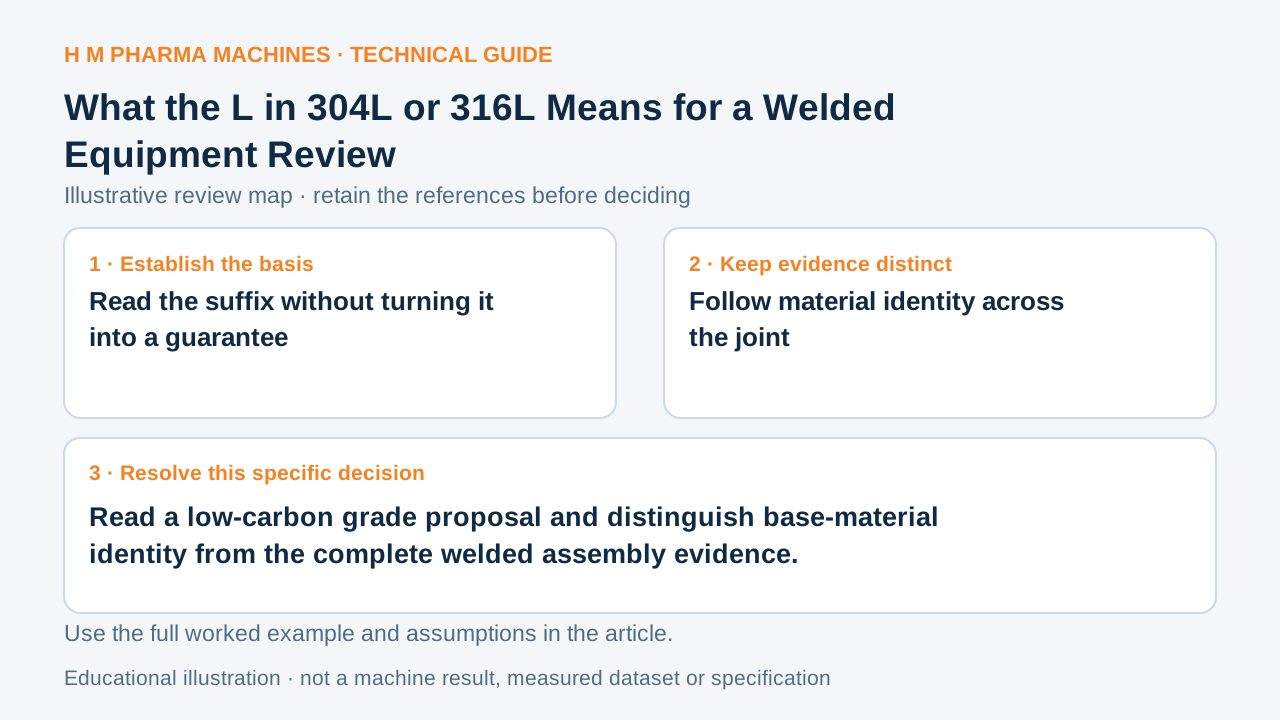
Read a low-carbon grade proposal and distinguish base-material identity from the complete welded assembly evidence.
Read the suffix without turning it into a guarantee
The L in familiar stainless designations such as 304L and 316L identifies a lower-carbon grade. Outokumpu's Core range information relates reduced carbon to limiting carbide precipitation during welding. The designation answers a material-composition question. It does not, by itself, certify a finished weld, establish a cleaning procedure or demonstrate suitability for every product. Buyers should therefore treat the suffix as a useful selection property while keeping fabrication and exposure evidence visible in the same review.
Outokumpu Core range brochure supports the technical principle above.
Follow material identity across the joint
Draw a simple joint map showing the shell, nozzle, flange or bracket being joined. Beside each item, list its specified material designation and the document that identifies it. Then add separate entries for the filler material and the fabrication procedure referenced by the supplier. Avoid assuming that a shell certificate automatically identifies every attached piece. The practical question is whether the proposed assembly has a traceable and coherent material definition, rather than whether one page happens to contain the letter L.
Record where a specification says an exact grade and where it merely says stainless steel. Ask a precise follow-up for any missing joint member. If dual certification or an alternative grade is proposed, request the actual designation and the basis for acceptance instead of treating similar-looking names as interchangeable.
Hypothetical document reconciliation
Consider a teaching example in which a quotation calls the tank 316L, a shell certificate identifies 316L, and a drawing labels one nozzle only as SS. A welding document is listed but has not been provided. Make four rows: shell identity supported; nozzle identity unresolved; filler reference pending; procedure reference pending. This avoids two opposite errors: rejecting the whole proposal merely because a page is missing, or treating the shell certificate as proof of the whole fabrication. The worksheet output is a short request for the missing nozzle designation and the referenced fabrication documents. It contains no invented test result or HM certificate.
Keep corrosion and fabrication acceptance distinct
The buyer's final record should explain which document resolves each question. Material chemistry, joint design, fabrication quality, surface treatment and actual operating exposure are related but different review items. An attractive photograph cannot establish any of them conclusively. Use the reconciled joint map when discussing a new vessel or storage-tank requirement, and retain it when scope changes. This article helps interpret a common grade suffix; it does not prescribe a welding procedure or claim that any current HM product uses a particular grade.
Customer Questions
Does 316L mean the entire machine is 316L?
No. A designation must be tied to identified components; ancillary parts need their own specified material information.
Does a low-carbon grade prove weld quality?
No. Grade identity and fabrication evidence answer separate questions.
What is a useful follow-up when a drawing says only SS?
Ask for the exact material designation for the named component and the document that supports it.
Related Equipment References
Review the actual offered equipment and application separately from this educational example.
Primary References
These references support the technical principles discussed in this guide. The worked examples and review questions are educational.
Discuss Your Machine Requirement
Share your product, container, required output and the evidence needed for your technical review.
Request a Technical Review