ESTABLISHED 2012 ยท AHMEDABAD, INDIA☎ +91 97379 73334✉ info@hmpharmamachines.com
Hygienic Pharmaceutical Process Equipment

Manufacturing Vessel

For compatible pharmaceutical syrups, solutions, suspensions, cosmetics and allied formulations, with ingredient charging through approved sanitary connections.

Suitable for
Compatible pharmaceutical syrups, solutions, suspensions, cosmetics and allied formulations
Method
Main batch formulation and homogenization
Batch capacity
Working volume, batch size and vessel duty are set in the approved datasheet.
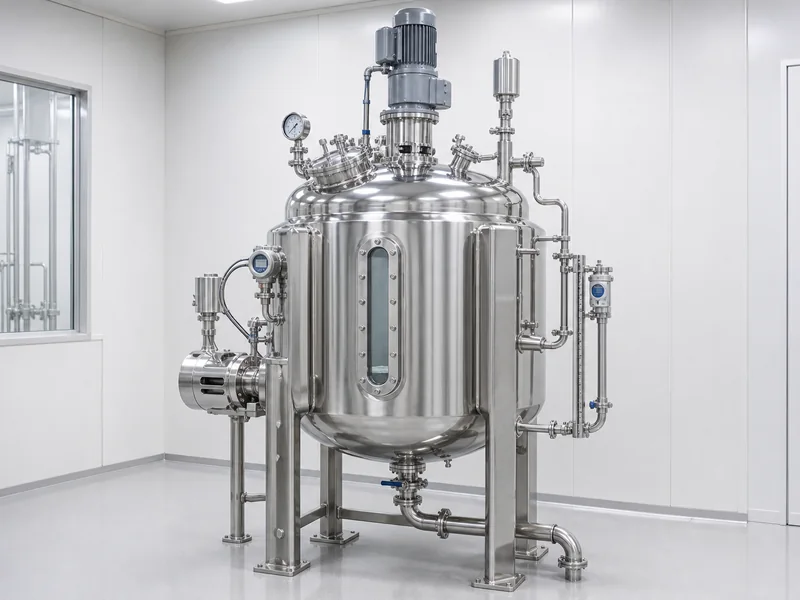
AI-generated conceptual visualization of Manufacturing Vessel; final machine configuration may vary
AI-generated conceptual visualization of this machine. Final configuration may vary by approved project scope.
GMP-Oriented EngineeringApplication-Matched DesignInstallation SupportAfter-Sales Service

Machine overview

Pharmaceutical Process Equipment Manufacturer in India

H M Pharma Machines manufactures the Manufacturing Vessel in Ahmedabad, Gujarat, India for pharmaceutical, nutraceutical, cosmetic, food, chemical and allied production applications.

The Manufacturing Vessel uses ingredient charging through approved sanitary connections for batch charging and transfer. Its approved process completes when finished product transfers through a closed hygienic path.

Detailed engineering for the Manufacturing Vessel aligns agitator, homogenizer, temperature, vacuum, load and recipe controls where specified with the approved application, target output, utility schedule and final line layout before the GA drawing is released.

Why this machine

Why Choose the Manufacturing Vessel

01

Main batch formulation and homogenization

The Manufacturing Vessel is intended for compatible pharmaceutical syrups, solutions, suspensions, cosmetics and allied formulations; performance is assessed against the output and acceptance criteria stated for the approved configuration.

02

Controlled Product Handling

Ingredient charging through approved sanitary connections.

03

Application-Matched Controls

Agitator, homogenizer, temperature, vacuum, load and recipe controls where specified.

04

GMP-Oriented Engineering

For the Manufacturing Vessel, the materials and cleanability review follows this product-contact requirement: Product-contact metallurgy, finish, weld treatment, pressure rating and cleanability are engineered from product compatibility and URS.

05

Production-Line Integration

Finished product transfers through a closed hygienic path.

Operating process

How the Manufacturing Vessel Works

The manufacturing vessel combines ingredient charging, controlled agitation, thermal processing and optional homogenization to produce a uniform batch in a closed hygienic system.

Step 01

Charge Measured Ingredients

Liquids and approved solids enter through sanitary ports in the sequence defined by the manufacturing process.

Step 02

Condition and Pre-Mix

The agitator circulates the contents while the jacket or selected services bring the batch to the required process condition.

Step 03

Blend and Homogenize

Agitation, and the optional high-shear homogenizer or vacuum system, disperses ingredients until the specified batch uniformity is achieved.

Step 04

Complete and Transfer the Batch

After the approved mixing and temperature endpoint is reached, finished product leaves through the hygienic outlet to storage or filling equipment.

Applications & selection

Built Around Your Product and Production Line

Pharmaceutical liquid preparation

Pharmaceutical liquid batches can be charged, mixed and thermally conditioned in a closed vessel built around the approved process and cleaning method.

Cosmetic creams and lotions

Cosmetic creams and lotions can use anchor agitation and optional homogenization when shear, temperature and deaeration requirements are defined.

Nutraceutical formulations

Nutraceutical formulations are processed after ingredient sequence, solids loading, mixing time and product-contact materials are confirmed.

Food and beverage processing

Food and beverage batches require a vessel configuration matched to hygienic design, thermal duty, agitation and the site's sanitation procedure.

Compatible chemical processing

Compatible chemical processing is considered only after reviewing corrosion, seals, pressure or vacuum duty, emissions and operator-safety requirements.

New plants and process-capacity upgrades

For new plants or capacity upgrades, vessel volume, platform access, utilities, transfer pumps and connection points are coordinated with the process layout.

Technical details

Manufacturing Vessel Specifications

Batch mixingFormulation-based process duty
Working volumeGross and usable batch capacity
Thermal dutyHeating/cooling scope when ordered
Closed transferHygienic finished-product outlet
Application & Operating Configuration
MachineManufacturing Vessel
CategoryProcess Equipment & Plants
Suitable ForCompatible pharmaceutical syrups, solutions, suspensions, cosmetics and allied formulations
Working PrincipleMetered ingredients are charged, mixed and optionally homogenized under controlled temperature and pressure or vacuum before hygienic transfer.
Infeed / HandlingIngredient charging through approved sanitary connections
Outfeed / TransferFinished product transfers through a closed hygienic path
Construction, Controls & Integration
Machine ConstructionGMP-oriented stainless-steel construction as defined in the approved scope
Contact MaterialsProduct-contact metallurgy, finish, weld treatment, pressure rating and cleanability are engineered from product compatibility and URS.
Control SystemAgitator, homogenizer, temperature, vacuum, load and recipe controls where specified
Optional ScopeAnchor or turbine agitator, high-shear mixer, scraper, vacuum, jacket, load cells, CIP and SIP are configurable.
Line IntegrationStandalone supply or integration with approved upstream and downstream machines
Manufacturing Vessel
Vessel and process dutyBatch manufacturing vessel for compatible syrups, solutions, suspensions, cosmetics or allied formulations; identify the selected process arrangement in the quotation.
Working batch volumeState gross volume, working volume and minimum batch for the approved formulation and mixing duty.
Product propertiesDefine viscosity, density, solids loading, compatibility and the required batch endpoint before selecting agitation and contact construction.
Mixing and homogenizing scopeIdentify the ordered agitator and drive; homogenizer, scraper, vacuum and other processing equipment apply only where included.
Thermal and pressure dutyThe vessel datasheet states product temperature, design pressure or vacuum and any ordered jacket operating conditions.
Batch output assessmentEvaluate working batch volume and charging, mixing, heating/cooling and discharge times for the agreed formulation and utilities.
Process acceptance and FATAgree batch-uniformity and process endpoints, instrument tolerances and the test method for the selected mixing and thermal duty.
Contact construction and cleaningApprove metallurgy, finish, weld treatment and sanitary connections; CIP or SIP equipment and services apply only to the ordered cleaning scope.
Electrical and process utilitiesList fitted drive, heater, pump and instrument loads; size heating/cooling, vacuum and other services for the approved process.
Footprint and shippingThe GA drawing defines overall size, charging and service access and outlet position; the datasheet and packing list state net and packed weights.
WarrantyThe approved order states duration, commencement, component coverage, exclusions and claim terms.
Installation and commissioningDefine positioning, utility and transfer connections, instrument checks, batch trials and training, with site and trial-material responsibilities.

Final specifications follow the approved quotation, layout, datasheet and project URS.

Options & project scope

Machine Configuration, Integration and Documentation

Approved Product Format

Compatible pharmaceutical syrups, solutions, suspensions, cosmetics and allied formulations.

Optional Equipment

Anchor or turbine agitator, high-shear mixer, scraper, vacuum, jacket, load cells, CIP and SIP are configurable.

Documented Supply

Documentation for the Manufacturing Vessel records agitator, homogenizer, temperature, vacuum, load and recipe controls where specified, the confirmed utilities and the agreed acceptance tests; drawings, manuals and qualification records are supplied when ordered.

Controls & protection

Manufacturing Vessel Controls and Process Monitoring

Controls, alarms and interfaces are confirmed for the ordered configuration.

Operating Sequence

Agitator, homogenizer, temperature, vacuum, load and recipe controls where specified.

Infeed / Process Readiness

Infeed readiness: ingredient charging through approved sanitary connections.

Outfeed / Transfer

Approved transfer: finished product transfers through a closed hygienic path.

Utilities to Confirm

Configuration-specific: Heating medium, cooling or chilled water, electrical supply, compressed air, vacuum, transfer and CIP or SIP services are sized for the approved process.

Acceptance Basis

Configuration-specific: Required tolerances for temperature, agitation speed, pressure or vacuum and level are defined by the selected instruments and process URS.

Configured Options

Anchor or turbine agitator, high-shear mixer, scraper, vacuum, jacket, load cells, CIP and SIP are configurable.

Frequently asked questions

Manufacturing Vessel FAQs

What does the Manufacturing Vessel do?

The Manufacturing Vessel provides the principal controlled vessel for charging, mixing and optional homogenization of a production batch.

Which products or formats suit the Manufacturing Vessel?

Suitable products and formats include compatible pharmaceutical syrups, solutions, suspensions, cosmetics and allied formulations. Final suitability is confirmed from approved samples, drawings and process details.

How does the Manufacturing Vessel perform its main operation?

Metered ingredients are charged, mixed and optionally homogenized under controlled temperature and pressure or vacuum before hygienic transfer.

How does material enter and move through the Manufacturing Vessel?

The Manufacturing Vessel handles material using ingredient charging through approved sanitary connections.

What determines the rated output of the Manufacturing Vessel?

Production capacity is defined by approved working volume and batch cycle rather than containers per minute; charging, heating or cooling, mixing, homogenizing, deaerating and transfer times establish batches per shift.

Can the Manufacturing Vessel process different batch sizes or formulations?

Only batches within the approved working-volume, agitator, heat-transfer, pressure or vacuum and cleaning limits are permitted; a new formulation requires process and material-compatibility review.

Which construction details are specified for the Manufacturing Vessel?

The vessel datasheet defines product-contact shell, agitator and optional homogenizer metallurgy, weld finish, gasket materials, jacket or coil construction and pressure or vacuum rating.

Which controls and interlocks are available on the Manufacturing Vessel?

The available control scope includes agitator, homogenizer, temperature, vacuum, load and recipe controls where specified. Final alarms and interlocks are documented in the approved control specification.

Which optional equipment can be added to the Manufacturing Vessel?

Anchor or turbine agitator, high-shear mixer, scraper, vacuum, jacket, load cells, CIP and SIP are configurable.

Where does the Manufacturing Vessel connect in a production line?

The vessel receives measured ingredients and utilities, then transfers the completed batch through a hygienic outlet to a holding vessel or filling line using the approved pump and piping route.

Which technical documents can accompany the Manufacturing Vessel?

The project file can include GA and fabrication drawings, P&ID, material and weld records, surface-finish data, agitator and utility calculations, electrical documents, manuals, cleaning information and vessel FAT dossier.

What information is needed to quote the Manufacturing Vessel?

Please provide the following: formula and rheology, batch size, process steps, temperature, vacuum or pressure, mixing, finish and automation.

Contact us

Discuss Your Manufacturing Vessel Requirement

Share your application and required capacity for a quotation.

WhatsApp Us