
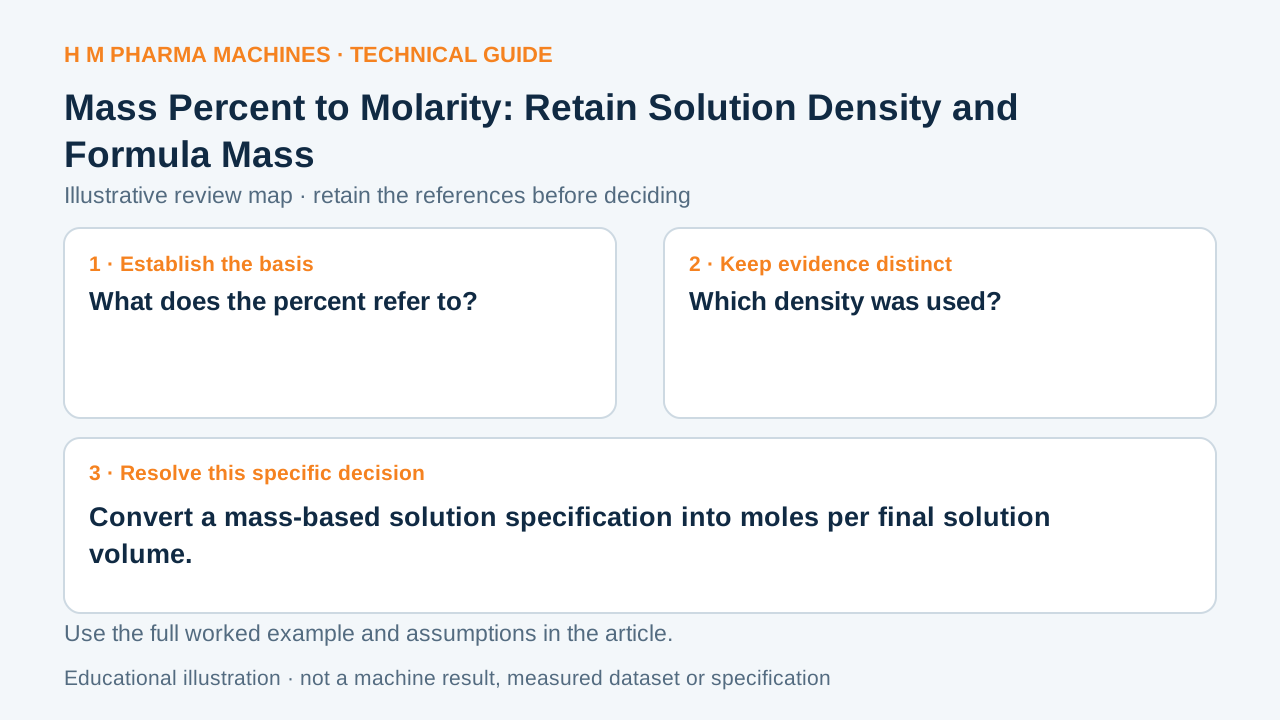
A mass-percent liquid specification cannot be converted into moles per litre from the percent number alone. The density and solute formula belong in the calculation.
Retain the solution-mass basis
Mass percent expresses solute mass relative to total solution mass. Converting to amount per solution volume adds two different pieces of information: solution mass per volume and the solute’s molar mass. Each must describe the actual reported material. Primary reference.
Construct a one-litre calculation
Define a fictional solution as 10.0% solute by mass, with density 1.20 kg/L at a stated temperature. Give its hypothetical solute molar mass as 60.0 g/mol. One litre contains 1,200 g of solution and 120 g of solute, which corresponds to 2.00 mol. Its amount concentration is therefore 2.00 mol/L.
Using 10 g per 100 mL would silently replace the mass-percent basis with a mass-per-volume basis. In this invented example that substitution produces 100 g/L and approximately 1.67 mol/L, a different result. The arithmetic discrepancy comes from the changed denominator.
Review the transferred concentration
Prepare an original conversion sheet showing the one-litre solution mass, the solute fraction and the mass-to-amount conversion separately. Retain density’s temperature and source rather than borrowing the density of pure water. If the solute label changes, also review the molecular or formula-unit basis.
These numbers are not an HM formulation or a preparation instruction. When requesting a liquid trial, supply the measured handling properties with the composition record. A correct concentration conversion alone does not establish pump compatibility, dosing accuracy or chemical suitability.
Solution review worksheet
This blank worksheet is for your own project. It contains no H M machine trial result.
| Question | Record to retain |
|---|---|
| What does the percent refer to? | Solute mass divided by complete solution mass |
| Which density was used? | Solution density and its conditions |
| Which mass-to-amount factor applies? | Named solute formula and molar mass |
Customer Questions
How much solute is in the fictional litre?
120 g.
What is the corresponding amount concentration?
2.00 mol/L under the stated assumptions.
Is mass percent identical to grams per 100 mL?
No. Their denominators differ.
Primary References
These references support the technical principles discussed in this guide. The worked examples and review questions are educational.
Discuss Your Machine Requirement
Share your product, container, required output and the evidence needed for your technical review.
Request a Technical Review