
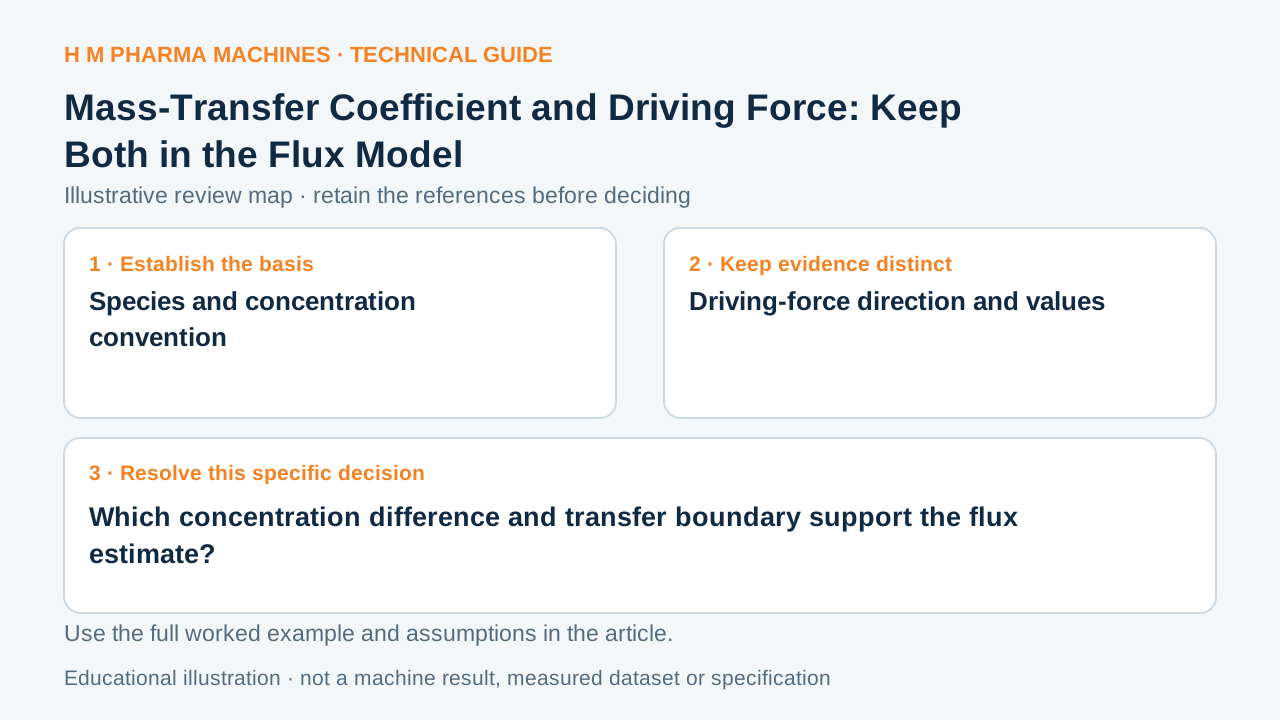
A mass-transfer coefficient must remain attached to its driving-force definition and units. The coefficient alone does not state a transfer rate.
Define the Process Model
COMSOL’s external-convection boundary description uses a concentration-driven flux with a coefficient kc and bulk concentration cb. For the stated molar-concentration convention, a simple relation is J = kc(cb − cs). With kc in m/s and concentration in mol/m³, J is mol/m²/s. Other conventions may use different coefficient units.
Compare a Hypothetical Case
Take an invented kc = 2×10⁻⁵ m/s and concentration difference 30 mol/m³. The model gives flux 6×10⁻⁴ mol/m²/s. Across an assumed active area of 0.50 m², the corresponding transfer rate is 3×10⁻⁴ mol/s. Doubling the coefficient while halving that concentration difference leaves the modeled flux unchanged.
Complete the Engineering Review
Write the species, direction, area and concentration convention in the same row as the coefficient. Identify how the surface or interface concentration is established, and preserve the selected model’s conditions. Keep molar flux per unit area separate from total transfer rate. A larger coefficient need not produce a larger observed rate if another input changes.
For a processing-tank project, obtain process-specific composition and interface evidence. These inputs are hypothetical and do not specify an HM mass-transfer coefficient. The worksheet provides a consistent unit and driving-force record for reviewing a transfer claim.
Which concentration difference and transfer boundary support the flux estimate?
This blank worksheet is for your own project. It contains no H M machine trial result.
| Review field | Reference or result | Responsible person |
|---|---|---|
| Species and concentration convention | To complete | To complete |
| Driving-force direction and values | To complete | To complete |
| Coefficient units and model conditions | To complete | To complete |
| Active area and total-rate calculation | To complete | To complete |
Customer Questions
Does every mass-transfer coefficient use m/s?
Its units depend on the selected driving-force convention.
Are flux and total rate identical?
Flux is per area; total rate also needs area.
Does twice kc guarantee twice the rate?
The other conditions and driving force must remain fixed.
Related Equipment References
Review the actual offered equipment and application separately from this educational example.
Primary References
These references support the technical principles discussed in this guide. The worked examples and review questions are educational.
Discuss Your Machine Requirement
Share your product, container, required output and the evidence needed for your technical review.
Request a Technical Review