
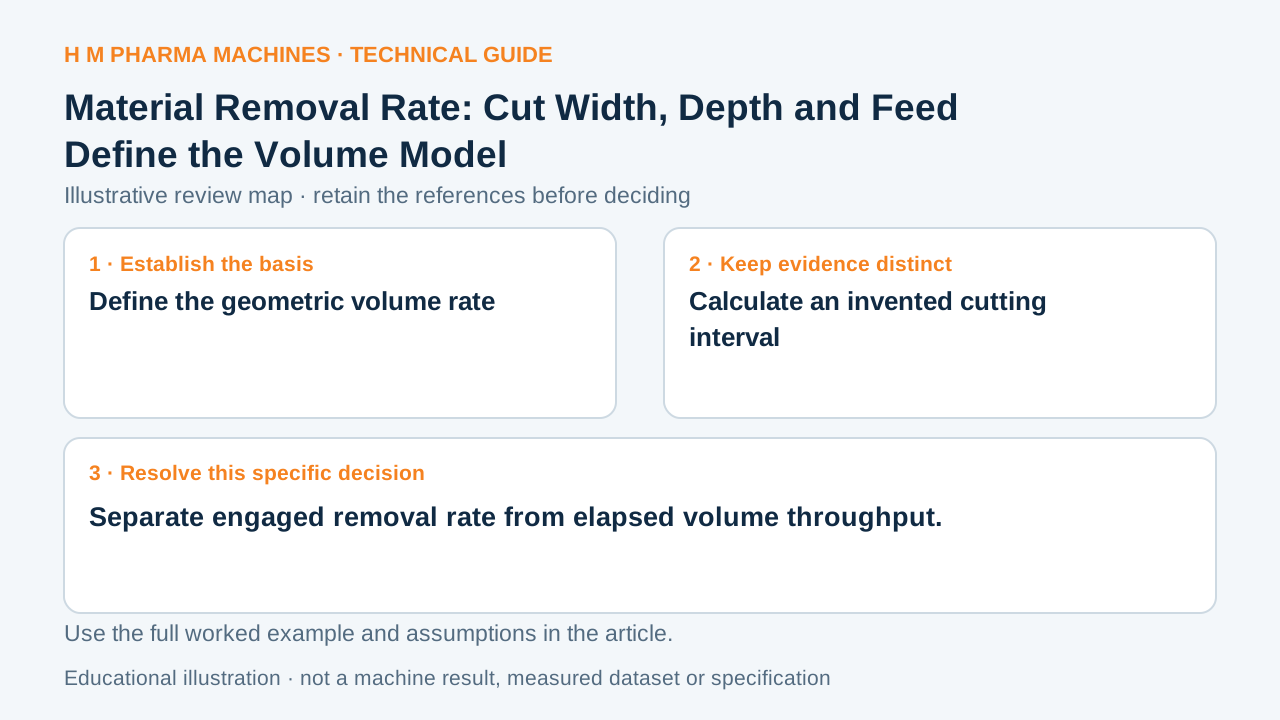
Keep engaged cross-section and cutting time with removal estimates.
Define the geometric volume rate
Sandvik gives milling removal rate as axial depth times radial engagement times table feed, with the appropriate cubic-unit conversion. Primary reference: Sandvik technical reference.
Calculate an invented cutting interval
Assume rectangular engagement 10 mm wide and 2 mm deep, advancing at 300 mm/min. The ideal rate is 6,000 mm³/min, or 6 cm³/min. For 20 seconds of uninterrupted engagement, the modeled removed volume is 2 cm³.
If a hypothetical elapsed minute contains only those 20 cutting seconds, its average removed volume per elapsed minute is 2 cm³/min. The instantaneous cutting rate remains 6 cm³/min. Neither result includes an actual machine acceleration trace, curved engagement or a changing stock boundary.
Draw the material and clock boundaries
Record width, depth and feed for each engaged interval. Mark approaches, retracts and pauses separately from material-contact time. Check the stock-volume comparison against the tool path rather than multiplying one local engagement by the complete program duration.
Keep a productivity calculation separate from spindle-power or thermal-capacity approval. A rectangular geometric rate does not establish that a particular cutter or machine can sustain it. This worksheet distinguishes a local volume-rate definition from the observed amount removed across an elapsed operation; it assigns no removal capability to HM equipment.
Customer Questions
What is the fictional engaged rate?
Six cubic centimeters per minute.
What is removed in twenty seconds?
Two cubic centimeters under the stated model.
Is elapsed throughput necessarily the same rate?
Noncutting intervals change its time denominator.
Primary References
These references support the technical principles discussed in this guide. The worked examples and review questions are educational.
Discuss Your Machine Requirement
Share your product, container, required output and the evidence needed for your technical review.
Request a Technical Review