
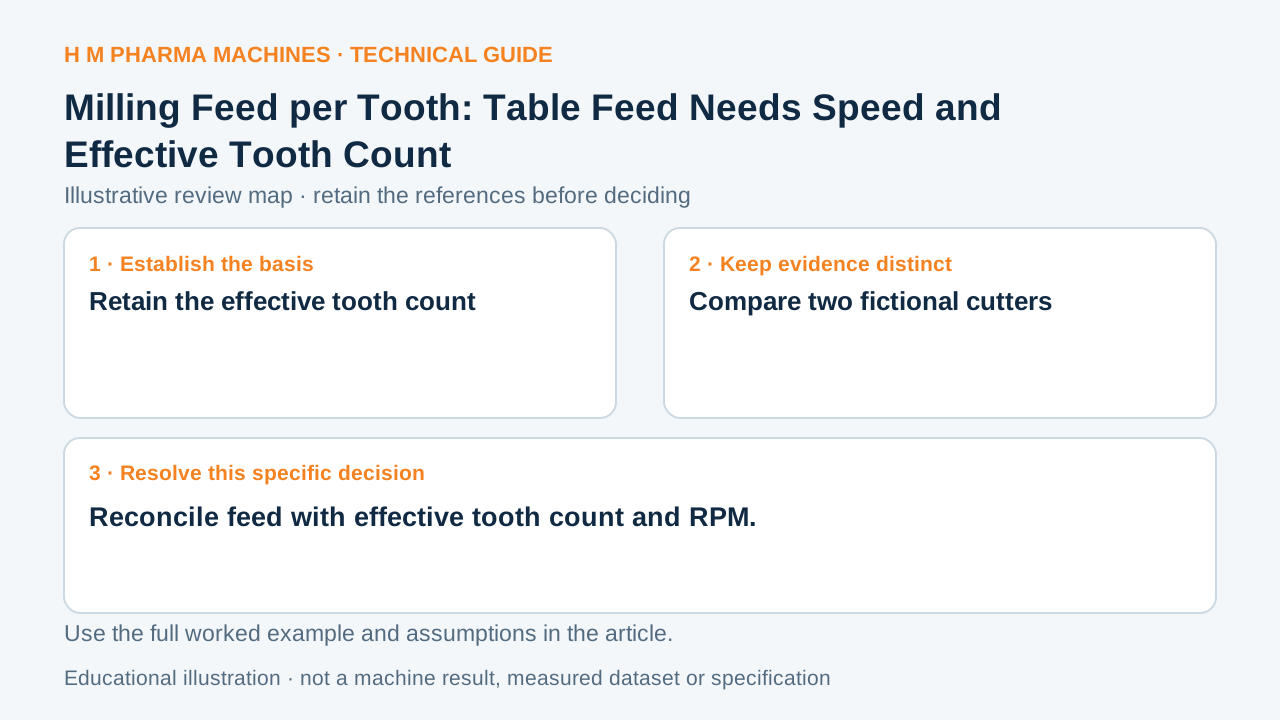
Nominal advance depends on how many effective teeth pass.
Retain the effective tooth count
Sandvik defines milling table feed as feed per tooth multiplied by spindle RPM and the number of effective cutting teeth. Primary reference: Sandvik technical reference.
Compare two fictional cutters
Assume a fictional table feed of 480 mm/min, spindle speed 2,000 RPM and four effective teeth. The nominal advance per tooth is 480/(2000×4)=0.060 mm. With six effective teeth at the same feed and RPM, it becomes 0.040 mm.
Alternatively, retaining an assigned 0.060 mm per tooth with six teeth requires a calculated 720 mm/min table feed. That calculation is an invented comparison, not a selected machining parameter. Effective teeth refers to the count used by the definition; it is not automatically every visible feature on the tool.
Separate advance from actual chip thickness
Write RPM, effective count, feed units and the resulting nominal advance in one record. Keep radial engagement, entering geometry and tool runout in separate fields because they can affect the actual chip-thickness history.
A matched nominal feed-per-tooth value does not establish identical forces, finish or tool life. Use the conversion to identify an incomplete supplier comparison, then obtain the actual cutter geometry and operating evidence. This avoids treating a larger table-feed number as a larger per-edge input when the tooth count changed at the same time.
Customer Questions
What is the four-tooth value?
0.060 mm per tooth.
What follows with six teeth?
0.040 at fixed feed and RPM.
Is advance the chip thickness?
Engagement and geometry matter.
Primary References
These references support the technical principles discussed in this guide. The worked examples and review questions are educational.
Discuss Your Machine Requirement
Share your product, container, required output and the evidence needed for your technical review.
Request a Technical Review