
A mixing-power estimate can be very sensitive to speed and diameter. Expose those exponents before comparing rounded motor figures.
Define the Process Model
Holding the model coefficients and fluid basis fixed, impeller power scales with N³D⁵. ProQuip’s impeller-power explanation identifies these dependencies and the geometry, viscosity and baffling effects behind its coefficients. A sensitivity calculation deliberately freezes those coefficients; it does not prove they stay fixed after a real layout change.
Compare a Hypothetical Case
In a hypothetical model comparison, a 10% speed increase gives 1.1³ = 1.331, a 33.1% increase in calculated impeller power. A separate 10% diameter increase at the same speed gives 1.1⁵ = 1.611, about 61.1% more. Applying both changes gives a factor of 1.1⁸, approximately 2.144. These are ratios, with no claimed installed kilowatt rating.
Complete the Engineering Review
Ask the supplier to distinguish calculated power at the impeller from drive nameplate capacity. Record which coefficient and fluid conditions were held fixed. If a dimension changes, check whether the impeller-to-tank relationship and Reynolds number still support that coefficient. Keep a spreadsheet sensitivity case separate from the final mechanical sizing case.
For a processing-tank enquiry, attach the actual geometry and required task. The ratios do not establish an acceptable speed increase or motor replacement. They explain why an apparently small geometry change deserves a renewed engineering calculation.
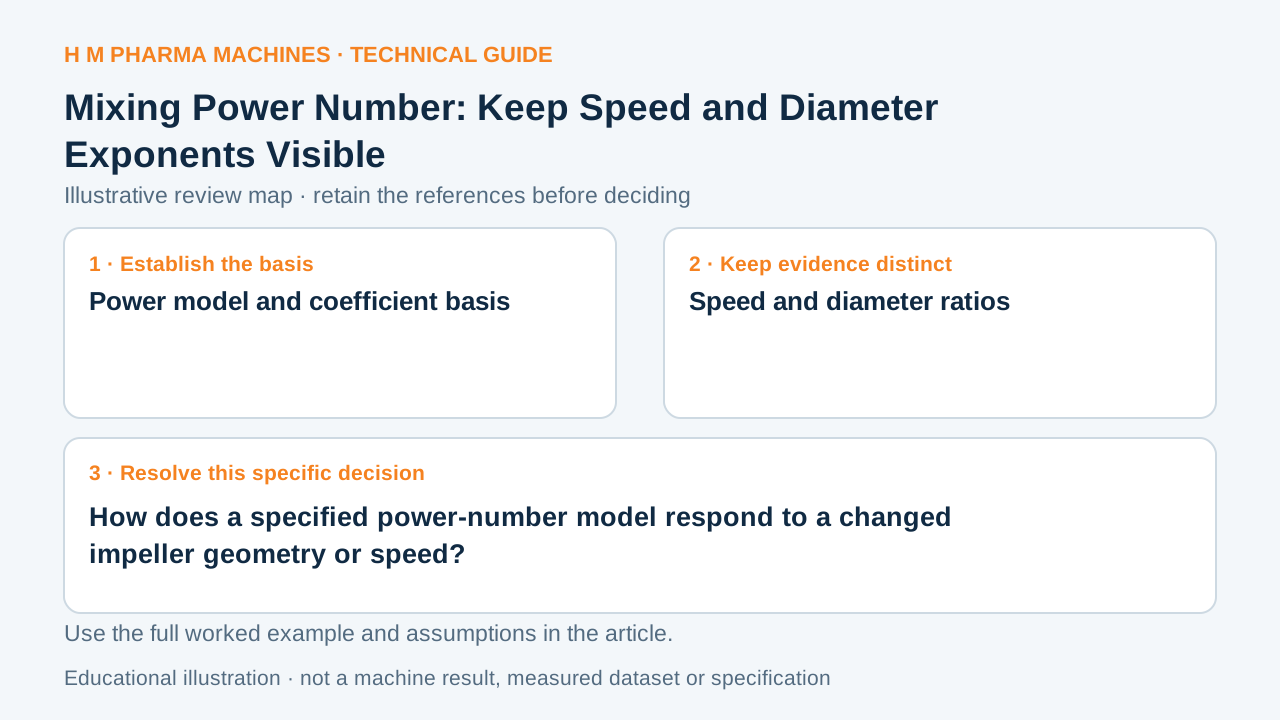
How does a specified power-number model respond to a changed impeller geometry or speed?
This blank worksheet is for your own project. It contains no H M machine trial result.
| Review field | Reference or result | Responsible person |
|---|---|---|
| Power model and coefficient basis | To complete | To complete |
| Speed and diameter ratios | To complete | To complete |
| Fluid and baffling conditions | To complete | To complete |
| Impeller draw versus drive capacity | To complete | To complete |
Customer Questions
Does 10% more RPM mean 10% more power?
The fixed-coefficient model has a cubic dependence.
Can D change without changing a coefficient?
That assumption requires justification.
Does nameplate power equal process draw?
Separate rated capacity from the duty calculation.
Related Equipment References
Review the actual offered equipment and application separately from this educational example.
Primary References
These references support the technical principles discussed in this guide. The worked examples and review questions are educational.
Discuss Your Machine Requirement
Share your product, container, required output and the evidence needed for your technical review.
Request a Technical Review