
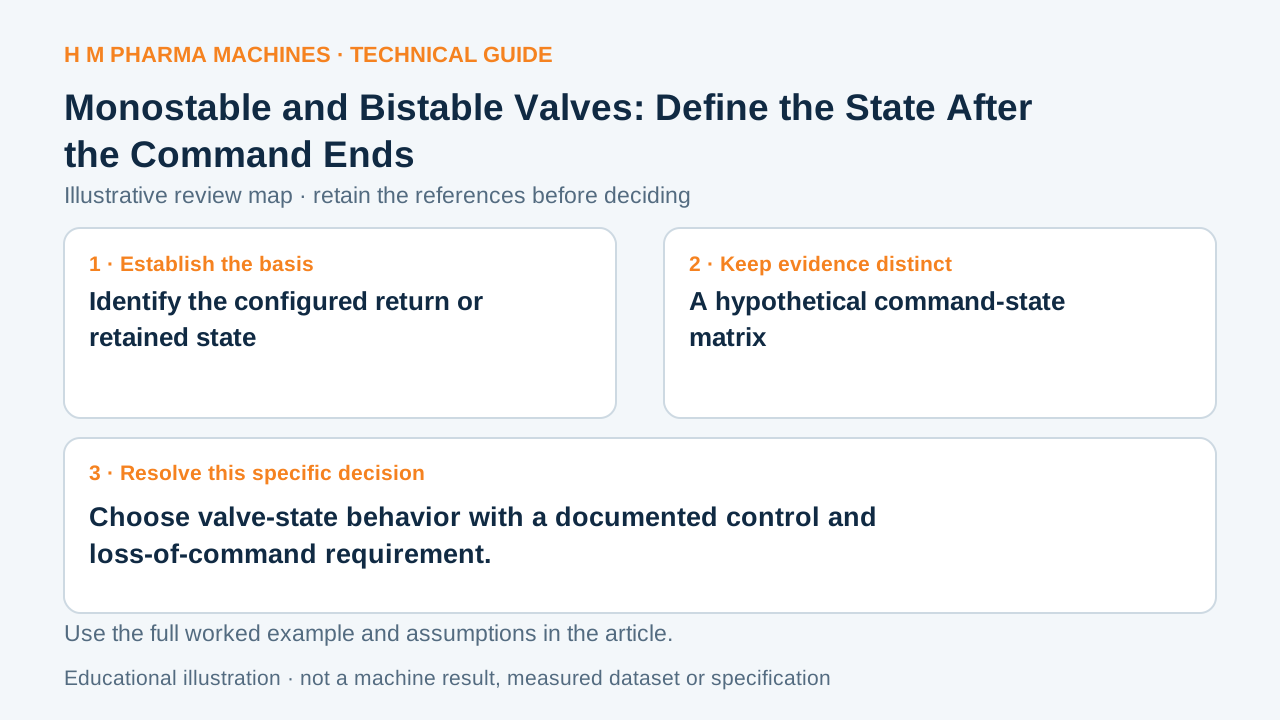
A removed command and a commanded opposite state are different events in a valve-function review.
Identify the configured return or retained state
Norgren lists monostable solenoid/spring and bistable solenoid/solenoid valve variants separately. Keep the actual configuration with its state interpretation. Primary reference: Norgren valve actuation variants.
Define the event being reviewed: removal of a command under stated normal supply conditions. Record the expected valve position from the actual documentation. Other events such as loss of pilot pressure, complete power loss or a hardware fault need their own defined conditions rather than a borrowed assumption.
A hypothetical command-state matrix
Imagine two fictional five-port, two-position offers. One specifies a documented spring-return configuration; the other specifies a documented bistable configuration. Make rows for command A active, command A removed and command B active where applicable. Copy each expected response from its identified function record rather than filling the table from connector appearance.
Add columns for electrical command, supply condition, expected valve state and source reference. Keep downstream actuator behavior separately identified. The scenario states no HM valve choice, safe state or real motion result.
Preserve the command contract
Ask which command timing and valid combinations the actual control interface supports. A product label alone should not silently generate the software's complete switching policy. Retain the supplier-confirmed function and relevant circuit identity with that policy.
If a replacement changes its actuation type, recheck the command-state relationship even when the port pattern is identical. This guide addresses an ordinary functional distinction without prescribing a machine recovery sequence, promising retention under every abnormal condition or treating a spring-return label as certification of a complete protective function.
Customer Questions
Is ending a command always the same as commanding the opposite state?
No. Use the documented valve function.
Does a matching port pattern identify its actuation behavior?
No. Preserve the configured variant.
Does this command table establish every power-loss outcome?
No. Those conditions need separate evidence.
Primary References
These references support the technical principles discussed in this guide. The worked examples and review questions are educational.
Discuss Your Machine Requirement
Share your product, container, required output and the evidence needed for your technical review.
Request a Technical Review