
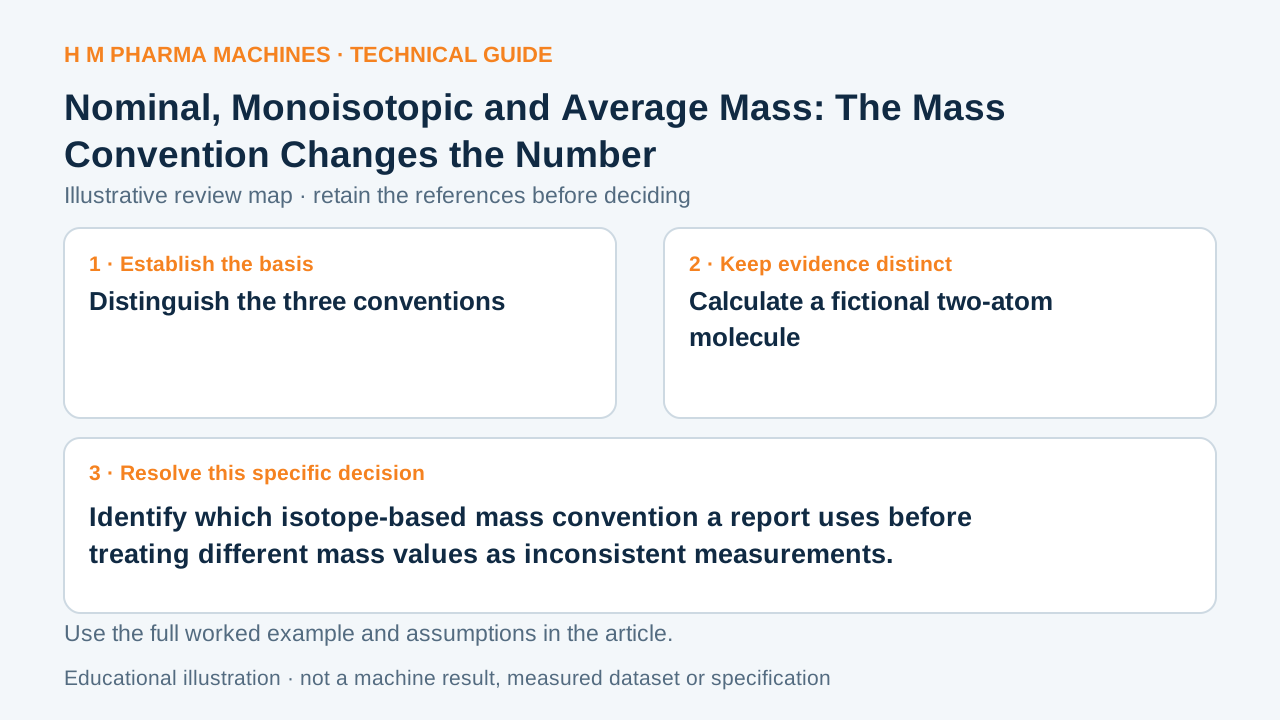
Different mass conventions can assign different numbers to the same stipulated molecular composition.
Distinguish the three conventions
Monoisotopic mass uses the exact masses of the most abundant isotope of each constituent element. Average mass weights isotope composition. Nominal mass uses the defined rounded masses of the most abundant constituent isotopes with their atom counts. These are different numerical conventions rather than alternative spellings of one reported value. Primary reference: IUPAC: monoisotopic mass.
State which convention is used and whether the result concerns a molecule or an ion. Most abundant constituent isotopes should not be silently redefined as the lightest in every element. Primary reference: IUPAC average mass; primary reference: IUPAC nominal mass.
Calculate a fictional two-atom molecule
Invent an element with two isotopes: exact mass 10.1 at fraction 0.8 and exact mass 11.1 at fraction 0.2. Its average atomic mass is 10.3 in the stipulated mass unit. A fictional molecule containing two such atoms consequently has average mass 20.6 and monoisotopic mass 20.2.
Rounding the most abundant isotope mass 10.1 to 10 gives nominal molecular mass 20 under the stated convention. These invented isotopes are not reference data for an actual element. The three numbers differ because their definitions differ, not because the worksheet changed the molecule composition between rows.
Retain the convention before calculating an error
Make fields for atom counts, isotope masses, isotope fractions, chosen convention and resulting quantity. Keep any ion or adduct definition separate. Check that fractions sum to one and reconstruct each result from its designated inputs. Do not compare an average value with a monoisotopic reference as an unexplained measurement error.
For real reporting, use applicable mass data and explicitly identify the quantity expected by the method or software. The hypothetical arithmetic cannot identify a molecule or determine an instrument accuracy. Its decision is to align the mass convention before two plausible-looking numbers are judged inconsistent.
Customer Questions
What is the fictional monoisotopic molecular mass?
It is 20.2 in the stipulated unit.
Why is its average 20.6 instead?
It includes the specified isotope fractions.
Are the invented isotope masses real reference data?
They define only this original example.
Primary References
These references support the technical principles discussed in this guide. The worked examples and review questions are educational.
Discuss Your Machine Requirement
Share your product, container, required output and the evidence needed for your technical review.
Request a Technical Review