
A repeating mark that appears distinct in one frame may become ambiguous when shifted slightly across the sensor grid. Its sampling phase matters.
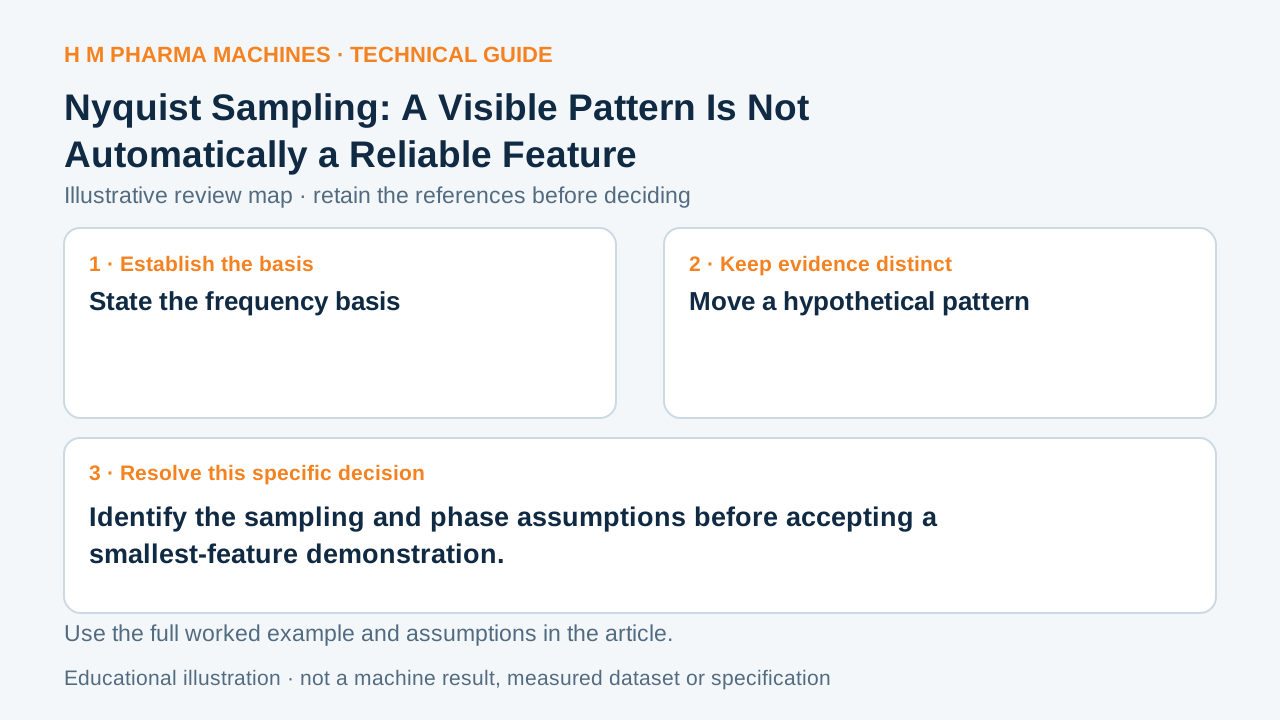
State the frequency basis
The Nyquist frequency of an ideal regularly sampled signal is half the sample frequency. A theoretical periodic pattern therefore needs two samples per cycle at that boundary. This frequency statement is not a general promise that a feature occupying two pixels will be inspected reliably. Primary reference: Edmund Optics: sensors, lenses and Nyquist sampling.
A cycle includes both parts of a repeating light-dark pattern. Keep its physical pitch, image scale and sampling direction together. Describing only the width of one dark bar changes the question and can make two apparently similar demonstrations incomparable.
Move a hypothetical pattern
Imagine ideal samples taken every 0.10 mm across the object and an alternating pattern with a 0.20 mm period. One alignment places samples at bright and dark extrema. A different alignment can place them at intermediate values, making that same period less distinguishable in the sampled record.
This illustration isolates sampling phase. It assumes a regular periodic signal and neglects the lens response, noise and pixel-area integration. It is not an acceptance target, an actual printed-code result or a recommended minimum sampling ratio for a packaging machine.
Request evidence over position
When a proposed inspection relies on a feature close to the sampling boundary, ask how its position changes within the actual product tolerance. Compare original frames from those positions rather than choosing the clearest frame after the trial. Preserve the scale used to identify the period.
Keep the relevant contrast and optical evidence with the sampling calculation. If the object or camera may rotate, include the changed direction relative to the grid. A demonstration of visibility should identify the range tested and the remaining unresolved detection decision instead of being described as universal capability.
Customer Questions
Is a line pair one dark line?
No. Its cycle contains the light and dark portions of the repeating pattern.
Does one clear frame settle the sampling question?
No. The relative position of the pattern and pixel grid can change the observation.
Is the example a required pixel count?
No. It illustrates a theoretical boundary and its assumptions.
Primary References
These references support the technical principles discussed in this guide. The worked examples and review questions are educational.
Discuss Your Machine Requirement
Share your product, container, required output and the evidence needed for your technical review.
Request a Technical Review