
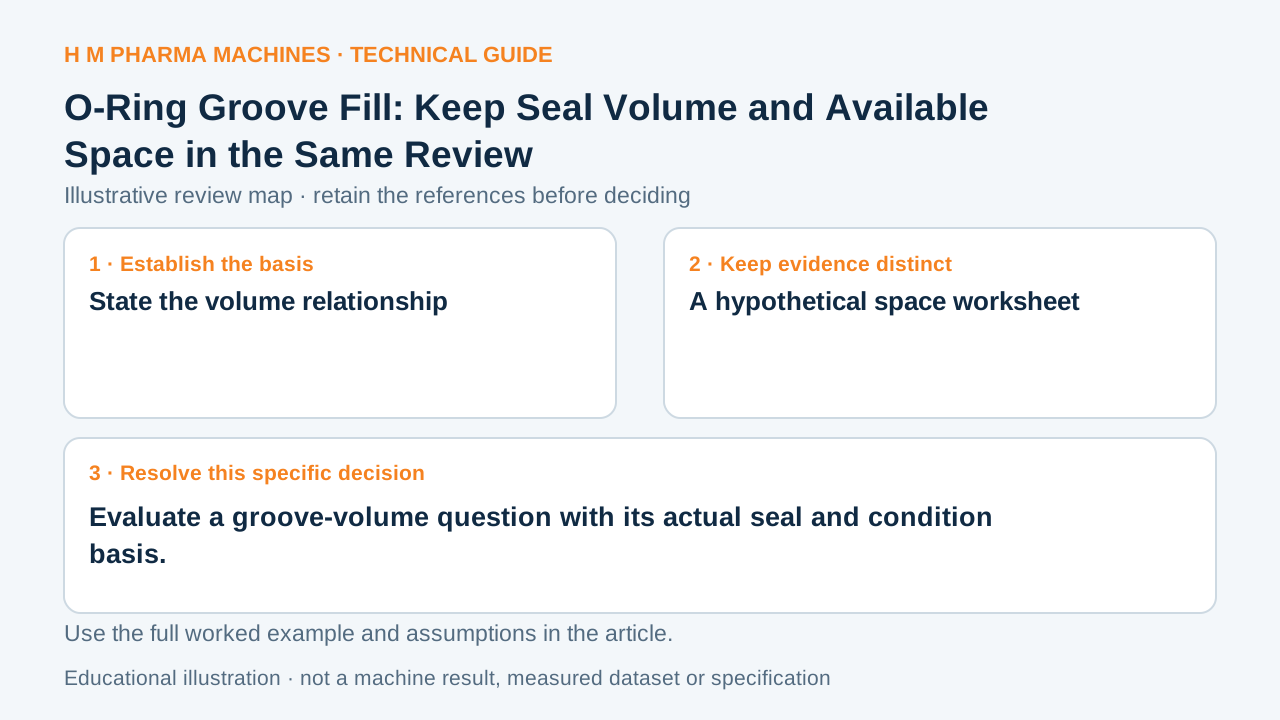
A groove-volume question differs from the amount of seal compression at one section.
State the volume relationship
Parker's handbook considers seal and gland geometry as application-specific design information. A volume-fill statement needs the actual geometry and condition basis. Primary reference: Parker gland design.
Identify what space is counted as available and which seal state supplies the volume. A percentage without those definitions cannot establish an assembled gland condition. Keep compression or squeeze questions distinct from the occupied-volume question rather than assigning one label to both.
A hypothetical space worksheet
Assume fictional available space of 100 mm³ and an identified teaching seal volume of 75 mm³. Their simple ratio is 75%. If a separate assumed condition changes seal volume to 90 mm³ while the modeled available space stays100, the ratio becomes90%. These are invented arithmetic inputs, not a recommended fill range or an HM seal measurement.
Make rows for geometry source, volume condition, available space, ratio and applicability limits. Do not assume the available space or seal volume remains constant in the actual application merely because the simple example does so. Retain actual tolerances and condition effects where relevant.
Keep the actual design basis together
Ask the responsible designer how the intended gland handles its actual seal and operating conditions. A nominal arithmetic ratio does not approve the sealing performance or define every permitted assembly variation.
If an alternative compound or groove changes the relevant volume basis, preserve that change in the review. The guide helps reconcile a percentage with its physical quantities. It supplies no universal fill limit, groove dimensions or installation instruction and does not treat an empty-looking clearance in a sketch as proof that the actual seal has appropriate space through all intended conditions.
Customer Questions
Is gland fill the same quantity as squeeze?
No. Occupied volume and sectional compression are distinct questions.
Is75% a universal recommended value here?
No. It is only an invented arithmetic example.
What must accompany the percentage?
Actual geometry, counted space, seal-volume condition and applicability basis.
Primary References
These references support the technical principles discussed in this guide. The worked examples and review questions are educational.
Discuss Your Machine Requirement
Share your product, container, required output and the evidence needed for your technical review.
Request a Technical Review