
A sealing interface with sliding motion poses additional friction and wear questions.
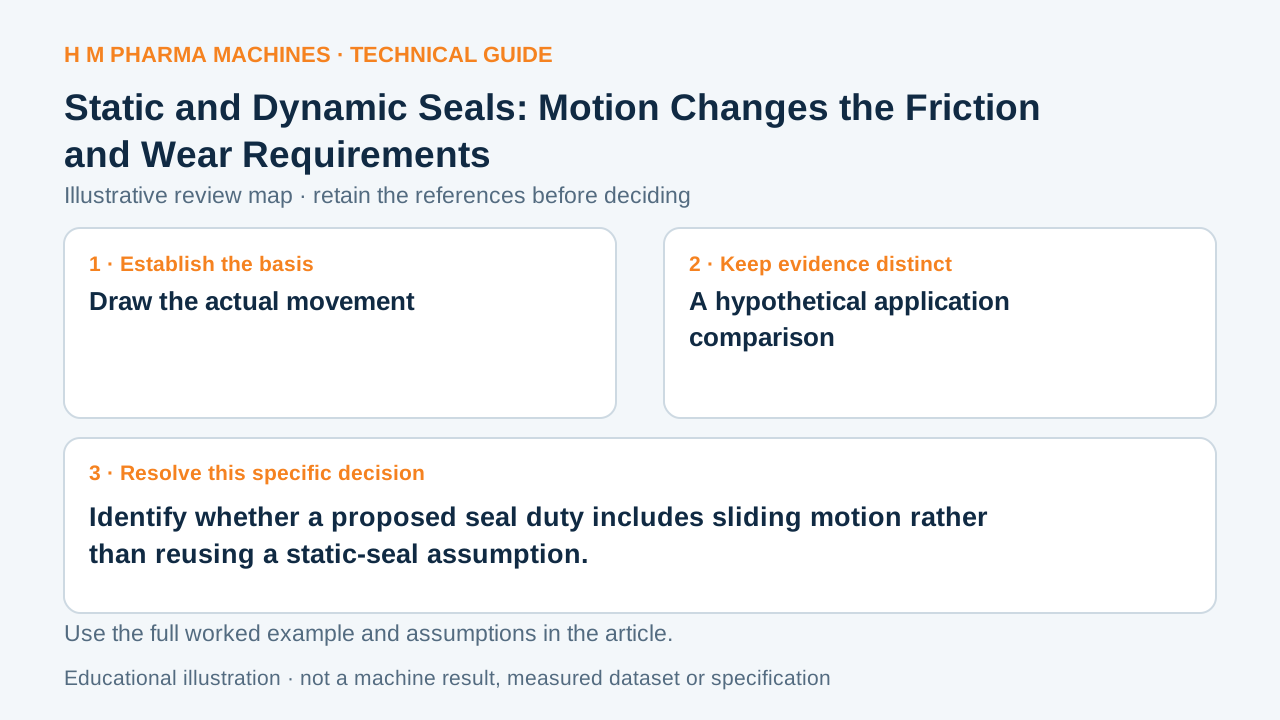
Draw the actual movement
Parker's O-Ring Handbook distinguishes static and dynamic applications and discusses friction and wear associated with movement. Preserve that duty distinction. Primary reference: Parker static and dynamic sealing.
Identify which surfaces move relative to the seal, the movement type and the relevant operating conditions. A part described only by diameter and cross-section leaves that function incomplete. A seal that fits a static connection is not thereby established for an unrelated sliding duty.
A hypothetical application comparison
Imagine a fictional spare list grouping a stationary cover seal and a reciprocating interface seal because their nominal dimensions match. Separate their duty records. The stationary fit observation does not establish the moving interface's friction, wear or applicable material basis, and the moving trial does not automatically represent the cover's complete exposure.
Make rows for relative movement, compound identity, geometry reference, operating conditions and required evidence. No HM seal interchange, squeeze percentage or sliding-speed limit is supplied by this example. It simply identifies which requirement disappeared from the grouped spare description.
Order the intended function
Ask the responsible supplier to identify the accepted seal and installation basis for the actual duty. Retain the complete component reference rather than treating a matching outline as all the evidence needed for substitution.
For later changes, preserve the movement and environmental differences in the review. This guide does not provide a dynamic seal design or a service procedure. It gives a buyer a function-first comparison that keeps the additional movement-related questions visible without claiming every elastomer or O-ring of equal size behaves equivalently in stationary and moving applications.
Customer Questions
Does equal size prove static and dynamic interchangeability?
No. The actual duties and component bases differ.
What movement should be recorded?
The relative movement at the seal and its defined operating context.
Does this article give a dynamic squeeze setting?
No. Use the actual component and application instructions.
Primary References
These references support the technical principles discussed in this guide. The worked examples and review questions are educational.
Discuss Your Machine Requirement
Share your product, container, required output and the evidence needed for your technical review.
Request a Technical Review