
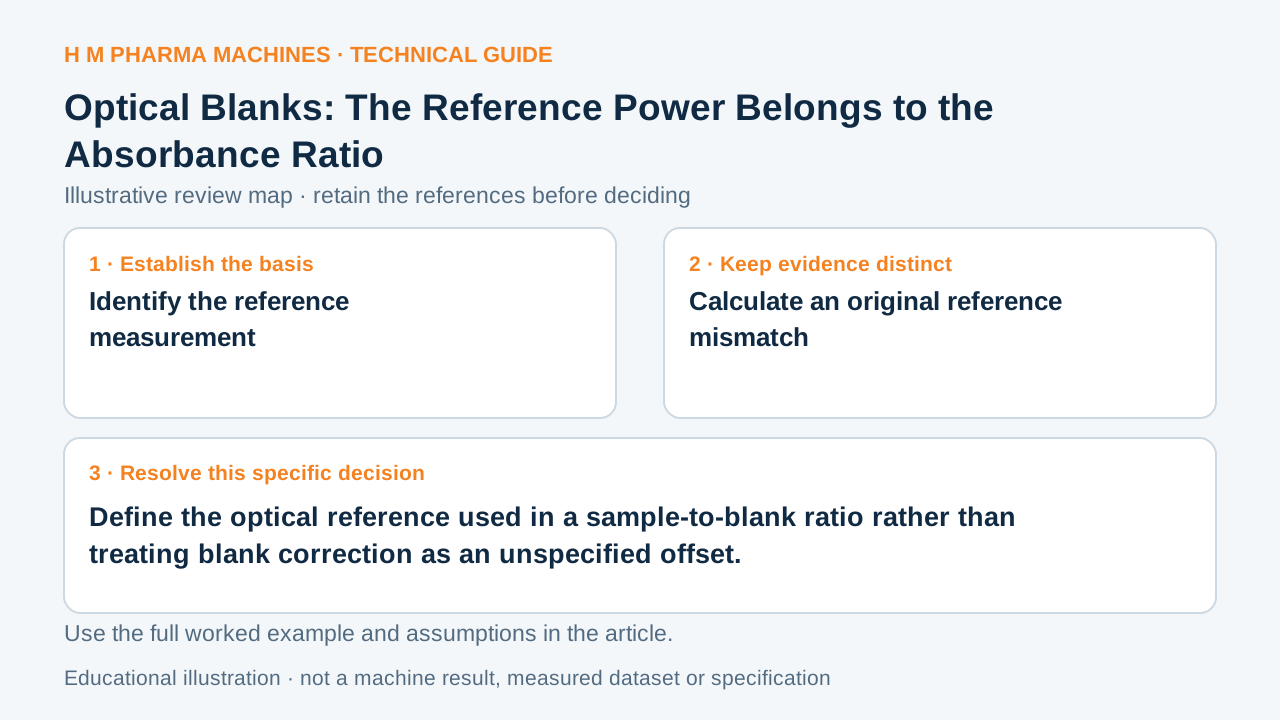
The blank is part of the comparison, so retain what the reference measurement actually contained.
Identify the reference measurement
A spectrophotometer uses the blank measurement as a reference for the subsequent sample comparison. A change in the source intensity between those measurements can affect their ratio. The reference is therefore an optical observation under conditions, not merely an unnamed number subtracted from any later result. Primary reference: Shimadzu: how spectrophotometers use the blank.
Describe the cell, solvent or matrix and measurement sequence that define the blank. A blank can account for matching background contributions only within that comparison. A numerical correction cannot by itself demonstrate that a different cell or changed source remained equivalent.
Calculate an original reference mismatch
Suppose an invented reference records 80 power units and the sample records 40. The sample-to-reference ratio is 0.5 and A = log10(80/40) = 0.30103. If someone instead uses an unmatched reference of 100 units, the same sample power gives A = 0.39794. The difference is about 0.09691.
Nothing in these two calculations changes the sample. They expose the consequence of substituting another denominator. These arbitrary power values are not a model of the behavior of a particular optical design, and the difference is not a recommended correction coefficient.
Retain reference identity in the worksheet
Give each reference a record ID and attach its wavelength, cell configuration, background composition and measurement time. Link the sample row to that exact reference rather than to a generic field named zero. Keep the raw powers alongside the derived reading when available.
To investigate a discrepancy, calculate both ratios and identify what changed in the denominator. Then use the method and instrument documentation to establish how its actual blank procedure works. Repeating a measurement without resolving that identity may reproduce a number while preserving the same mistaken comparison.
Customer Questions
What changes between the two fictional calculations?
Only the chosen reference power.
Is the 0.09691 difference universal?
No; it follows these invented powers.
Can an unnamed zero identify the blank?
It does not identify its conditions.
Primary References
These references support the technical principles discussed in this guide. The worked examples and review questions are educational.
Discuss Your Machine Requirement
Share your product, container, required output and the evidence needed for your technical review.
Request a Technical Review