
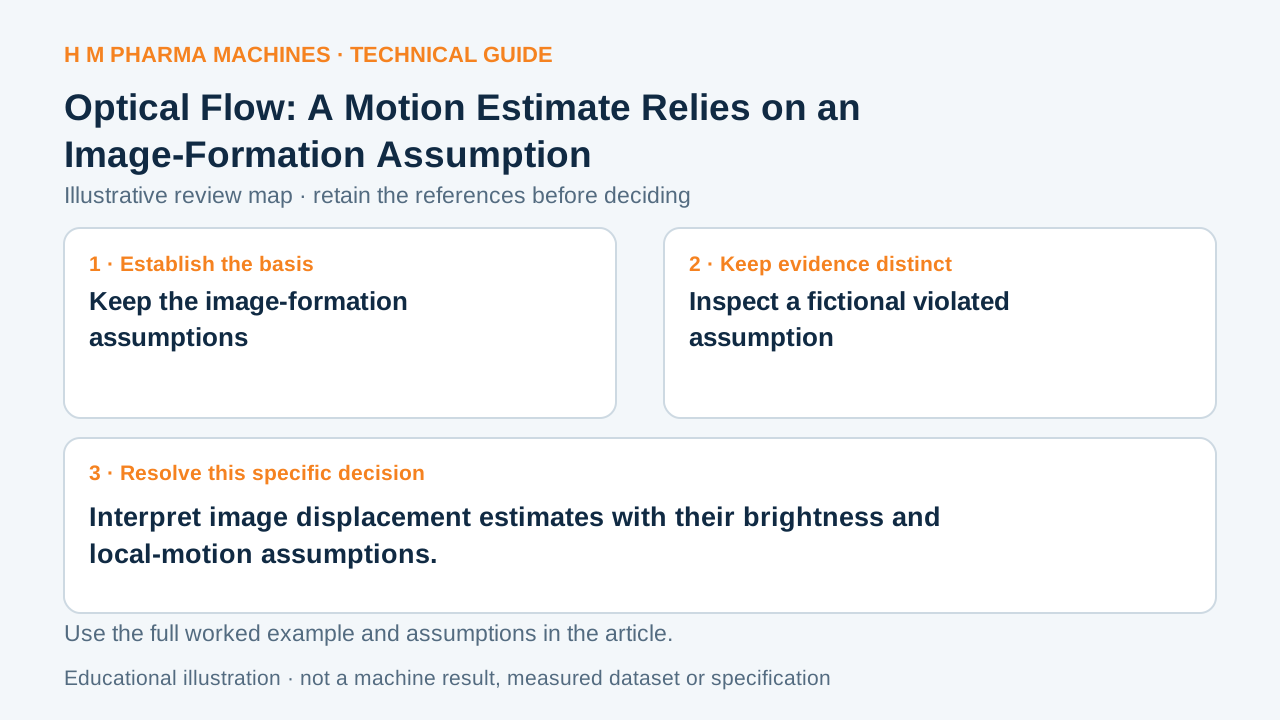
An image-motion equation can attribute intensity changes to displacement. A changing appearance can violate that assumed relationship.
Keep the image-formation assumptions
A common optical-flow formulation assumes corresponding feature intensity remains stable between frames and uses local motion structure to constrain displacement. Image gradients and temporal changes enter the estimate. Illumination or appearance variation can violate those assumptions without requiring motion of the underlying object. Primary reference: OpenCV optical-flow assumptions and image derivatives.
For an original review worksheet, retain both input frames, timing and the relevant acquisition conditions. Keep a calculated image displacement separate from a physical distance conversion. A numerical solution to an image model does not establish that every observed intensity change came from object movement.
Inspect a fictional violated assumption
In an invented one-dimensional linearized model, set spatial intensity gradient Ix = 10 per pixel and temporal change It = 10 per frame. The equation Ix u + It = 0 gives u = −1 pixel per frame. Now expressly define the scene as stationary with an added ten-unit illumination change.
That construction violates the brightness-stability premise, so the model-based displacement should not be treated as proof of motion. It is not a claimed output of a complete optical-flow implementation; other constraints and processing affect real results. The exercise isolates the assumption behind the equation.
Review estimates against observations
Prepare an original comparison with retained frame values and any independently known stationary or moving condition. Identify exposure, lighting or surface-appearance changes that could alter correspondence. Preserve the actual model's local support and validity evidence rather than treating a dense arrow display as a motion certificate.
This guide claims no HM tracking accuracy or optical-flow setting. Its reader decision is whether the observed image change fits the assumptions used to estimate displacement. Scene motion and image appearance need distinguishable evidence before a derived vector supports a physical conclusion.
Customer Questions
What displacement does the fictional equation give?
Minus one pixel per frame.
Is the defined scene actually moving?
No. Its illumination changes in the constructed case.
Is this a claimed full software output?
No. It isolates a model assumption.
Primary References
These references support the technical principles discussed in this guide. The worked examples and review questions are educational.
Discuss Your Machine Requirement
Share your product, container, required output and the evidence needed for your technical review.
Request a Technical Review