
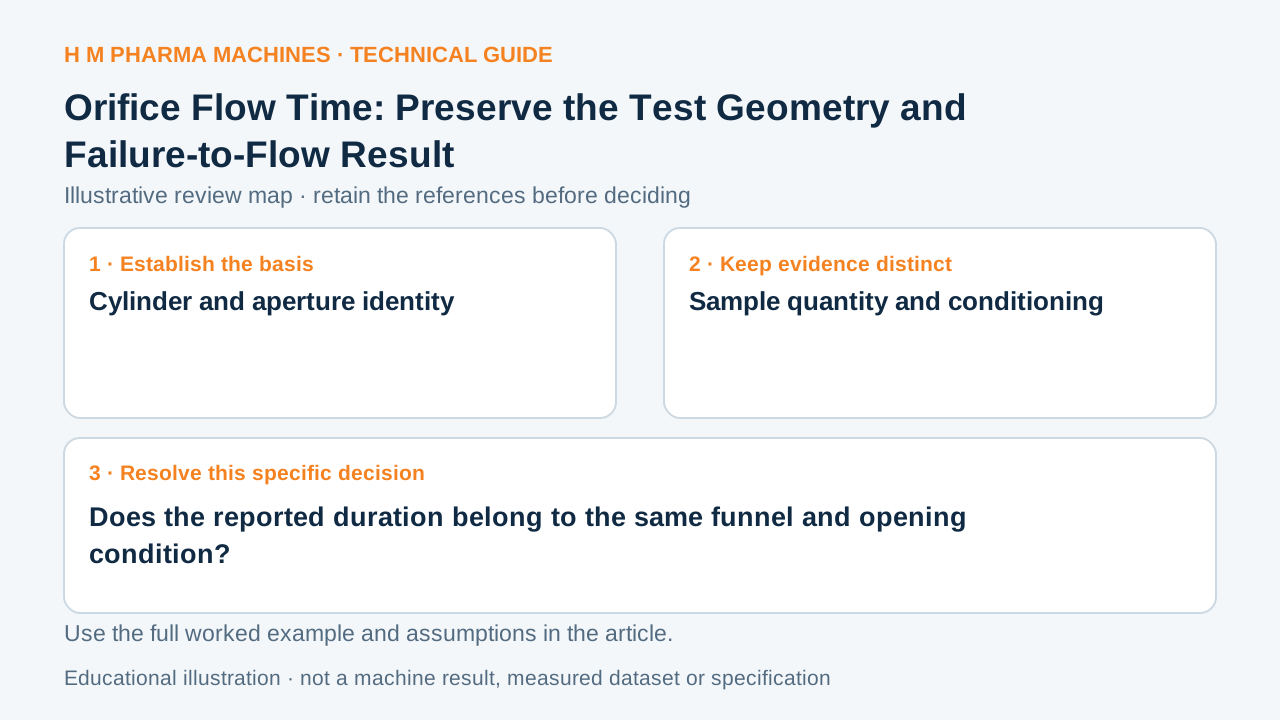
Retain the outlet geometry and a failure-to-flow observation when reporting a powder discharge time; successful values alone can hide the test boundary.
Identify the Material Response
Copley describes flow-through-orifice testing as timing a known powder quantity through an identified cylinder and aperture. The geometry is part of the measurement, rather than an incidental accessory. Primary reference: flow-through-orifice basis.
Review a Hypothetical Comparison
Suppose 100 g of an invented sample discharges through an identified opening in 20 s, giving an average 5 g/s for that test. A second sample does not establish sustained discharge during the observation. Writing an enormous arbitrary time for the second sample would manufacture a rate that was never measured.
Keep the Evidence with the Decision
Record the aperture, cylinder, sample state, initial quantity and timing endpoint. Keep “no sustained flow observed” beside the stated observation period and method. Describe any intervention separately; a value obtained after tapping or another change cannot silently inherit the untouched-test identity. Preserve whether the collected mass actually matches the timed sample.
A short successful time under one geometry does not determine discharge under another outlet or after storage. Ask for the complete result set, including non-flowing cases, when comparing material reports. The fictional aperture test does not recommend an opening, permission to intervene or a machinery capacity. Its purpose is to preserve both measurement geometry and the limits of the observed response.
Does the reported duration belong to the same funnel and opening condition?
This blank worksheet is for your own project. It contains no H M machine trial result.
| Review field | Reference or result | Responsible person |
|---|---|---|
| Cylinder and aperture identity | To complete | To complete |
| Sample quantity and conditioning | To complete | To complete |
| Timing endpoint and recovered mass | To complete | To complete |
| Non-flow/intervention observation | To complete | To complete |
Customer Questions
What average rate follows from 100 g in 20 s?
5 g/s for the stated test.
Should failure to flow be replaced by an invented time?
No. Report the actual observation.
Does this rate transfer to another outlet?
Not without the relevant geometry and material evidence.
Primary References
These references support the technical principles discussed in this guide. The worked examples and review questions are educational.
Discuss Your Machine Requirement
Share your product, container, required output and the evidence needed for your technical review.
Request a Technical Review