
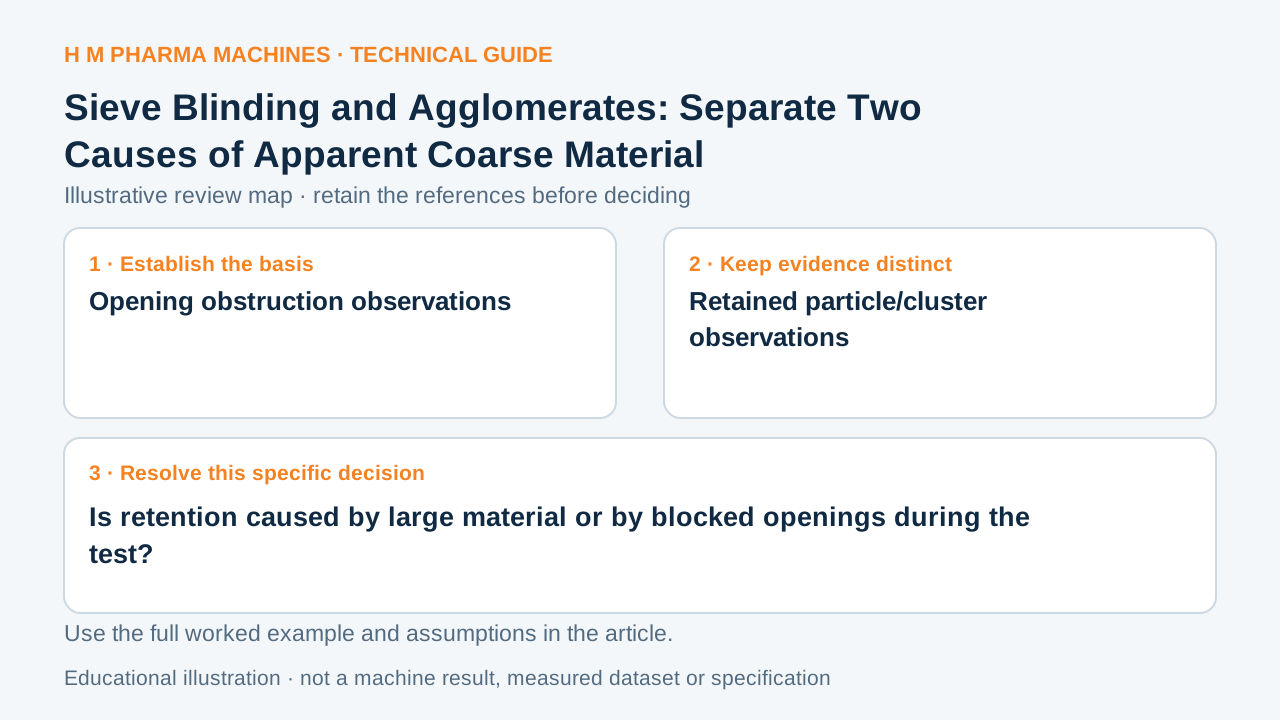
Separate blocked sieve openings from retained particle associations before describing every coarse-looking result as large primary particles.
Identify the Material Response
RETSCH discusses agglomerating materials and near-mesh particles in air-jet sieving. Those features can affect passage through a sieve, so retained mass needs its test-condition context. Primary reference: agglomeration and near-mesh passage.
Review a Hypothetical Comparison
Consider two invented images of a retained fraction. In A, separate particles lodge in individual openings and reduce open area. In B, clusters rest above visibly open apertures. The images suggest different physical questions: obstruction of the screening area versus associations in the sample. Neither image alone establishes a complete particle-size distribution.
Keep the Evidence with the Decision
Retain the sieve identity, test history and observation locations. Describe visible lodged material and visible clusters separately. Compare the original sample condition with what remained after the identified test. If a preparation or method changes, record whether it might also separate associations or alter fragile material.
Ask the laboratory how the selected method addresses the observed condition without assuming that longer testing, stronger agitation or another accessory is always appropriate. This is a review of competing explanations, not an instruction to alter a production sieve. The accepted result should identify the sample state actually characterized.
Is retention caused by large material or by blocked openings during the test?
This blank worksheet is for your own project. It contains no H M machine trial result.
| Review field | Reference or result | Responsible person |
|---|---|---|
| Opening obstruction observations | To complete | To complete |
| Retained particle/cluster observations | To complete | To complete |
| Sieve and test condition identity | To complete | To complete |
| Preparation changes and result boundary | To complete | To complete |
Customer Questions
Is retained coarse-looking material always one large primary particle?
No. Associations and passage conditions need review.
Are blocked openings and clusters identical observations?
No. They describe different physical locations and mechanisms.
Does this guide prescribe a stronger sieving setting?
No. The actual method must define its conditions.
Primary References
These references support the technical principles discussed in this guide. The worked examples and review questions are educational.
Discuss Your Machine Requirement
Share your product, container, required output and the evidence needed for your technical review.
Request a Technical Review