
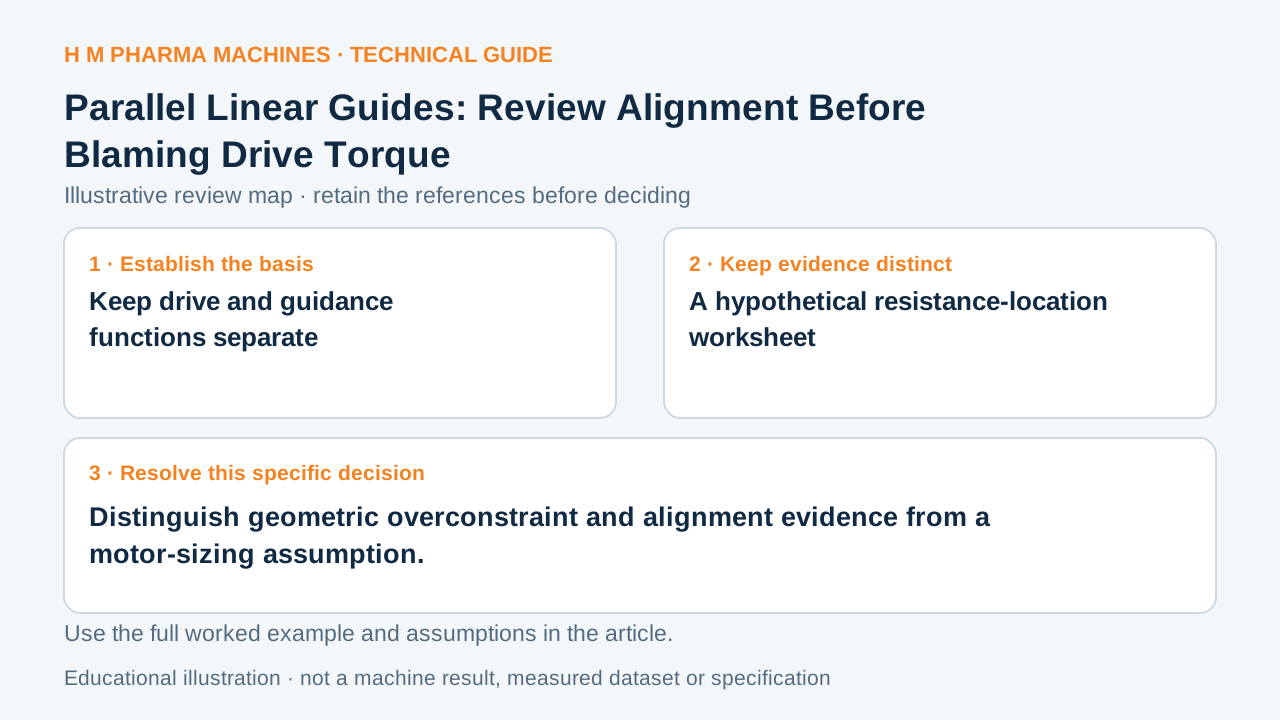
A difficult-to-move carriage can raise a geometry question. The drive's torque rating does not explain the resistance by itself.
Keep drive and guidance functions separate
THK describes a linear guide as a defined rail, carriage and rolling-element arrangement. Its mounting and selection basis belongs to that arrangement. Primary reference: THK linear-guide design and selection.
For a two-rail system, ask what geometry constrains carriage movement and which installation references govern the relationship. A motor can supply force, but increased force is not evidence that a geometric inconsistency has disappeared. Preserve possible load, contamination and assembly explanations separately.
A hypothetical resistance-location worksheet
Imagine a fictional carriage whose resistance changes with travel position. One proposal recommends a larger motor without a geometry review; another requests the rail arrangement, installation references and the location-dependent observation. The second asks a more diagnostic question but still supplies no confirmed cause.
Record travel region, loading condition, component identity and available geometry evidence. Keep the original symptom description intact. This teaching case reports no measured force, allowable parallelism or HM defect, and does not authorize loosening a rail or moving a live axis.
Review the hypothesis with identified evidence
The responsible technical team should distinguish the intended guide constraint from an installation or service deviation. Compare the selected arrangement's documentation with the actual observation, rather than applying one general alignment number to every guide type.
If a change is approved, retain its geometry and recheck basis with the drive settings. That prevents the final record from explaining an improvement solely by increased torque when several things changed. The useful outcome is a bounded investigation of guidance and drive roles, not an assumption that all resistance comes from misalignment or that every torque increase is a remedy.
Customer Questions
Does more available torque prove alignment is acceptable?
No. Torque and guidance geometry answer different questions.
Does position-dependent resistance identify one cause?
No. It helps define the investigation; competing causes need evidence.
Should one generic parallelism limit cover every guide?
No. Use the identified arrangement's documentation and assessment basis.
Primary References
These references support the technical principles discussed in this guide. The worked examples and review questions are educational.
Discuss Your Machine Requirement
Share your product, container, required output and the evidence needed for your technical review.
Request a Technical Review