
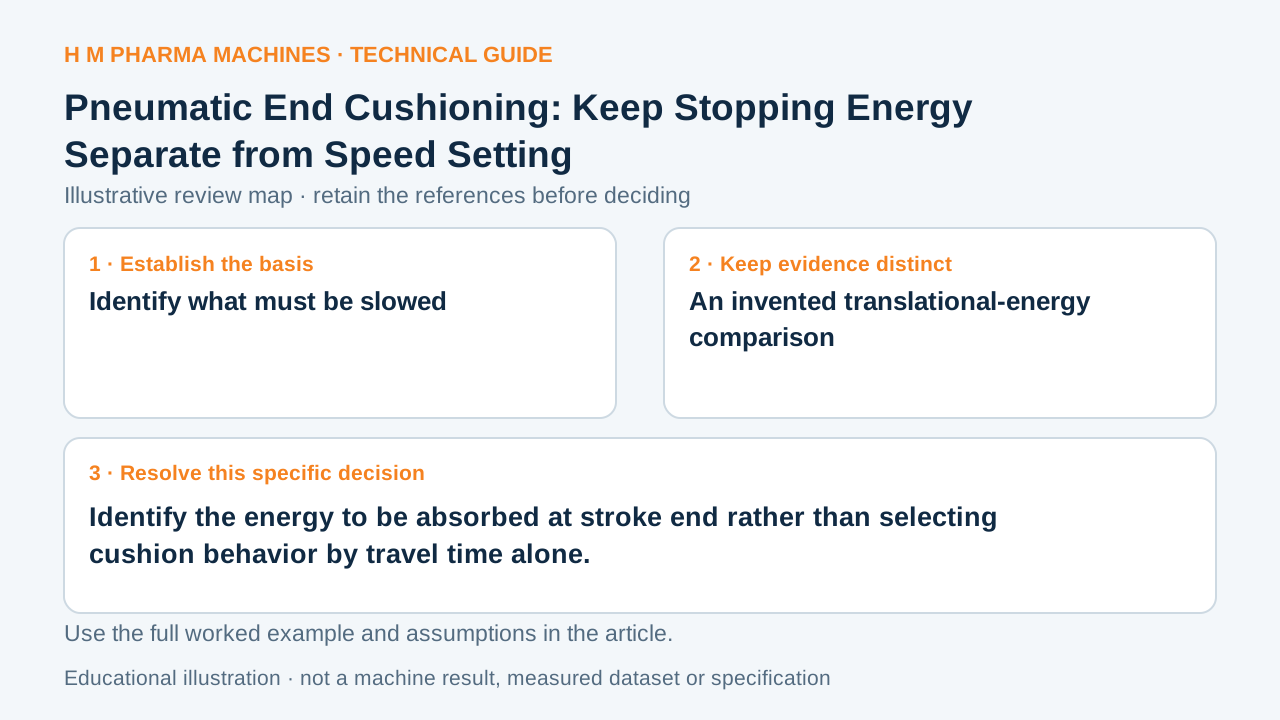
A travel-time statement alone does not specify the energy present near the end of a pneumatic stroke.
Identify what must be slowed
Festo's cushioning explanation relates end-position damping to kinetic energy and the actual load/speed condition. Preserve that duty with the cushioning concept. Primary reference: Festo end-cushioning context.
Identify the moving assembly and its speed entering the relevant stopping region. A nominal stroke divided by overall travel time is an average, not necessarily that local speed. Keep the actual evidence source beside the proposed cushioning envelope.
An invented translational-energy comparison
For a simplified hypothetical moving mass of 2 kg at 0.5 m/s, kinetic energy is ½mv² = 0.25 J. At 1.0 m/s with the same mass, it is 1.0 J. Doubling the assumed speed quadruples this energy. This model excludes other forces and is not an actual cushion-capacity assessment.
Place moving mass, end-region speed, modeled energy and relevant repetition duty in separate cells. Two motions with equal average travel time can still have different speed profiles near the endpoint. Ask for the local duty rather than choosing the smaller estimate without evidence.
Request the actual stopping basis
The selected cylinder, cushioning arrangement and complete mechanical duty need applicable manufacturer review. Keep any separately required stop or energy-absorption component identifiable. A cushion type's name alone does not establish the accepted mass/speed combination.
If tooling mass or motion timing changes, update the duty record. This guide supplies an original energy worksheet to make the evidence request concrete; it specifies no adjustment screw position, permitted impact or universal cushion limit. The actual design must address its relevant loads and repeated operating condition together.
Customer Questions
Is average stroke speed necessarily the endpoint speed?
No. Preserve the actual profile or applicable local evidence.
How does doubling speed affect this simple energy model?
It multiplies energy by four at unchanged mass.
Does the calculated joule value approve a cushion?
No. The complete stopping duty needs applicable evidence.
Primary References
These references support the technical principles discussed in this guide. The worked examples and review questions are educational.
Discuss Your Machine Requirement
Share your product, container, required output and the evidence needed for your technical review.
Request a Technical Review