
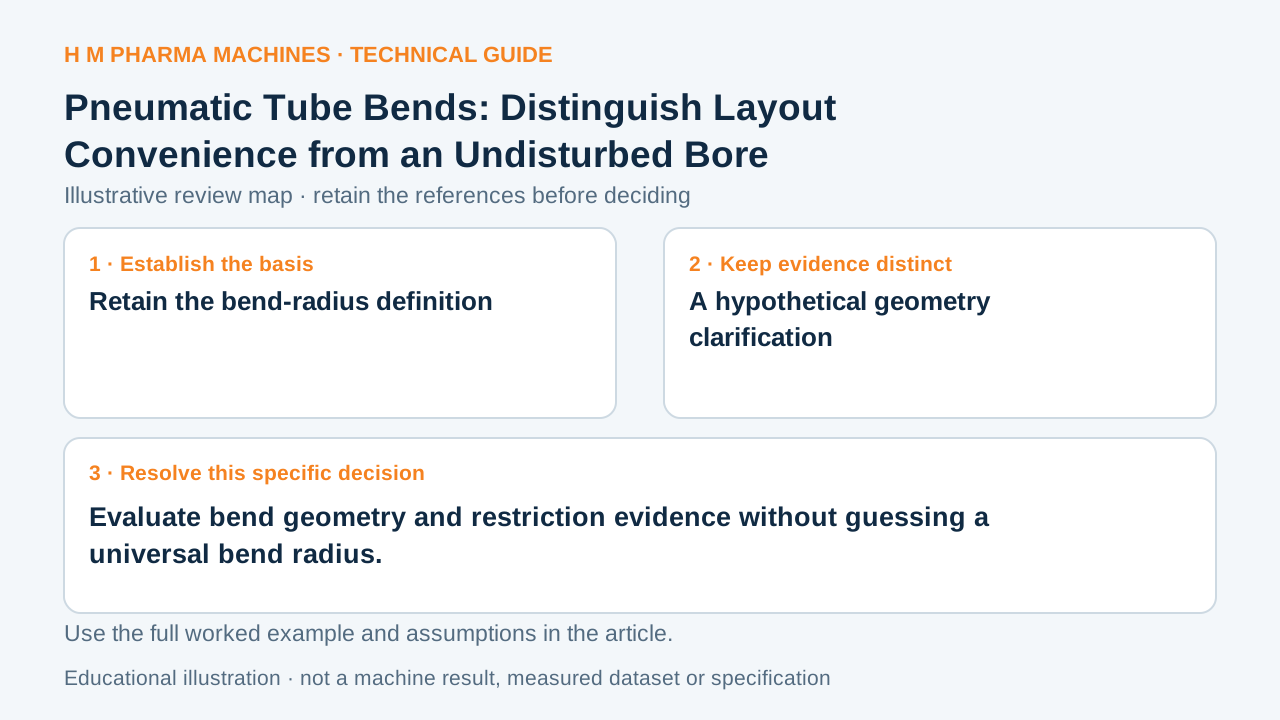
A tidy route drawing does not establish that the internal passage remains suitable at every bend.
Retain the bend-radius definition
SMC's identified tubing reference attaches a measurement method and temperature condition to its minimum bending radius. Keep those conditions with the figure. Primary reference: SMC bending-radius definition.
A drawing should identify which geometric radius it shows. A centreline radius and an inner-surface radius are different values for a finite-diameter tube. The manufacturer's actual convention is the comparison basis, rather than an assumed radius read from a small perspective illustration.
A hypothetical geometry clarification
For an ideal round 8 mm outside-diameter tube with a centreline bend radius 20 mm, the inner and outer surface radii are 16 mm and 24 mm. These values only describe the ideal geometry. They provide no acceptable minimum radius and do not model flattening of a real flexible tube.
Create cells for tubing identity, specified radius convention, proposed drawing convention, temperature basis and applicable comparison. An unexplained 20 mm note cannot be judged against a minimum defined using another geometric reference without resolving that difference.
Keep the route and duty together
Ask the supplier how the actual tube supports the intended static or moving route under the relevant conditions. Preserve any separate movement, abrasion or cyclic-life requirements; a static bend statement should not automatically certify repeated flexing.
If layout constraints change, update the tube-route evidence instead of forcing the earlier specification into a tighter sketch. This guide gives a buyer a defined radius comparison without prescribing a universal multiple of diameter, claiming a kink threshold or selecting an allowable bend from the teaching geometry alone. Keep each drawing dimension linked to its geometric reference.
Customer Questions
Are centreline and inner radius identical?
No. Tube diameter separates the geometric references.
Does the 20 mm example establish an allowed bend?
No. It is an ideal geometry illustration.
Does a static bend statement prove repeated-flexing life?
No. Keep the separate duty evidence.
Primary References
These references support the technical principles discussed in this guide. The worked examples and review questions are educational.
Discuss Your Machine Requirement
Share your product, container, required output and the evidence needed for your technical review.
Request a Technical Review