
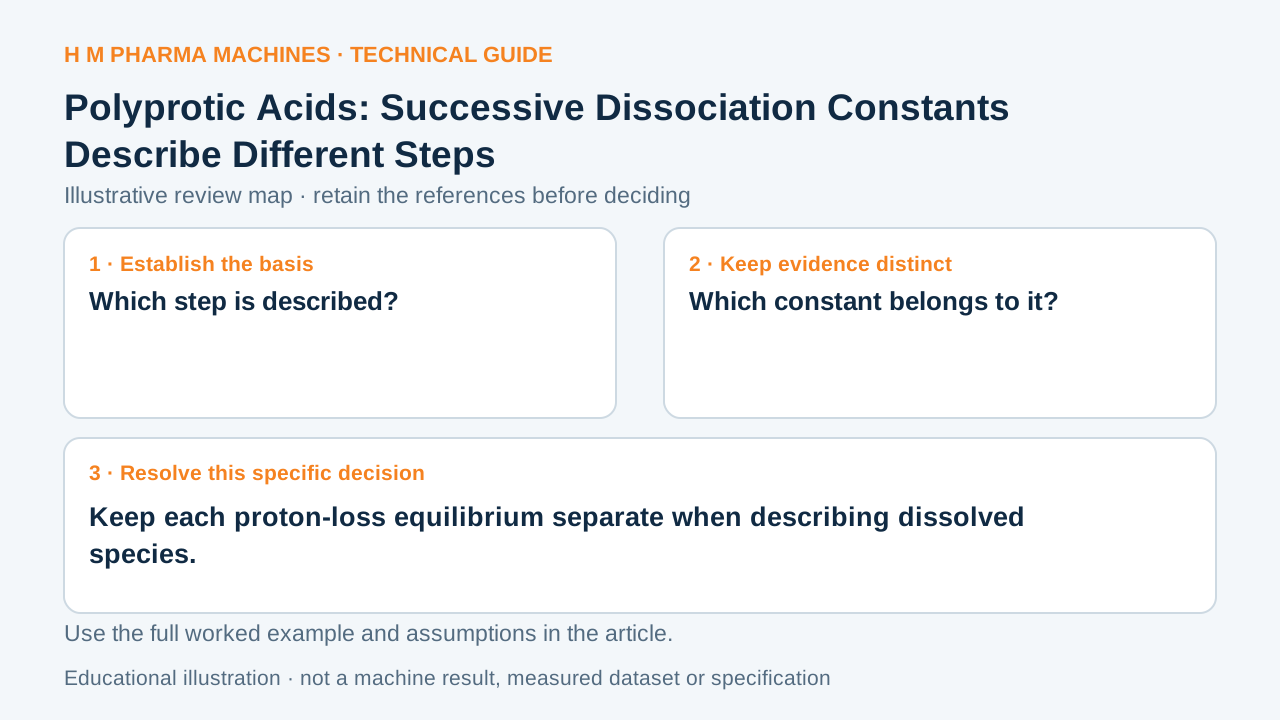
A molecule with several acidic protons has several dissociation steps. A single proton count does not determine how its dissolved species are distributed.
Write each equilibrium separately
A polyprotic acid can lose protons in successive equilibria, each with its own dissociation constant. For a diprotic model, H₂A, HA⁻ and A²⁻ are different species. The second equilibrium concerns HA⁻ losing a proton, not a second copy of the first reaction. Primary reference.
Compare an invented two-step system
Construct dimensionless activity-based constants Ka₁ = 10⁻⁴ and Ka₂ = 10⁻⁸, with hydrogen activity aH = 10⁻⁶. The equilibrium activity ratios are aHA/aH₂A = Ka₁/aH = 100 and aA/aHA = Ka₂/aH = 0.010.
Under an additional ideal species-concentration approximation, the relative inventories would be H₂A:HA⁻:A²⁻ = 1:100:1. HA⁻ therefore dominates this fictional state, although the formula includes two acidic protons. The hydrogen activity was supplied as an input, not solved from an unbuffered initial preparation.
Preserve the species model
Build an original species register with each reaction, constant, activity convention and any concentration approximation. Keep total acid amount as a separate sum over its forms. A charge balance and other equilibria would be needed to solve hydrogen activity from a complete real composition.
This guide provides no real dissociation constants or preparation recipe. Its decision is whether a report has treated successive equilibria as separate chemical relationships. Retain the intermediate form when interpreting dissolved species instead of assuming complete release of every proton from the molecular formula.
Solution review worksheet
This blank worksheet is for your own project. It contains no H M machine trial result.
| Question | Record to retain |
|---|---|
| Which step is described? | Explicit species pair and dissociation reaction |
| Which constant belongs to it? | Ka₁ or Ka₂ at the stated conditions |
| Was hydrogen activity supplied or solved? | Input state or complete equilibrium calculation |
Customer Questions
What is the fictional HA⁻ to H₂A activity ratio?
100.
What is the fictional A²⁻ to HA⁻ activity ratio?
0.010.
Does the two-proton formula prove complete dissociation?
No.
Primary References
These references support the technical principles discussed in this guide. The worked examples and review questions are educational.
Discuss Your Machine Requirement
Share your product, container, required output and the evidence needed for your technical review.
Request a Technical Review