
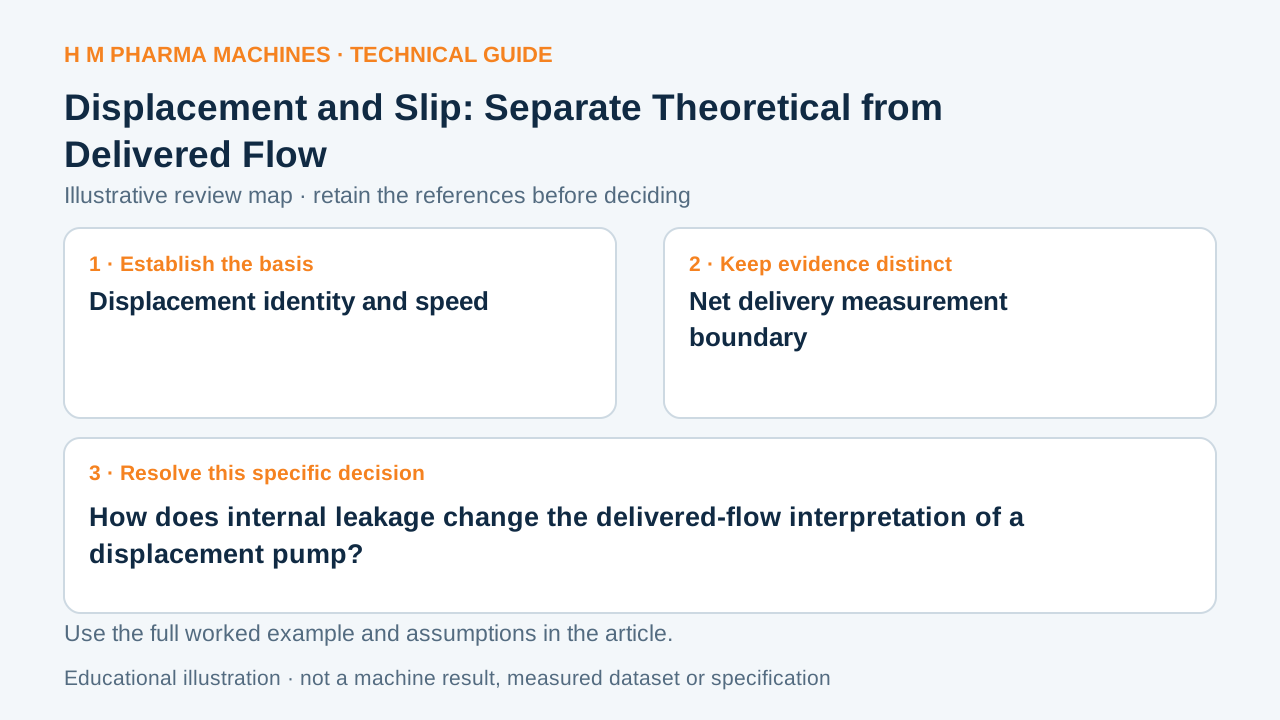
Theoretical displaced volume and delivered volume are different quantities. Define the ratio before treating each revolution as an exact output.
Identify the Physical Basis
Volumetric efficiency compares delivered liquid output with the theoretical output. NETZSCH’s definition identifies clearance, wear, viscosity and internal backflow among the factors that can affect it. For an identified displacement V_d and speed n, a simple theoretical rate is Q_th = V_d n; the comparison η_v = Q_actual/Q_th uses consistent volume and time units.
Work Through an Example
A hypothetical pump displaces 10 mL per revolution and rotates at 100 revolutions per minute. Q_th is 1,000 mL/min. If the measured net outlet rate is 920 mL/min under one defined condition, η_v is 92% and the shortfall is 80 mL/min. This calculation reports a comparison. It does not prove that all of the shortfall came from one leakage path, nor that the same ratio applies at another pressure or temperature.
Use the Result in the Review
Capture displacement identity, speed, inlet supply, pressure difference and fluid condition beside the delivered-rate result. Define the measurement boundary: a downstream return or bypass may change net delivery without changing the pump’s geometric displacement. When two results disagree, investigate what was counted before adjusting an assumed efficiency. Keep the dimensional unit visible rather than mixing mL/revolution and litres/hour.
For the gear-pump filler, use product trials to establish the selected machine’s delivered-dose behaviour. This general ratio explains one engineering distinction; it does not provide a dosing calibration, an acceptance limit or an HM slip-performance guarantee.
How does internal leakage change the delivered-flow interpretation of a displacement pump?
This blank worksheet is for your own project. It contains no H M machine trial result.
| Review field | Reference or result | Responsible person |
|---|---|---|
| Displacement identity and speed | To complete | To complete |
| Net delivery measurement boundary | To complete | To complete |
| Fluid and pressure-difference conditions | To complete | To complete |
| Calculated ratio and unresolved causes | To complete | To complete |
Customer Questions
Is volumetric efficiency motor efficiency?
No. It compares liquid output, not electrical energy.
Does 92% become a fixed machine setting?
No. It describes the illustrative condition, not all future duties.
Does a shortfall identify leakage alone?
No. Supply, bypass and measurement-boundary effects require review.
Related Equipment References
Review the actual offered equipment and application separately from this educational example.
Primary References
These references support the technical principles discussed in this guide. The worked examples and review questions are educational.
Discuss Your Machine Requirement
Share your product, container, required output and the evidence needed for your technical review.
Request a Technical Review