
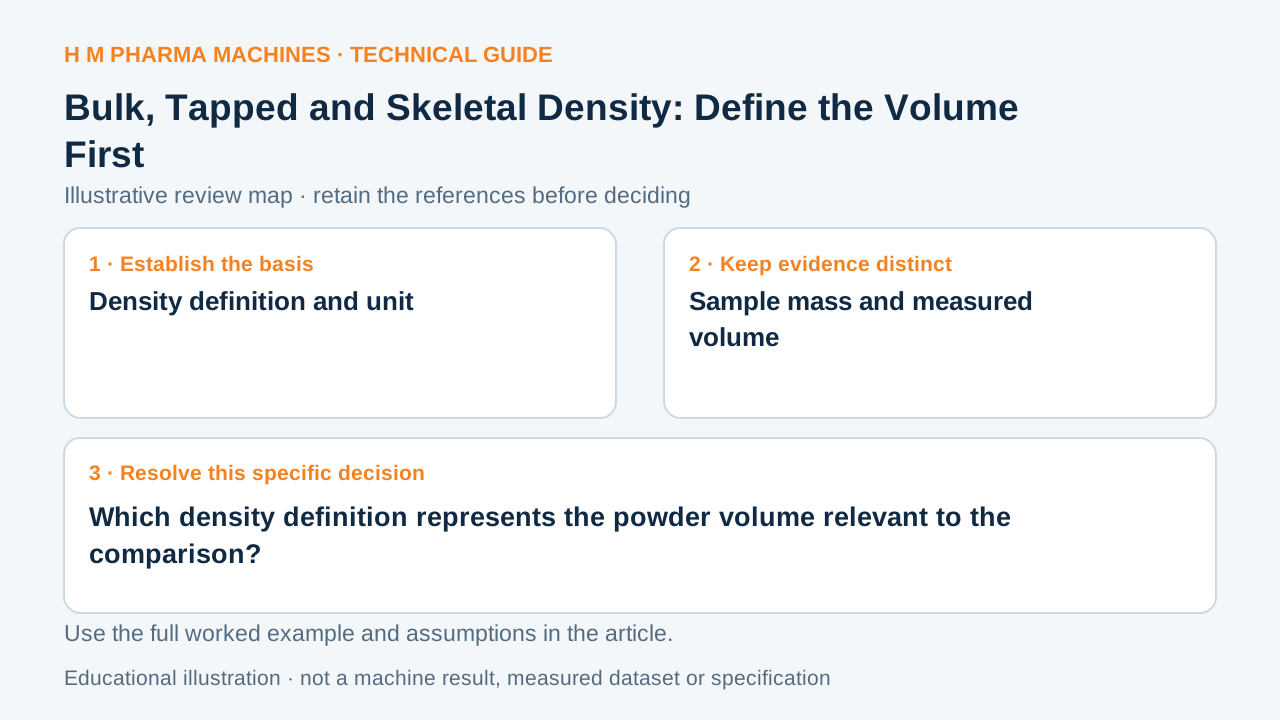
Different powder density values can be valid while describing different volumes. Identify the definition before using one in a filling discussion.
Distinguish Bed Volume from Particle Volume
Micromeritics distinguishes loose bulk density from skeletal density. A bulk-bed volume includes spaces between particles. A skeletal measurement excludes interparticle voids and accessible open pores while including closed pores under its defined method. They should not be treated as interchangeable quantities.
Tapped bulk density describes another bed state after a defined tapping method. Retain that method instead of reading tapped as a synonym for skeletal or true density. The cited USP harmonization reference explains the bulk/tapped distinction; the project must identify its applicable procedure. Primary characterization reference.
Illustrative Volume Comparison
Consider an invented 100 g sample occupying 200 mL in a loose bed and 160 mL after the specified tapping assessment. Its corresponding bulk and tapped densities are 0.50 and 0.625 g/mL. A separately reported skeletal density would concern a different volume definition.
These figures are not HM powder results. Using skeletal density to estimate the same loose powder-bed volume would answer a different question. Conversely, the bulk-bed value does not establish the density of individual particle material or quantify each pore type.
Choose the Application Quantity
Ask whether the enquiry concerns occupied container volume, handling condition or material characterization. Keep the sample, volume definition, method and state beside the selected value. A drawing capacity and a powder dose do not become equivalent merely because a density was provided.
Complete the worksheet before comparing formulation reports. The resulting record can explain why supplier calculations differ and which quantity should enter the application discussion. Actual auger delivery and container filling still require representative powder and machine evidence. HM equipment context: Auger Powder Filling Machine.
Bulk, Tapped and Skeletal Density: Define the Volume First — blank comparison record
This blank worksheet is for your own project. It contains no H M machine trial result.
| Quantity/question | Method or result | Reviewer/status |
|---|---|---|
| Density definition and unit | To complete | To complete |
| Sample mass and measured volume | To complete | To complete |
| Loose/tapped/skeletal method | To complete | To complete |
| Intended application quantity | To complete | To complete |
Customer Questions
Is tapped density skeletal density?
No. One concerns a defined powder-bed state; the other uses a different particle-volume definition.
Can any density estimate container volume?
Choose the definition and powder state relevant to that question.
Are the example values filling guarantees?
No. They are hypothetical density calculations.
Related Equipment References
Review the actual offered equipment and application separately from this educational example.
Primary References
These references support the technical principles discussed in this guide. The worked examples and review questions are educational.
Discuss Your Machine Requirement
Share your product, container, required output and the evidence needed for your technical review.
Request a Technical Review