
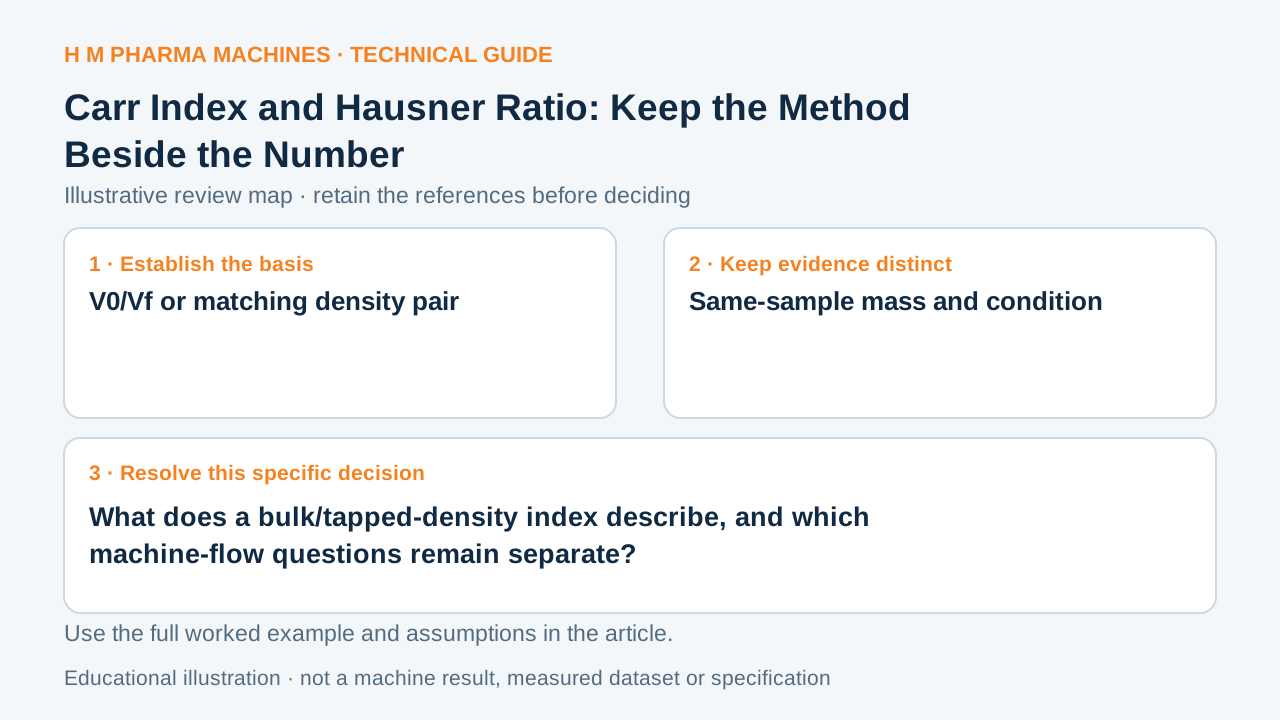
A compressibility index or Hausner ratio summarizes a defined volume comparison. It is not a universal powder-filler performance rating.
Preserve the Input Pair
The cited USP harmonization reference gives compressibility index as 100(V0 − Vf)/V0 and Hausner ratio as V0/Vf, using untapped and final tapped bulk volumes. Equivalent density forms require the same sample mass. The reference notes that these indices depend on methodology.
Keep sample identity, initial state, tapping method and final-state basis with the numbers. Do not combine an untapped value from one preparation with a tapped value from another and describe the ratio as one coherent test. Primary characterization reference.
Illustrative Calculation
For an invented sample with V0 = 200 mL and Vf = 160 mL, the compressibility index is 20% and the Hausner ratio is 1.25. These values summarize a 40 mL volume reduction under the declared assessment. They are not HM material or machinery data.
An index does not by itself explain how the powder behaves under every stress, aeration or handling condition. A relative ranking from a reference should not become a universal acceptance threshold for a selected filler. The actual product and process question still need a suitable assessment.
Use Indices as Bounded Evidence
Ask the formulation reviewer what comparison the method supports and whether another flow test is needed for the intended application. Preserve raw mass/volume data so the index can be reconstructed. Mark any method change before comparing successive reports.
Complete the worksheet when sharing these indices with a powder-equipment supplier. State the application concern separately, such as a material comparison under an identified condition. This prevents a useful laboratory summary from becoming an unexplained machine compatibility label. HM equipment context: Servo Powder Filling Machine.
Carr Index and Hausner Ratio: Keep the Method Beside the Number — blank comparison record
This blank worksheet is for your own project. It contains no H M machine trial result.
| Quantity/question | Method or result | Reviewer/status |
|---|---|---|
| V0/Vf or matching density pair | To complete | To complete |
| Same-sample mass and condition | To complete | To complete |
| Index arithmetic and method | To complete | To complete |
| Application question still to assess | To complete | To complete |
Customer Questions
Are these indices intrinsic constants?
The cited method reference makes their method dependence explicit.
Can 1.25 guarantee a dose result?
No. A calculated ratio does not establish actual filler performance.
Can different sample masses be mixed?
Use a coherent same-sample volume or density comparison and retain its basis.
Related Equipment References
Review the actual offered equipment and application separately from this educational example.
Primary References
These references support the technical principles discussed in this guide. The worked examples and review questions are educational.
Discuss Your Machine Requirement
Share your product, container, required output and the evidence needed for your technical review.
Request a Technical Review