
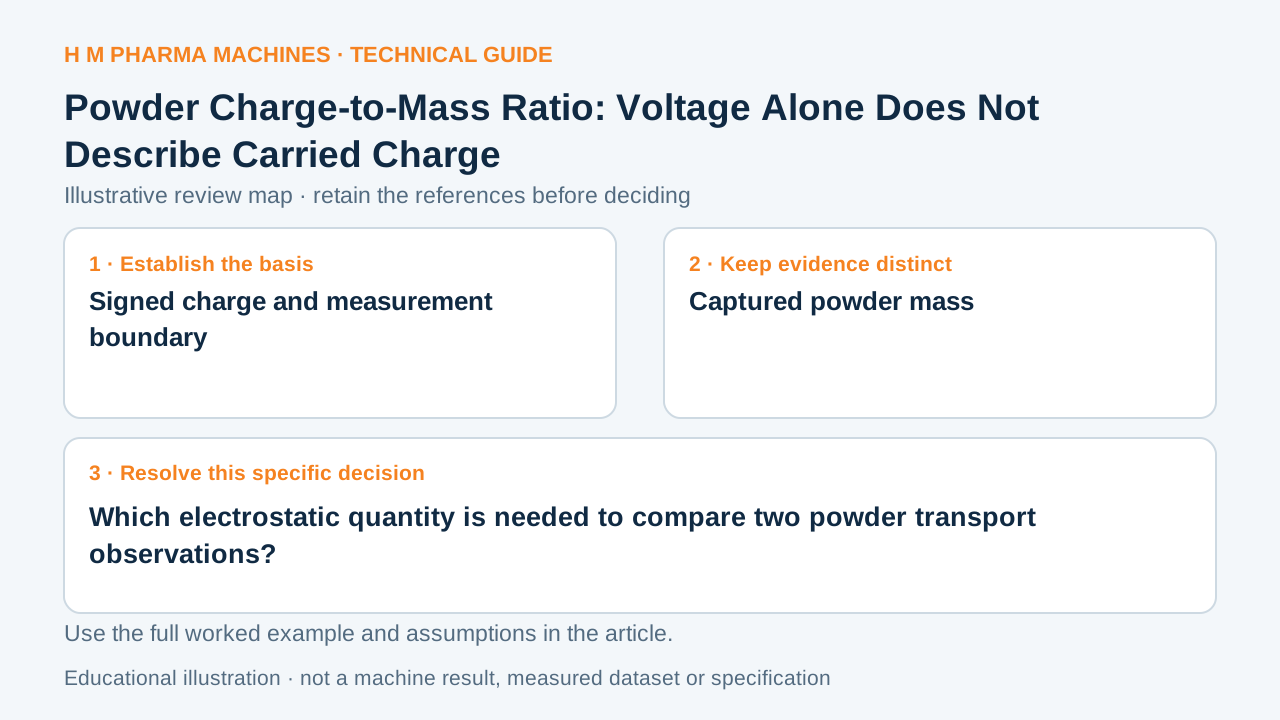
Retain collected charge, sample mass and measurement history when comparing carried powder charge; a voltage label cannot replace those quantities.
Identify the Material Response
DEKRA describes chargeability as a response to an identified charge-generation regime, with the acquired charge measured after that exposure. The exposure belongs beside the result. Primary reference: defined powder chargeability.
Review a Hypothetical Comparison
For an invented signed collected charge of −20 nanocoulombs on 0.010 kg of powder, charge divided by mass is −2 microcoulombs/kg. A separate report stating −200 V provides a potential measurement, not that same charge-to-mass ratio. Voltage cannot be substituted for charge without an additional applicable electrical model and measurement boundary.
Keep the Evidence with the Decision
Keep the charge sign, units, powder mass and timing in a result register. Record the generation exposure and collection method so a change in contact history is visible. Ask whether the reported charge belongs to the complete captured sample or to a different measurement region. Do not silently divide a field or voltage reading by powder mass and rename it chargeability.
A net charge result may also conceal positive and negative contributions within a mixture. The hypothetical ratio supplies no ignition threshold, electrostatic-control setting or accepted HM condition. This article clarifies the reported physical quantity; interpretation of a process hazard or actual charge-control measure requires its own specialist evidence. Preserve that distinction when sharing a powder characterization report.
Which electrostatic quantity is needed to compare two powder transport observations?
This blank worksheet is for your own project. It contains no H M machine trial result.
| Review field | Reference or result | Responsible person |
|---|---|---|
| Signed charge and measurement boundary | To complete | To complete |
| Captured powder mass | To complete | To complete |
| Generation/collection and elapsed time | To complete | To complete |
| Reported ratio and units | To complete | To complete |
Customer Questions
What is −20 nC divided by 0.010 kg?
−2 microcoulombs/kg.
Can volts be substituted directly for coulombs?
No. Potential and charge are different quantities.
Does net charge expose every particle contribution?
No. Opposite contributions can cancel in the net result.
Primary References
These references support the technical principles discussed in this guide. The worked examples and review questions are educational.
Discuss Your Machine Requirement
Share your product, container, required output and the evidence needed for your technical review.
Request a Technical Review